After the FCC Covered List: A Practical Migration Playbook for DJI-Dependent Fleets
Most coverage rehashes the politics. Operators need a hardware-by-hardware decision framework: what the FCC ruling actually restricts, what still flies, and the real cost of swapping Mavic 3E and M350 fleets.
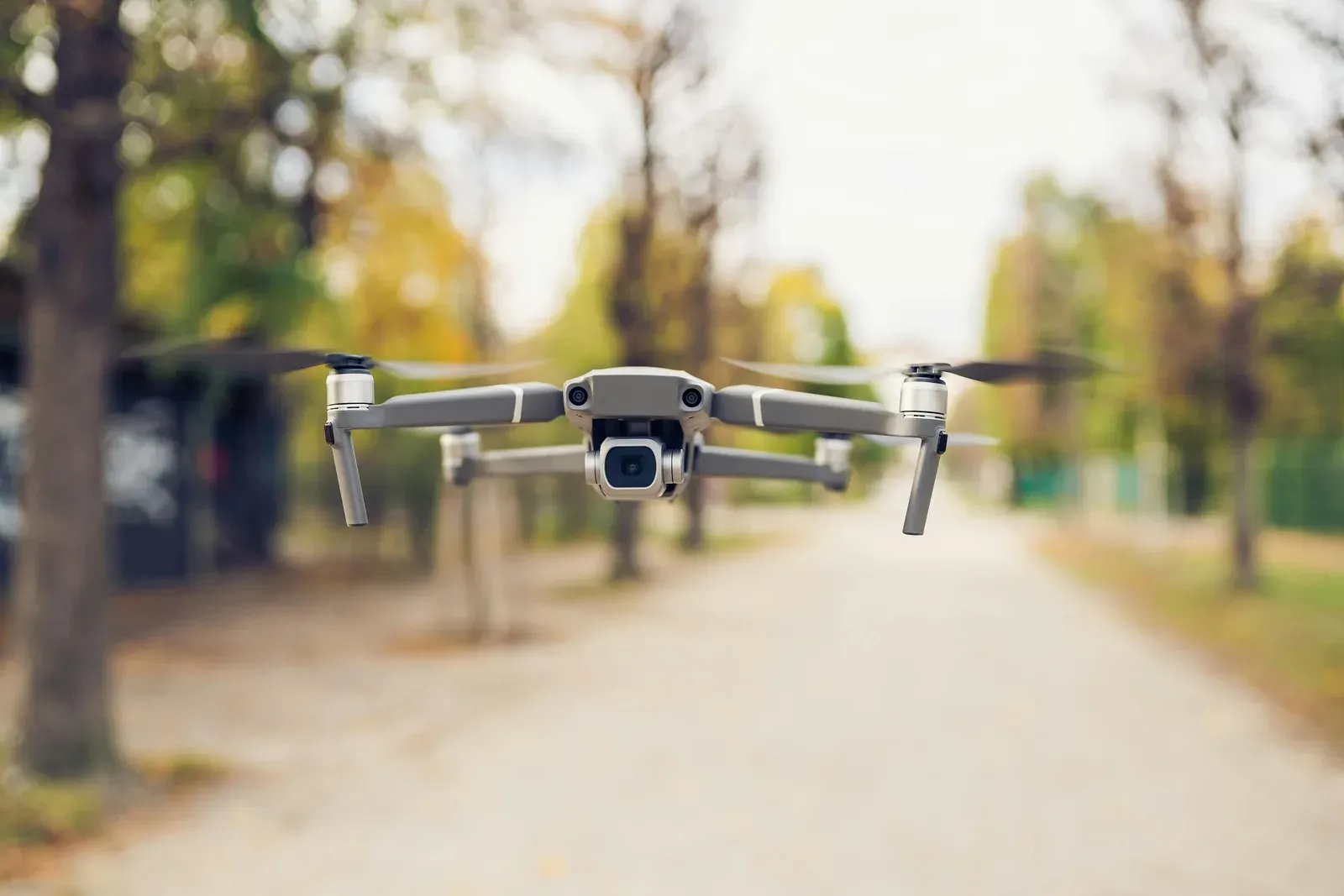
December 23, 2024. That's when the NDAA was signed with a clause that put DJI and Autel on a one-year clock — federal agencies must determine whether their gear poses an unacceptable risk, or it gets added to the FCC Covered List by default. Operators have been asking the wrong question ever since. The right question isn't whether DJI will be banned. It's what your DJI ban fleet migration plan looks like if the answer turns out to be yes.
This piece is a DJI ban fleet migration playbook for operators sitting on fleets of Mavic 3 Enterprises, Matrice 350 RTKs, and thermal-response platforms that suddenly carry regulatory uncertainty. No politics. Just hardware, contracts, procurement timelines, and operational math.
What the FCC Covered List Actually Restricts
Quick definition for the snippet hunters: the FCC Covered List, under the Secure Equipment Act of 2021, prohibits the authorization of new equipment from listed entities for use on U.S. communications infrastructure. If DJI lands on it, the FCC stops granting new equipment authorizations, meaning future DJI products can no longer be legally imported or marketed in the United States.
That distinction matters for any DJI ban fleet migration timeline. A Covered List addition is not an automatic grounding order. Existing aircraft can still operate legally under Part 107 rules.
Your current Mavic 3E or Matrice 350 RTK keeps flying. What changes is long-term viability: replacement cycles, resale value, expansion planning, and procurement confidence.
That's where the real DJI ban fleet migration problem starts.
There's also the parallel state-level issue. Florida's SB 44 already restricts DJI operations for state agencies. Tennessee, Arkansas, and Mississippi introduced similar frameworks. Operators flying contracts tied to state DOTs, universities, utilities, or emergency-response agencies may already be operating on a compressed DJI ban fleet migration timeline.
Frankly, anyone with public-sector exposure should have started this audit 18 months ago.
Foto: Mark Stebnicki
Step One: Classify Missions, Not Aircraft
The first mistake operators make during a DJI ban fleet migration is replacing aircraft before analyzing missions.
Start with operational categories first, because the replacement market is uneven. Some DJI platforms already have viable alternatives. Others do not.
Mapping and Photogrammetry
Mavic 3E and Phantom-class mapping workflows are relatively well covered by current alternatives.
Heavy-Lift Inspection Operations
M350 RTK workflows with H30T or LiDAR payloads are only partially covered, usually with steep price increases.
Thermal Public Safety Operations
M30T and Mavic 3T replacements remain the biggest unresolved gap in the current U.S. ecosystem.
Indoor and Confined-Space Inspection
FPV-style inspection workflows are largely solvable through Skydio and specialized enterprise systems.
Once missions are categorized, prioritize migration by annual flight hours, not by aircraft purchase price.
The drone sitting unused in a Pelican case nine months a year should migrate last, regardless of cost.

Foto: Marta Bernal
The Realistic DJI Ban Fleet Migration Replacement Matrix
This is where most DJI ban fleet migration discussions become vague. Let's get specific.
Replacing the Mavic 3E / Mavic 3T
The Skydio X10 is the most obvious enterprise replacement. It's NDAA-compliant, Blue UAS listed, and its autonomy stack outperforms DJI in certain inspection workflows.
The downside is pricing.
A properly configured X10 often lands between $14,000 and $17,000, compared to roughly $3,400 for a Mavic 3E kit.
That's a severe multiplier for any enterprise-scale DJI ban fleet migration.
Parrot's ANAFI USA lowers acquisition costs somewhat, but endurance and imaging gaps remain significant.
For mapping-specific workflows, Wingtra One Gen II and Quantum-Systems Trinity Pro remain serious fixed-wing alternatives. Both deliver strong survey outputs. Neither is inexpensive.
Replacing the M350 RTK
This is where the economics of a DJI ban fleet migration become painful.
The M350 RTK combines endurance, weather resistance, payload flexibility, and dual-operator capability at a price point Western competitors still struggle to match.
Freefly Astro paired with a Sony ILX-LR1 works for mapping missions. LiDAR operations usually push buyers toward Inspired Flight systems paired with YellowScan payloads.
The problem is total system cost.
An M350 RTK plus L2 payload can sit near $20,000-$25,000 depending on configuration. Comparable U.S.-built alternatives frequently exceed $80,000.
That's not simply a procurement inconvenience. That's a business-model disruption.
If your operation depended on DJI-level performance at DJI-level pricing, your DJI ban fleet migration strategy may require revisiting pricing structures entirely.
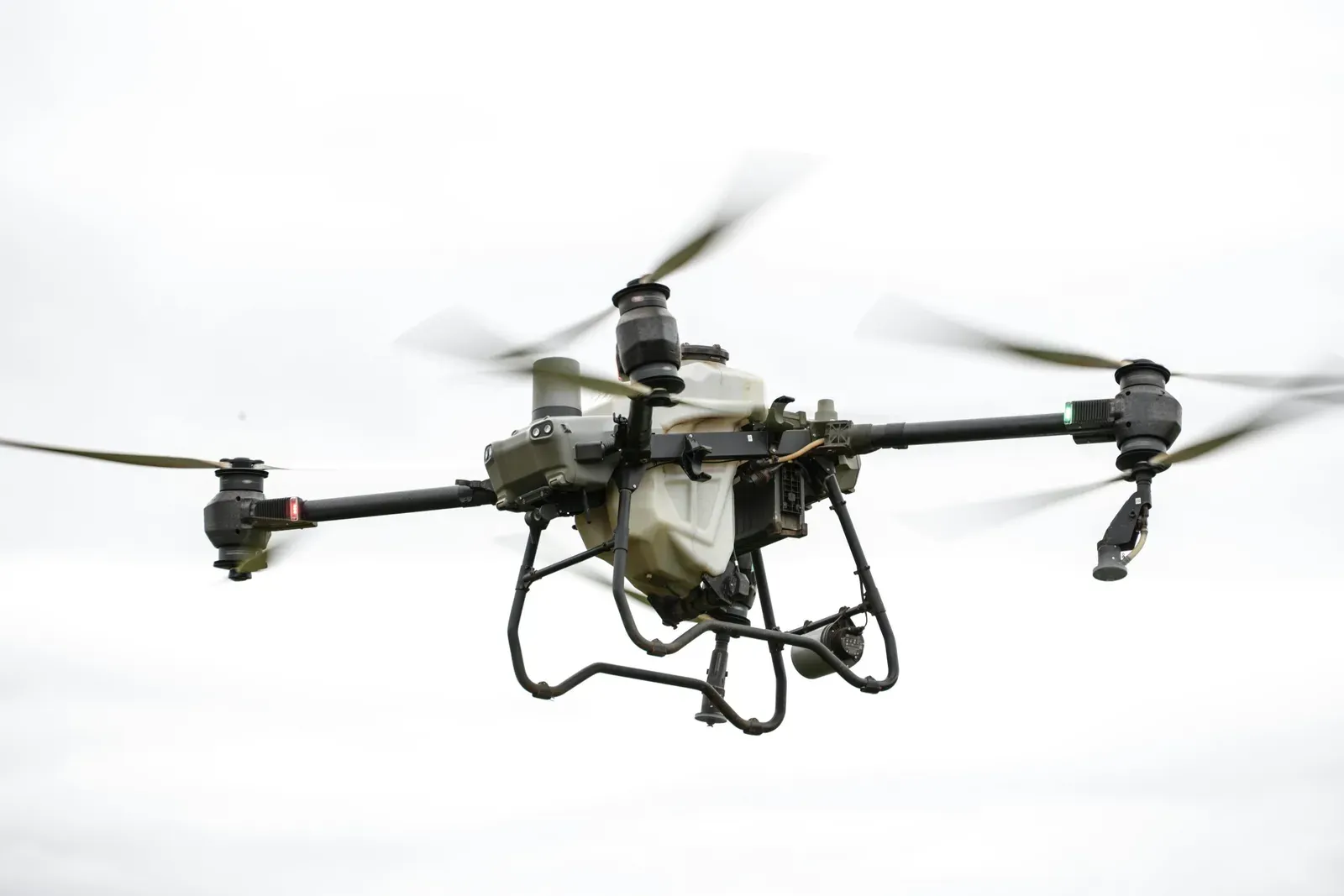
Foto: Magda Ehlers
The Public-Safety Thermal Gap
This remains the least solved category in any DJI ban fleet migration strategy.
There is still no true sub-$5,000 thermal aircraft inside the Blue UAS ecosystem capable of matching the flexibility of the Mavic 3T.
Departments transitioning toward BRINC or Skydio thermal systems are frequently facing 3x-4x cost increases per deployable aircraft.
Quietly, this may become the category where budgets fail first.
Foto: Michael Starkie
The Hidden Costs Nobody Puts on the Invoice
Hardware is only the visible expense in a large-scale DJI ban fleet migration.
The invisible costs are often worse.
Pilot Retraining
Skydio's autonomy-first flight philosophy differs dramatically from DJI's manual-control ecosystem. Pilots frequently need 15-25 operational hours before trusting autonomous navigation behaviors.
Workflow Reconstruction
Many enterprise pipelines rely on DJI Terra integrations feeding Pix4D, DroneDeploy, or ArcGIS workflows. A platform change can disrupt geotag standards, overlap automation, and photogrammetry presets.
Battery Logistics
New aircraft ecosystems require new charging systems, transport cases, spare inventories, and shipping procedures.
Insurance Costs
Hull values rise dramatically during a DJI ban fleet migration, and insurance premiums rise with them.
Spare-Parts Availability
DJI's aftermarket ecosystem is mature and globally distributed. Smaller American manufacturers frequently operate on much slower fulfillment cycles.
A realistic rule from operators already navigating a DJI ban fleet migration: budget approximately 1.4x the quoted hardware cost to become fully operational during year one.
A $400,000 hardware replacement quote can easily become a $560,000 operational transition.
Building a Long-Term DJI Ban Fleet Migration Strategy
For most operators, the biggest challenge in a DJI ban fleet migration isn't regulation. It's operational continuity.
Operators who panic-bought alternatives in early 2024 paid premium prices before firmware ecosystems matured. Operators waiting for total regulatory certainty may face inventory shortages once enterprise demand spikes.
A staged DJI ban fleet migration strategy makes more sense.
Migrate one mission category per quarter. Prioritize public-sector exposure first. Keep DJI aircraft operating commercial contracts while depreciation still makes financial sense.
Negotiate replacement-flexibility clauses with vendors whenever possible. Locking into an immature hardware ecosystem for years creates its own operational risk.
One overlooked step in any DJI ban fleet migration strategy is auditing client contracts for compliance clauses.
Many utilities, infrastructure operators, oil-and-gas firms, and federal subcontractors already restrict DJI hardware internally regardless of federal regulation.
For some operators, the migration deadline has already been set by procurement departments, not Congress.
Takeaways
The FCC Covered List restricts future equipment authorization, not existing flights. Current DJI fleets still operate legally, but long-term uncertainty continues to grow.
A successful DJI ban fleet migration starts with mission analysis, not direct aircraft replacement.
Mapping workflows already have viable alternatives. M350-class replacement economics remain difficult. Affordable thermal-response replacements remain largely unresolved.
Budget roughly 1.4x hardware replacement cost for a realistic DJI ban fleet migration. Training, insurance, logistics, workflow disruption, and downtime absorb the rest.
Most importantly: watch enterprise contracts as closely as federal regulation.
In the end, a successful DJI ban fleet migration will depend less on headlines and more on how quickly operators adapt procurement strategy, workflows, compliance planning, and operational structure.