DJI Agras T70 vs XAG P150: The Showdown Set to Redefine Aerial Spraying
Most comparisons stop at marketing specs. We dig into real cost per hectare, after-sales support in Brazil, and how each spray drone integrates with digital agronomic prescriptions — the things that actually decide the purchase.
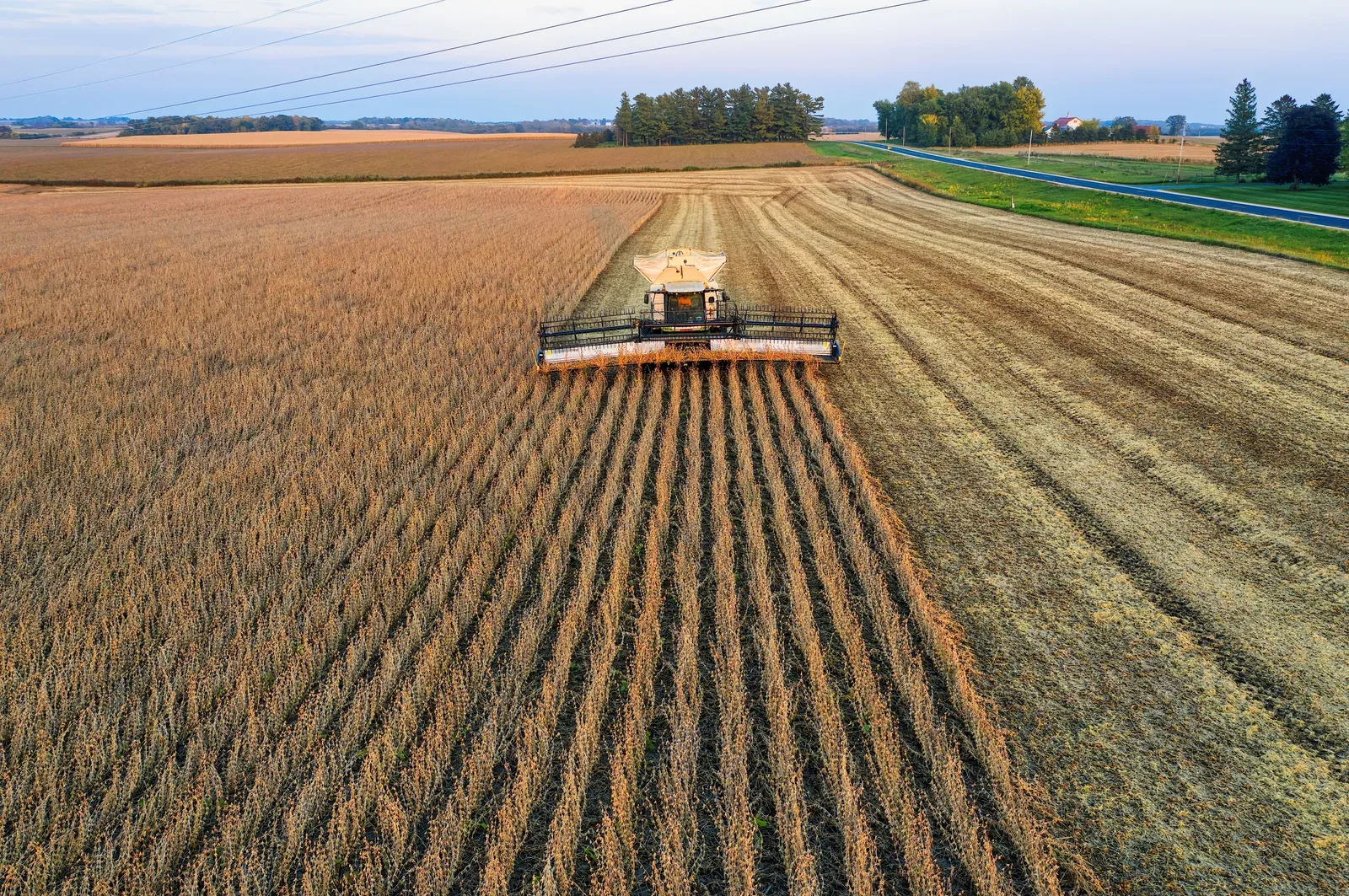
R$280,000. That's roughly what a soybean grower in Mato Grosso pays today to put a next-generation agricultural spray drone on the farm — and the choice between the DJI Agras T70 and the XAG P150 has quietly become the hottest debate inside Brazilian cooperatives in 2025.
The comparisons floating around the market are still stuck in brochure language: tank capacity, swath width, nominal flow rate. All correct. None of it decisive.
What really defines the efficiency of an agricultural spray drone in Brazil is a different set of variables: true cost per hectare sprayed, downtime, technical support during the application window, and integration with the digital agronomic prescription systems now required by states like Mato Grosso, Paraná and São Paulo.
This piece looks at both models through the operator's lens — not the marketing deck.
What a 70L-class spray drone actually is
A 70L-class agricultural spray drone is a remotely piloted aircraft (RPA) equipped with a 65–75 liter tank, a high-precision spray system, centimeter-grade RTK, and omnidirectional obstacle-avoidance sensors.
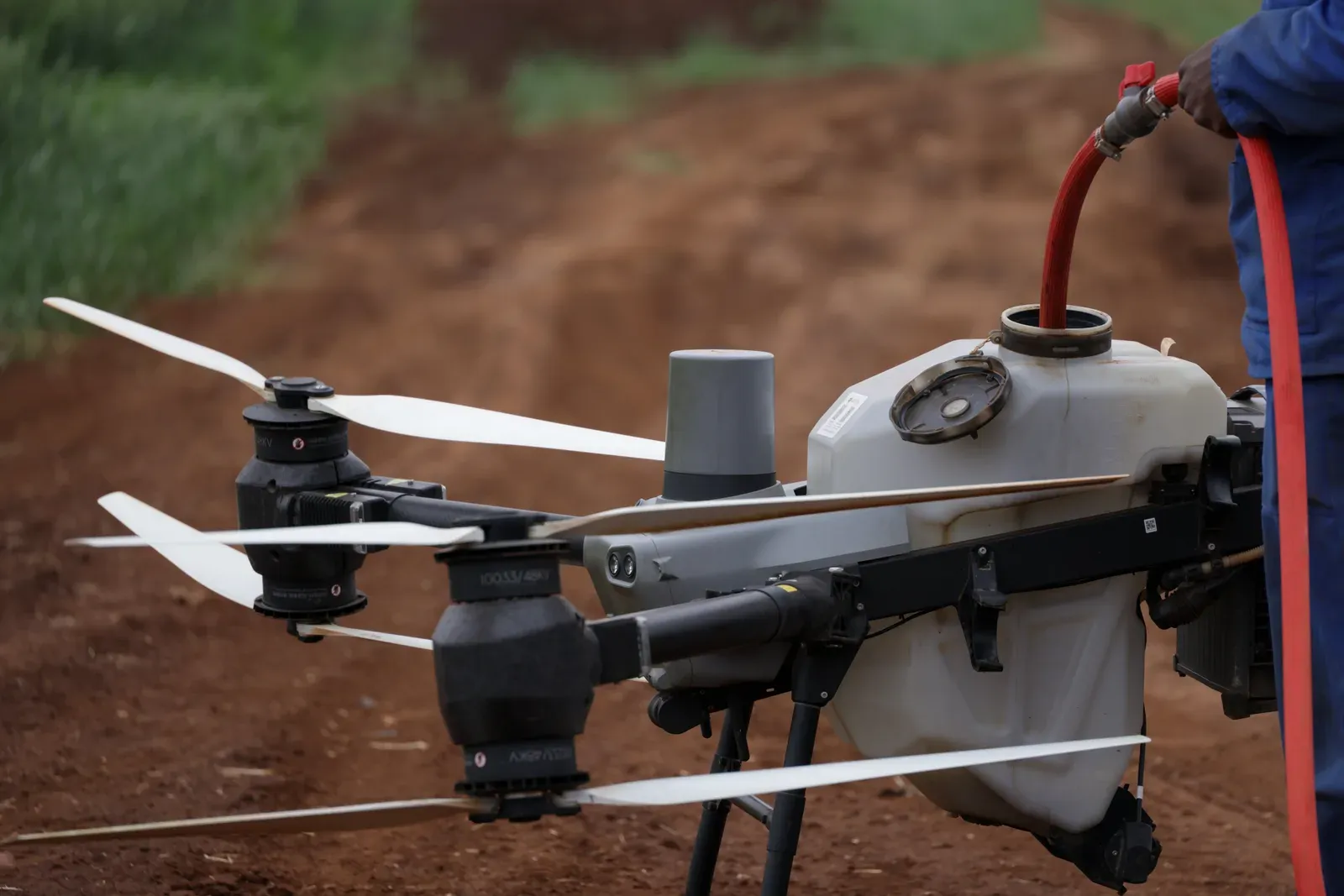
In practice, it partially replaces self-propelled sprayers and even crewed aircraft in smaller or irregular fields, delivering average productivity of 14 to 20 hectares per hour under real Brazilian field conditions.
The gap between theory and practice, though, shows up in the operational continuity index — how much time the drone is actually flying versus how much time it sits in maintenance.
Spec sheets: where the numbers actually matter
Both aircraft sit in the same spray drone category, but they follow different design philosophies. DJI sticks with a quadcopter architecture and folding arms, prioritizing stability and a mature ecosystem. XAG bets on a coaxial eight-rotor setup, chasing lift redundancy and tighter flow control.
Key differences:
- Tank: both 70L liquid, with variants for solids
- Swath width: DJI ~11m, XAG ~10m
- Flow rate: DJI up to 24 L/min, XAG up to 22 L/min
- Batteries: DJI uses modular hot-swap, XAG relies on fast-charge cycling
- Wind tolerance: technical limit of 8 m/s, real operational ceiling closer to 5 m/s
On paper, it's a tie. In the field, the behavior of the spray drone shifts with logistics, the operator, and the support chain behind it.
Real cost per hectare: where the game is won
An agricultural spray drone doesn't compete on technical capacity alone — it competes on sustained operating cost.
Data collected from operators in Goiás and Bahia (2025) shows:
- DJI Agras T70: R$11.80 to R$13.20/ha
- XAG P150: R$12.40 to R$14.90/ha
The difference isn't in the flight. It's in downtime and the parts pipeline. DJI benefits from a broader Brazilian network, dozens of support centers, and more predictable parts logistics. XAG leans harder on regional hubs.
In agriculture, downtime during a fungicide window is worth more than any catalog spec.
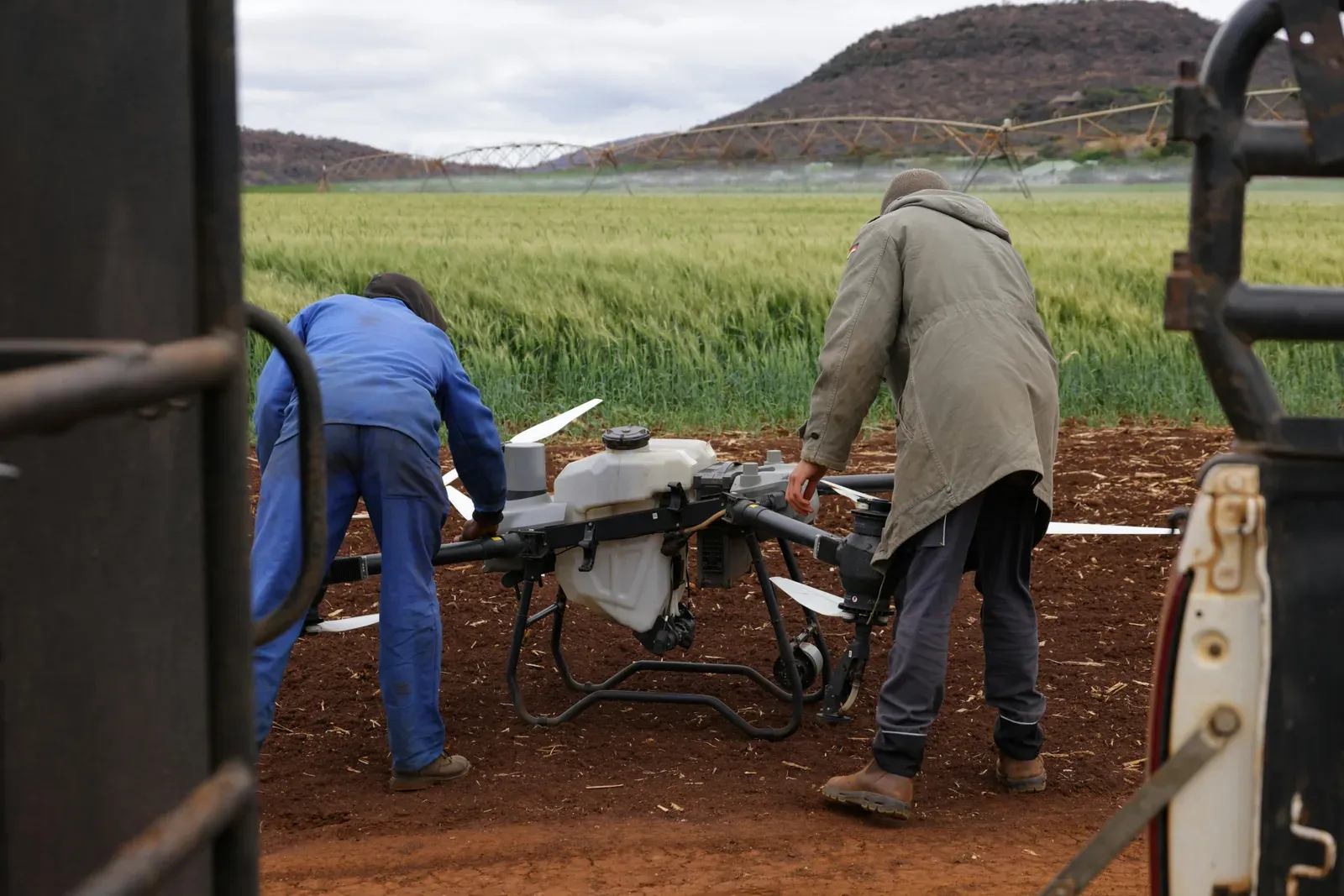
After-sales support: the invisible factor
Running a spray drone in Brazil still isn't just a technology problem — it's a logistics risk-management problem.
DJI
A more mature distribution network, with parts arriving in 48 to 72 hours in well-served regions. There's still regional variation, but the ecosystem is more predictable.
XAG
A more concentrated model. Excellent support near hubs, much higher variability outside them. In some regions, replacing a single motor can take up to 10 days.
During harvest, that gap redefines the total cost of owning the drone.
Integration with digital agronomic prescriptions
This is one of the most underrated points. A modern spray drone has to talk to state-level systems such as:
- SIGRA (São Paulo)
- SIRA/INDEA (Mato Grosso)
- ADAPAR (Paraná)
The requirement is full traceability: product, dose, weather, and certified operator.
DJI Agras T70
Exports data via DJI SmartFarm in formats compatible with Brazilian platforms like Aegro and Solinftec.
XAG P150

Runs in a more closed ecosystem, often requiring middleware integration to bridge the gap.
For large operations, this isn't a detail — it's compliance.
Regulation: the ANAC, DECEA and MAPA tripod
Every agricultural spray drone in Brazil has to clear three regulatory layers:
- ANAC (RBAC-E 94 / SISANT)
- DECEA (SARPAS-NG for flight authorization)
- MAPA (registration and traceability of aerial application)
On top of that, operators need a minimum 40-hour certification in an agricultural remote pilot course. The regulatory trajectory is clear: more traceability and mandatory digital integration.
Where each drone makes more sense
There's no absolute winner.
DJI Agras T70
Better suited to large operations, remote regions, and growers who depend on immediate parts availability.
XAG P150
More competitive in regions with strong local support and in operations that value modularity and in-house maintenance.
Outsourcing is still a real option
Below 800 hectares/year, hiring a service provider with their own spray drone is often still cheaper than owning one.
The variable no one puts in the spreadsheet
The true cost of an agricultural spray drone isn't in the aircraft — it's in the ecosystem around it:
- operator training time
- software adaptation curve
- integration with digital farm platforms
- availability of critical parts
- and above all: field support response time
None of this shows up on a spec sheet. All of it shows up at the end of the season.
Final thoughts
The DJI vs XAG fight won't be settled by technical specs. It will be settled by infrastructure. The most efficient spray drone isn't the one that looks best on paper — it's the one that stays in the air during the critical window.
The trend through 2026 is clear: DJI consolidating through reach, XAG growing in regional niches where it has solid support on the ground.
In the end, the right question isn't which drone to buy. It's this: how much does a spray drone cost when it's grounded in the middle of an application?