Drone-on-Drone: How Ukraine's Interceptor UAVs Are Rewriting Air Defense Economics
A technical breakdown of low-cost interceptor UAVs — sensors, guidance, and cost-exchange ratios — as they replace million-dollar missiles for defeating Shahed-class threats, with implications for NATO and homeland C-UAS doctrine.
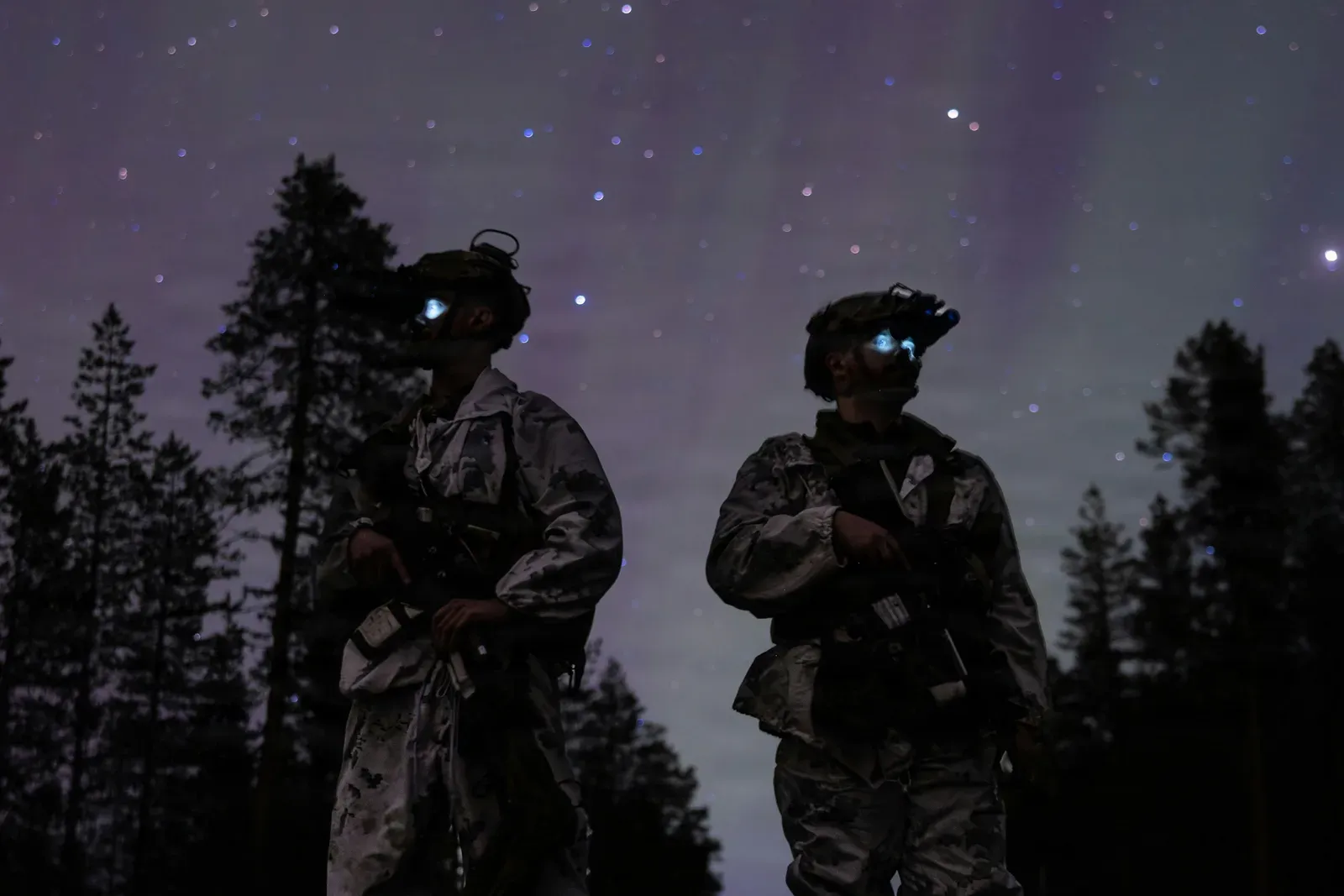
A $600 quadcopter shooting down a $50,000 Shahed-136 sounds like a meme. In Ukraine, it's now a nightly occurrence. Interceptor drones — small, fast, often fiber-optic-guided or radio-linked UAVs built to ram or detonate against incoming loitering munitions — have quietly become the most cost-effective air defense innovation of the war, and possibly of the decade.
The math is brutal for legacy doctrine. A single IRIS-T interceptor missile runs north of $400,000. A Patriot PAC-3 round clears $4 million. Ukraine's domestically produced interceptor drones — the Sting from Wild Hornets, the STM Fowler, and various Besomar-class platforms — cost between $2,000 and $8,000 apiece. When you're facing 800 Shahed and decoy drones in a single overnight barrage (as happened on 9 July 2025, per Ukrainian Air Force figures), the exchange ratio isn't a footnote. It's the whole war.
Understanding Interceptor Drones and Their Role
Interceptor drones are purpose-built unmanned aerial vehicles designed to detect, pursue, and physically defeat other aerial threats — typically loitering munitions, reconnaissance UAVs, or slow cruise missiles — through kinetic collision or onboard warhead detonation. These interceptor drones combine agile airframes (often FPV quadcopters or fixed-wing craft capable of 200–350 km/h), radio or fiber-optic guidance immune to jamming, and IR or optical seekers cued by ground-based acoustic and radar networks. Cost per unit runs one to three orders of magnitude below conventional surface-to-air missiles.
That's the featured-snippet version. The reality on the ground is messier and more interesting.
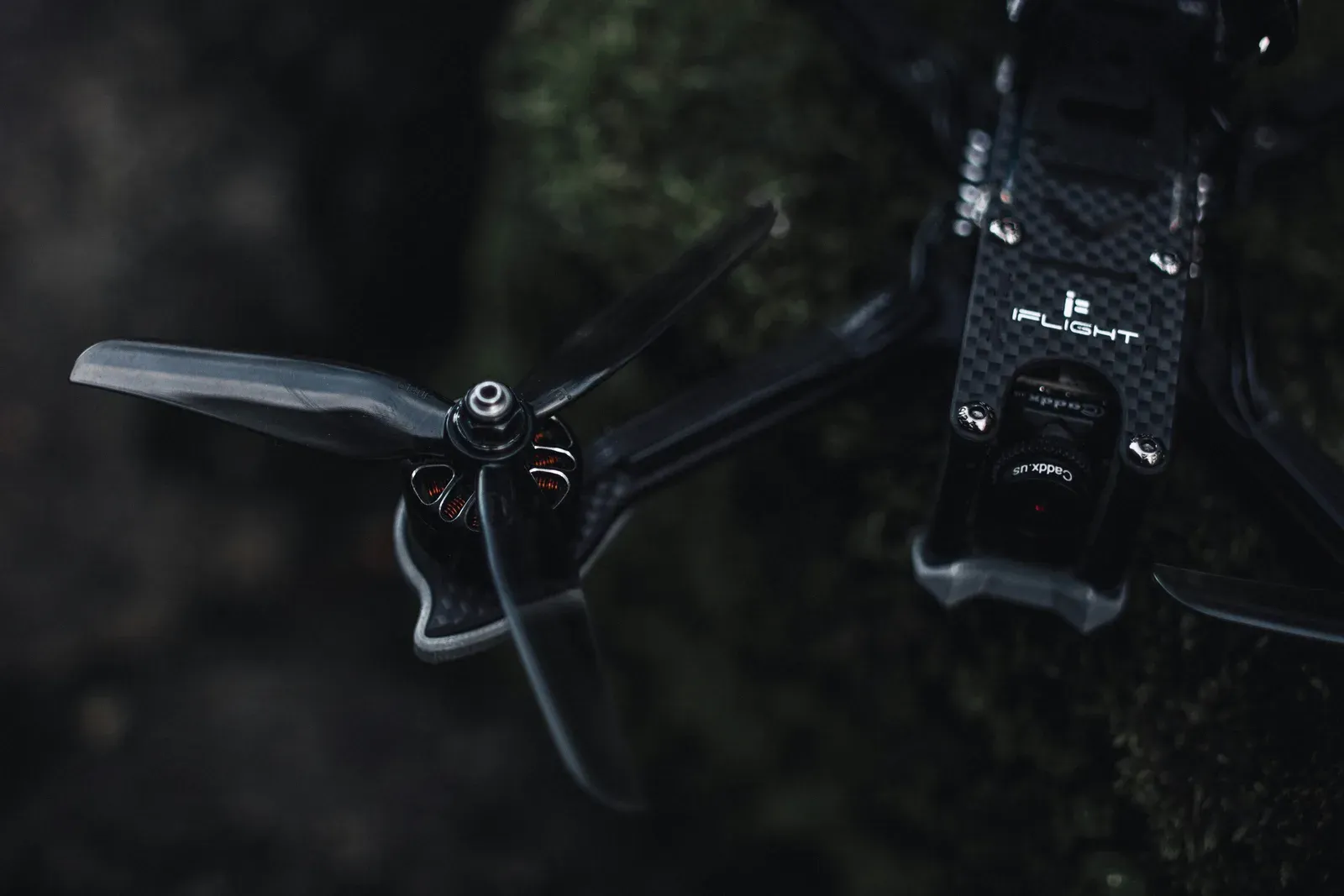
Foto: Lilian Velet
The Shahed Problem and the Scalability Crisis
Iran's Shahed-136 (Russian designation Geran-2) is a delta-wing loitering munition with a 50 kg warhead, a two-stroke engine that sounds like a moped from hell, and a unit cost estimated at $20,000–$50,000. Russia now produces its own variant at Alabuga at a claimed rate exceeding 5,000 units per month as of mid-2025. They fly low, slow (around 180 km/h), and in swarms designed to saturate.
Shoot one down with a Gepard 35mm round? Fine — that's about $6,000 in ammunition, and Ukraine only has so many Gepards. Shoot one down with an AIM-120 fired from an F-16? You just spent a million dollars on a lawnmower with wings. The West's air defense inventory was built to intercept fast, expensive, exquisite threats. It was not built for the cheap-and-numerous.
Foto: su fu
This is where interceptor drones slot in. Not as a replacement for Patriot or NASAMS, but as the bottom rung of a layered defense. The rung that was, until 2024, completely missing.
Operational Mechanics: How These Systems Function
The kill chain is elegant in principle, ugly in execution. Roughly:
- Acoustic sensor arrays (the Sky Fortress network, originally a volunteer project using cellphones on poles) detect Shahed engine signatures at 5–15 km range.
- Data fuses with mobile radar and passive RF direction-finding into a low-altitude UTM-style picture.
- A ground operator scrambles an interceptor drone — sometimes autonomous launch, sometimes hand-flown from a pickup truck.
- The interceptor climbs to 2,000–4,000 m, cued to intercept vector.
- Terminal phase: FPV operator (or increasingly, onboard optical AI) locks and rams. Some interceptor drones carry a small shaped charge; many just collide.
The Sting, built by the Wild Hornets collective, reportedly hits 315 km/h and has downed dozens of Shaheds since its combat debut in late 2024. Fiber-optic variants — yes, literally trailing a spool of glass fiber tens of kilometers long — are jam-proof by design. Awkward, brilliant, and very hard to counter without hitting the operator directly.
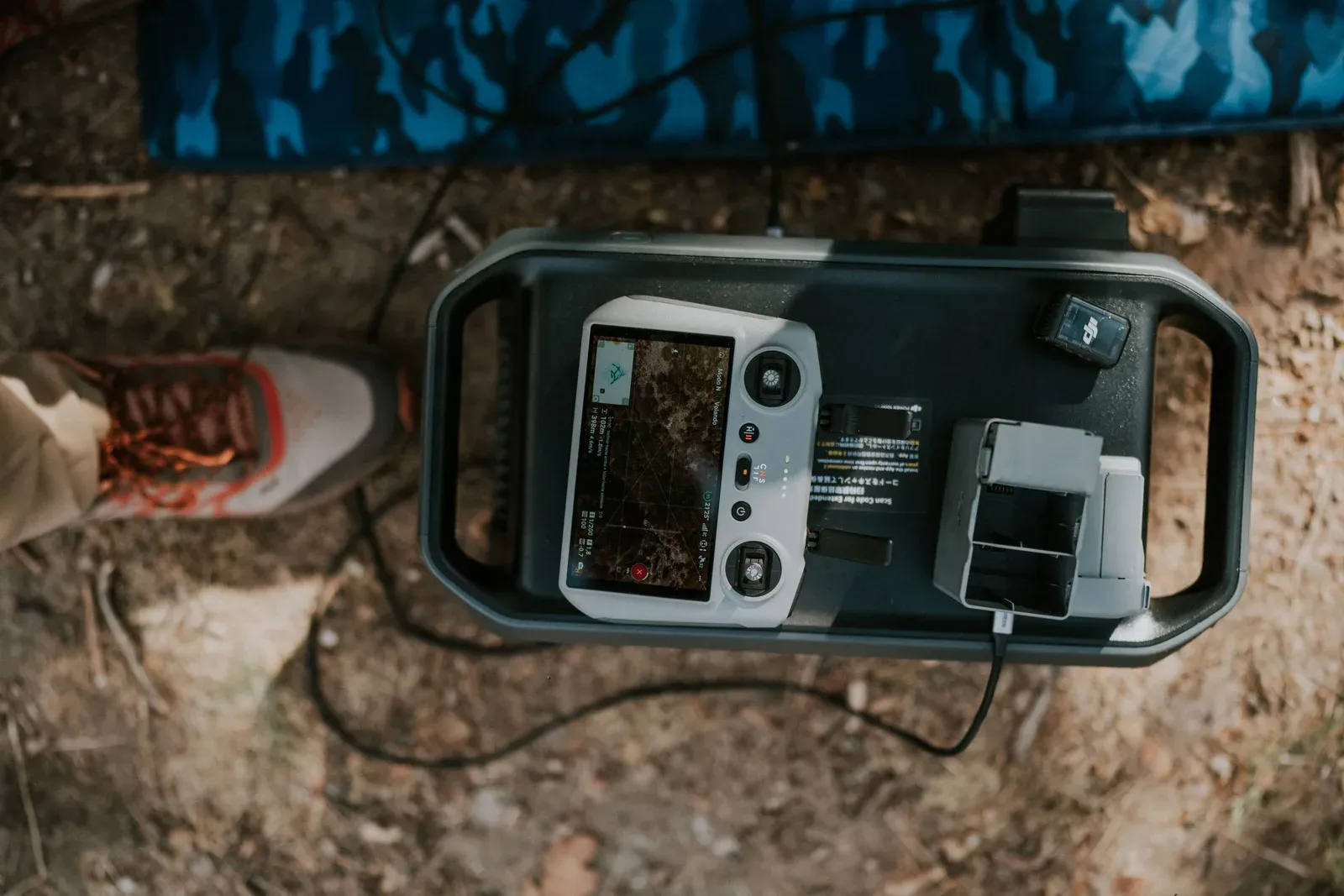
Foto: Amar Preciado
The Economic Impact and NATO Implications
Here's the number that keeps NATO planners awake. If a Shahed costs $35,000 and an interceptor drone costs $5,000 — with, say, a 60% single-shot kill probability requiring an average of 1.7 interceptors per kill — the defender spends roughly $8,500 to destroy $35,000 of attack. That's a 4:1 favorable exchange. Compare to using an IRIS-T: 1:87 unfavorable. Two orders of magnitude difference.
Frankly, this is the first time in the missile age that the defender has held the economic advantage against a mass air threat. That's not a small thing. It's a doctrinal earthquake, and most Western air forces are still processing what it means for procurement lines already committed through 2035.
Current-gen Ukrainian interceptor drones lean on three sensor stacks:
- Optical/EO with onboard NVIDIA Jetson-class compute for target lock in the terminal phase (last 500 m).
- Passive IR for engine-heat homing against Shahed's air-cooled engine — a fat signature at cruise altitude.
- RF link (2.4/5.8 GHz, or increasingly Ku-band mesh) with fiber-optic as the jam-immune fallback.
Foto: Vishnu Mohanan
The Future of Homeland Defense and C-UAS
The Pentagon's Replicator initiative, announced August 2023, promised thousands of attritable autonomous systems by August 2025. Delivery has been slower than the slide deck suggested. Meanwhile Anduril's Roadrunner-M, Raytheon's Coyote Block 2, and MBDA's SkyWarden concept are all chasing the same tactical niche for interceptor drones Ukraine already occupies with garage-built hardware.
The uncomfortable truth: a $2 million Roadrunner interceptor isn't a Shahed answer. It's a cruise-missile answer wearing interceptor clothing. The genuine Shahed-tier interceptor drone response — sub-$10k, mass-produced, integrated with cheap acoustic sensing — barely exists in NATO inventories. Poland's border incursion incident of 9–10 September 2025, when Russian drones crossed into NATO airspace and F-35s reportedly fired AIM-120s (yes, million-dollar missiles) to defeat them, made the gap embarrassingly public.
Key Takeaways for Future Doctrine
- Interceptor drones have inverted the air defense economics that held since the 1960s — for the first time, defenders can spend less than attackers per engagement.
- The Ukrainian model works because the threat set (Shahed-class) is narrow. Generalizing to cruise missiles or manned aircraft is unsolved.
- NATO procurement is chasing a $2M solution to a $30k problem. Until that mismatch is fixed, homeland C-UAS will remain reactive and expensive.
- If your organization operates infrastructure that could plausibly be targeted by a low-cost UAV — pipelines, substations, ports — the honest planning horizon for interceptor-based defense is 18–36 months, not 5–10 years. Start the conversation now.
Continue exploring the future of the drone industry
Interceptor drones are only one piece of a much broader transformation. New delivery architectures, evolving regulations, geopolitical shifts, and changing fleet strategies are reshaping the global drone market faster than ever.
If you want to better understand where commercial drone operations are heading, these articles provide valuable context:
• Zipline's Texas Push Tests Whether Fixed-Wing Delivery Beats Quadcopter Economics
Explore how Zipline, Wing, and Amazon are competing to define the next generation of drone delivery, and why operational economics may matter more than aircraft specifications.
• After the FCC Covered List: A Practical Migration Playbook for DJI-Dependent Fleets
Learn how potential FCC restrictions are forcing organizations to rethink fleet strategies, evaluate alternative platforms, and prepare for a post-DJI operating environment.