Fiber-Optic Drones: The Jam-Proof Weapon Rewriting the War in Ukraine
A technical breakdown of how 10–20 km fiber spools replaced radio in FPV attacks, making drones invisible to electronic warfare — and what that forces NATO doctrine and civilian counter-drone thinking to reconsider.
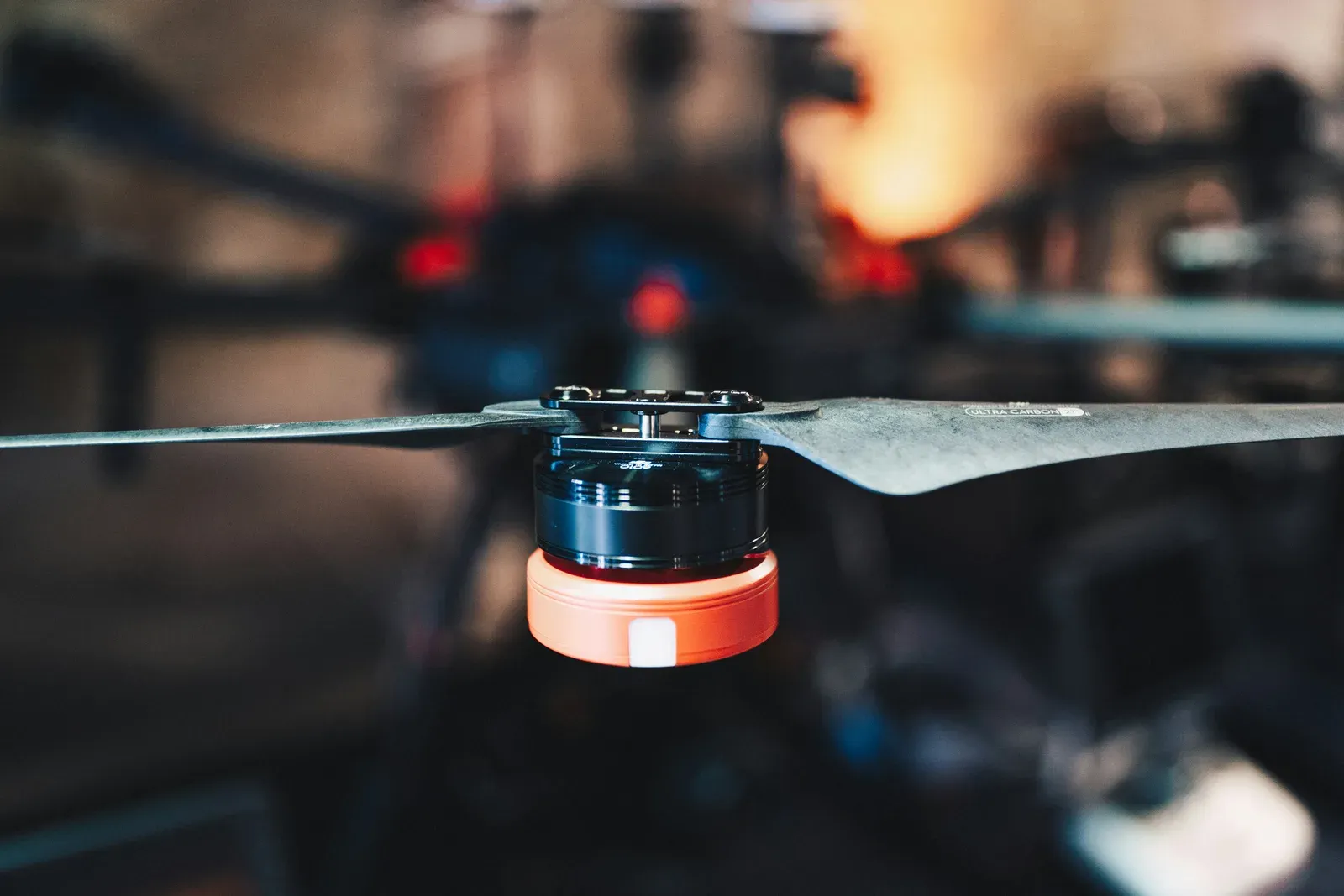
A spool the size of a condensed-milk can, 15 km of glass fiber thinner than a human hair, and a Russian FPV lands exactly where the operator wants it — inside the hangar, behind the tree, on the open hatch of a tank. No radio signal. No jammer that helps. In little more than 18 months, fiber-optic drones have become the tactical nightmare of the war in Ukraine — and the reason half of the Western counter-drone industry is, frankly, obsolete.
The first documented use at scale came in the summer of 2024, when Russian units of the 3rd Army began deploying wired FPVs in the fighting around Kursk. A year later, the Ukrainians hit back with their own systems — 2E FPV, Silkworm, and variants bolted onto commercial platforms. The escalation was fast. Brutal.
What a Fiber-Optic Drone Actually Is (and Why It Changes the Game)
A fiber-optic drone is an unmanned aerial vehicle — usually an attack FPV — tethered to the operator by a 5 to 20 km fiber-optic cable wound on an onboard spool that unspools in flight. The link carries high-definition video and control commands without emitting any radio frequency, which makes the aircraft immune to jamming, invisible to RF sensors, and unbothered by GPS spoofing.
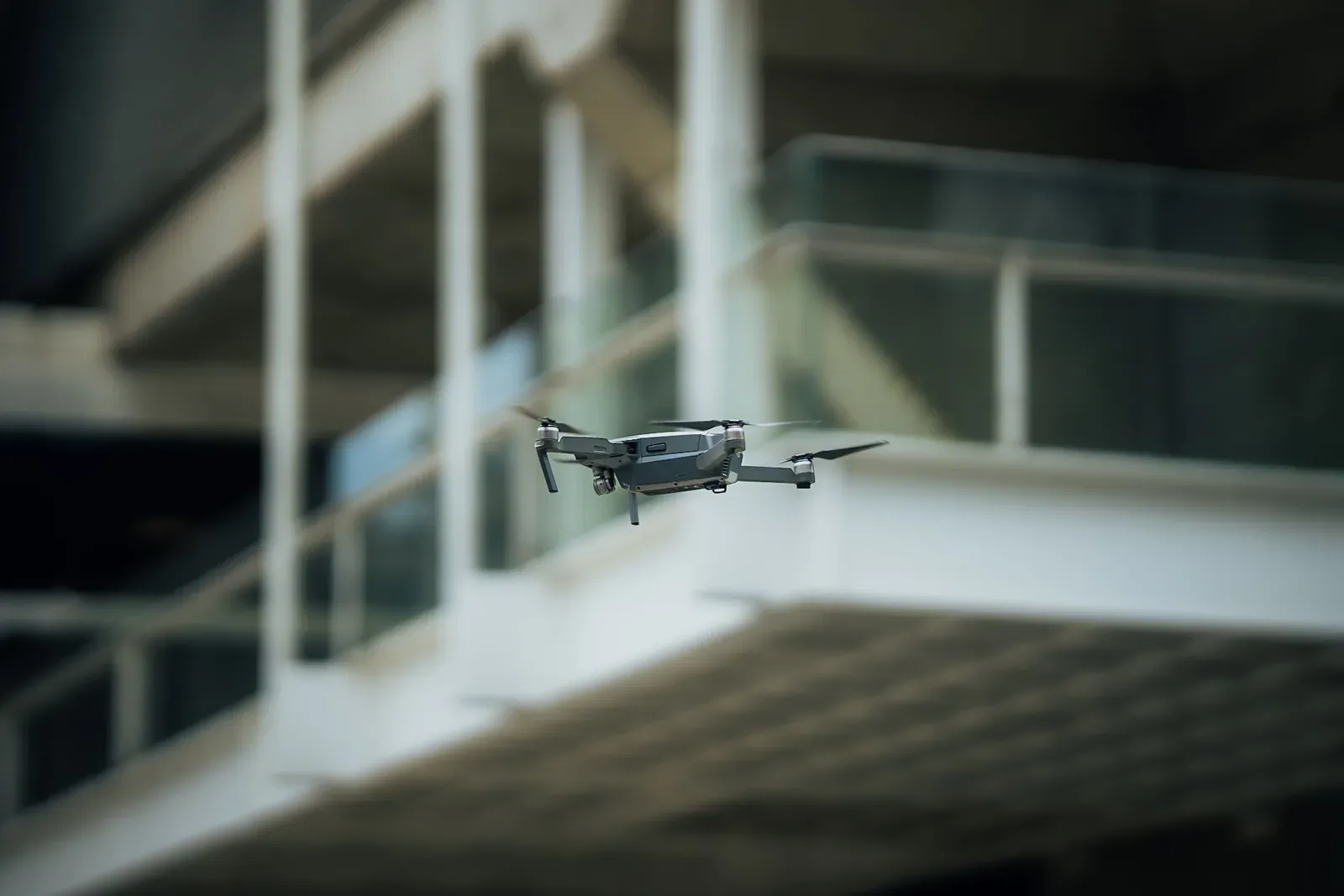
Foto: Gustavo Denuncio / Pexels
In practice, the pilot sees a clean, lag-free image even inside a concrete bunker or between buildings — scenarios where a conventional FPV loses link within seconds. And because the cable is passive, it doesn't give away the operator's position.
The Physics of the Spool: Why This Only Works Now
The concept isn't new. The TOW missile has used a guide wire since 1970. Israel's Spike NLOS, likewise. What changed is the fiber itself: modern spools use 250 μm single-mode fiber with attenuation below 0.3 dB/km at 1550 nm, allowing 20 km runs with plenty of optical margin.
The winding is the real trick. Orthocyclic winding — the same technique used in guided torpedoes — lays the fiber in concentric layers that peel off tangentially, without twist. Any knot, any side friction, and the cable snaps. Chinese manufacturers such as Yangtze Optical Fibre are now shipping ready-made spools between US$180 and US$400 apiece. Industrial scale. That's what the Russians exploited first.
- Typical operational range: 10 km (short), 15 km (standard), 20 km (long-range)
- Weight of a 10 km spool: around 1.2 kg — 15 to 20% of the FPV's total payload
- End-to-end video latency: under 20 ms, versus 60–120 ms on a 5.8 GHz link
- EW resistance: total. There's no electromagnetic vector to attack
Why Jamming and Remote ID Suddenly Became Irrelevant

Foto: Lee Dunican / Pexels
Every strand of Western C-UAS doctrine built between 2018 and 2023 — DroneShield, Dedrone, Anduril Anvil, MyDefence — rests on the assumption that the drone emits. It emits control, telemetry, video, Remote ID. Detect the RF, triangulate, jam, drop it. Beautiful on paper.
A fiber-tethered drone emits nothing. Zero. Passive RF sensors go silent, jammers turn into dead weight on the armored vehicle, and GNSS-spoof systems like the Russian Pole-21 have nothing to fool (the FPV doesn't even use GPS — the operator flies by sight). Immunity to jamming is the whole point.
What's left? Low-altitude radar, acoustic sensors, and optical/EO-IR detection. All expensive, all with high false-positive rates, all with limited coverage. The uncomfortable truth is that NATO spent a decade optimizing for the wrong vector.

Foto: Amar Preciado / Pexels
Limits — Because Fiber Isn't a Silver Bullet
This is where the enthusiasm has to stop. The cable comes with real constraints that rarely show up in the viral Telegram clips.
First: maneuverability. A tethered FPV can't cut a tight turn around dense obstacles — trees, poles, and high-voltage lines slice the fiber. Second: speed. Above 100 km/h, drag on the unspooling cable sharply increases the risk of a break. Third: single use. The spool isn't recoverable, and the cable ends up draped across the landscape (an environmental problem nobody is talking about, incidentally).
Then there's cost. A conventional radio-controlled FPV runs somewhere between US$400 and US$600. The version fitted with a 10 km fiber spool sits between US$1,200 and US$1,800 — roughly three times more.
So for area-saturation missions, radio FPVs remain the cheaper, more scalable option. But when the target is specific — an armored vehicle wrapped in EW protection, or something sitting behind the front line — the fiber-optic drone has almost no competition.

Foto: Alfo Medeiros / Pexels
What NATO and the Civilian Market Need to Rethink
The US Army tested the first American wired FPV — Red Cat Holdings' TEW — at Fort Moore in October 2024. The Bundeswehr fast-tracked procurement through Helsing and Quantum Systems. The UK folded specific countermeasures into Project Corvus. But the doctrinal response is still crawling compared to the proliferation on the battlefield.
On the civilian side — and here's an opinion that may sting — the entire regulatory model built around Remote ID (FAA Part 89, EASA U-Space, and whatever ANAC/DECEA eventually publish in Brazil) becomes a dead letter against a bad actor with a fiber FPV. Airports, prisons, critical infrastructure: all vulnerable to a US$1,500 drone that shows up on no RF sensor on the market.
Countermeasure Vectors That Still Work
- Low-altitude Ku/X-band radar with micro-Doppler processing (Echodyne, Robin Radar)
- Multi-array acoustic sensors with AI classification (Squarehead, Sensofusion)
- EO/IR with automatic detection — expensive, but the only fully passive vector that actually works
- Kinetic interception: hunter drones like the Anduril Roadrunner-M, or hard-kill net concepts
- Detecting the cable itself — early-stage LiDAR research aimed at spotting suspended fiber
And Where Does Brazil Sit in All This?
The Brazilian Army, through the Army Technology Center (CTEx), has been tracking Ukrainian doctrine since 2023 — there are records of joint instruction at Yavoriv before those routes were closed. Avibras and Akaer have the capacity to replicate the platform. Fiber spool? Furukawa has been producing single-mode fiber in Curitiba for 30 years. The supply chain exists.
What's missing is a decision. And, being honest, a military procurement culture that can actually buy a US$1,500 item without spending three years on paperwork. Meanwhile, organized crime in Rio and São Paulo is already using modified DJI Mavics to smuggle contraband into prisons. Migrating to fiber is a matter of time — months, not years.
Final Thoughts
- Fiber-optic drones aren't experimental tech — they're mass production, with tens of thousands deployed per month across the Ukrainian theater in 2025
- Any C-UAS architecture built on RF detection needs to be reassessed; the emissive vector is gone
- Investment should shift toward EO/IR, low-altitude radar, and kinetic interception — in that order of cost-benefit
- Civilian regulators (ANAC, FAA, EASA) who bet everything on Remote ID have a structural problem on their desks and haven't yet acknowledged the threat
- The lesson from Ukraine, at bottom, is always the same: disruptive innovation doesn't come from the Pentagon's US$800 billion budget. It comes from two engineers in a Kharkiv workshop buying Chinese spools on AliExpress. Anyone who isn't looking at this now will show up late. As usual.