Autonomous Drone Swarms in Ukraine: How AI Is Rewriting the Combat-Drone Playbook
Ukraine's shift from human-piloted FPVs to AI-guided drone swarms with terminal guidance marks a technical inflection point — and a regulatory crisis for lethal autonomous systems.
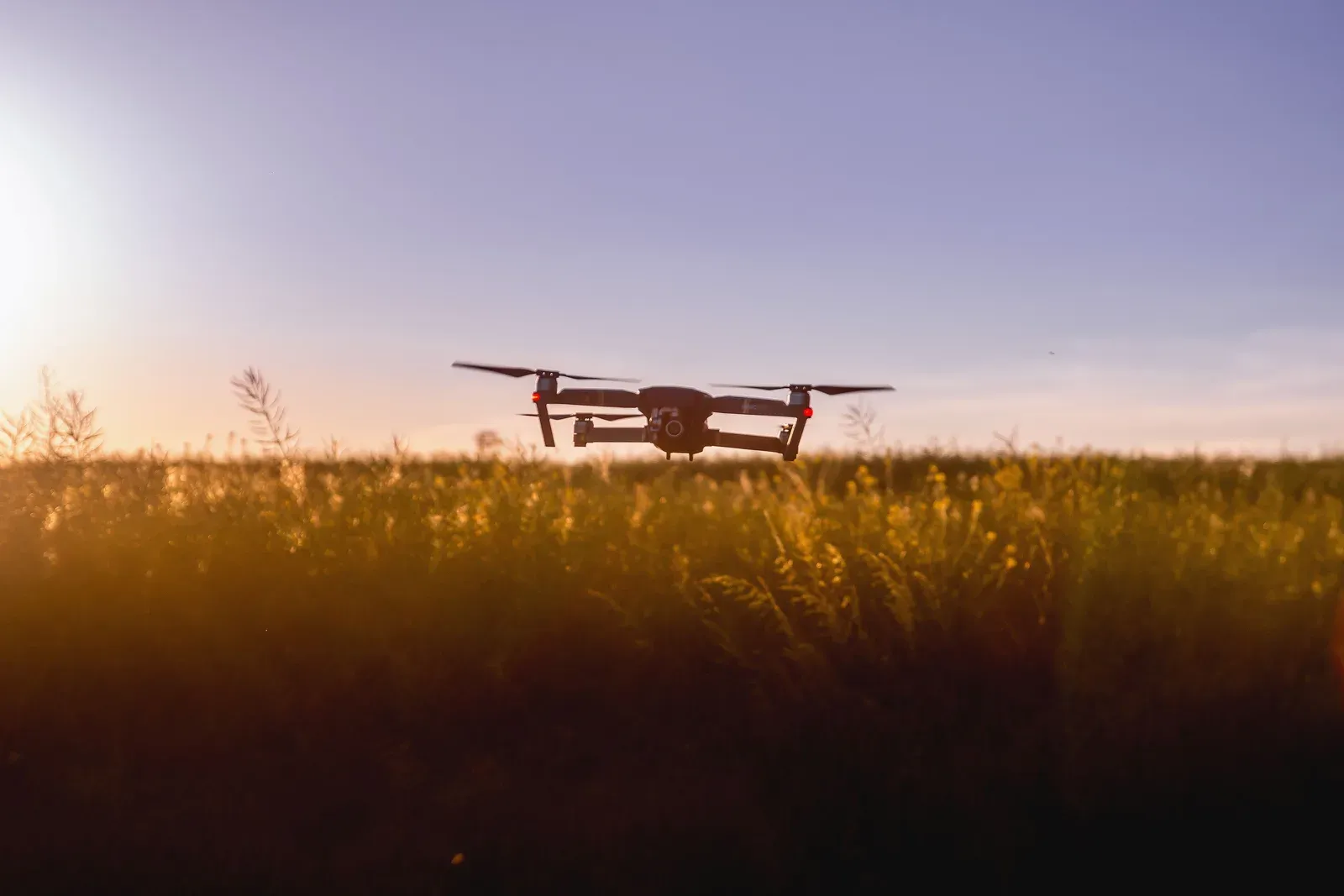
A drone swarm is a group of unmanned aircraft operating in coordination to carry out a shared mission, exchanging sensor data and trajectory decisions in flight. When that coordination includes onboard AI capable of identifying and engaging targets in the final seconds with no human input — what engineers call terminal guidance — the system crosses the line between a teleoperated weapon and a lethal autonomous weapons system (LAWS).
In Ukrainian practice, that means three stacked layers: vision-based navigation (hardened against GPS jamming via Starlink or Russian GNSS spoofing), target recognition through an embedded neural network — typically running on chips like the NVIDIA Jetson Orin Nano or cheaper Rockchip variants — and a mesh radio link between units in the group. The human pilot becomes a supervisor. Points at the area. Confirms the target class. Releases.
From piloted FPV to Saker Scout: the technical arc
Until mid-2023, the Ukrainian kamikaze FPV was essentially a racing quadcopter with a kilogram of explosive strapped to it and a human operator wearing analog 5.8 GHz goggles. Cheap ($400–600), effective, and absurdly vulnerable to electronic warfare. When Russia scaled up systems like the Shipovnik-Aero and the R-330Zh Zhitel, the success rate of these FPVs collapsed from roughly 70% to somewhere between 30% and 40%, according to figures cited by Ukraine's own Ministry of Digital Transformation in 2024.
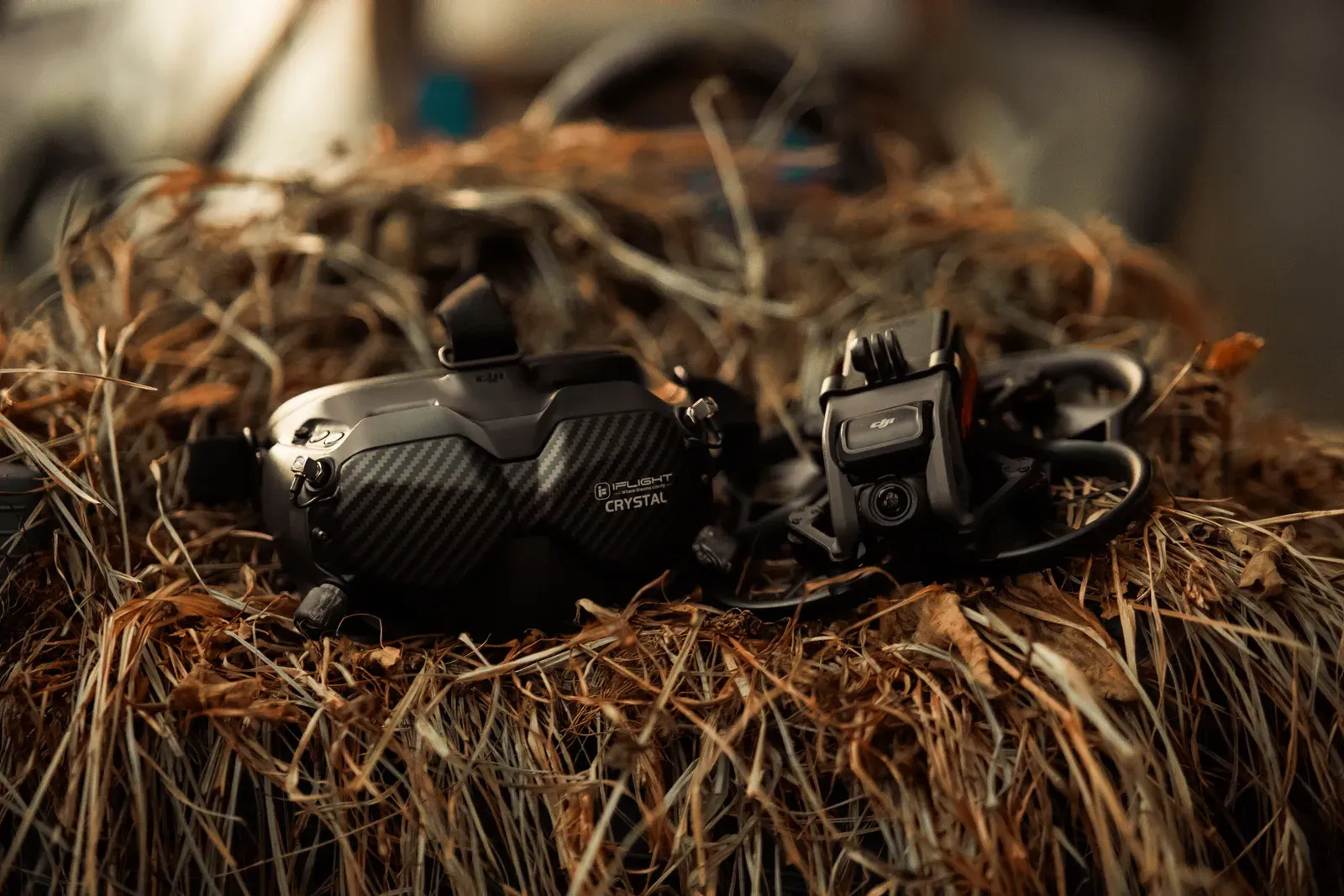
The answer was technical, not tactical. Enter the Saker Scout — unveiled publicly in October 2023 as the first Ukrainian drone with autonomous target recognition cleared for combat use. Then came variants of UAC's Backfire, AI-powered V-BAT FPVs, and a constellation of smaller local makers (Vyriy, TAF Drones, Skyeton) pushing the same principle: if the link drops, the drone finishes the job on its own.
Why a swarm beats a single autonomous drone
One autonomous FPV can be shot down. Four, six, twelve of them, on uncorrelated trajectories converging at the same instant, saturate the defender. It's 1980s anti-ship missile doctrine, ported over to 3D-printed plastic and a Raspberry Pi.
- Short-range air defense (SHORAD) saturation — Pantsir and Tor-M2 have limited engagement rates.
- Redundancy: losing 3 of 8 units still completes the mission.
- Role division — some drones handle ISR, others carry the warhead, one acts as a radio relay.
- Asymmetric cost: an 8-FPV swarm runs about $5,000 and destroys a $3 million vehicle.
The regulatory gap: LAWS, CCW, and Geneva's paralysis
This is where the conversation gets uncomfortable. Since 2014, the Group of Governmental Experts (GGE) under the UN Convention on Certain Conventional Weapons (CCW) has been debating lethal autonomous weapons in Geneva. Eleven years on, there is no treaty. None. The last substantive meeting, in March 2024, ended in the same deadlock: Russia, the US, India, and Israel block any binding instrument; Austria, Brazil, and the Non-Aligned Movement bloc push for a preemptive ban.
And Ukraine, caught in the middle? It operates systems that, by the ICRC's 2021 definition, meet the criteria for LAWS — selecting and engaging targets without meaningful human intervention in the specific act. Kyiv argues that human oversight exists in the wider loop (the operator picked the zone, the target category, authorized the flight). It's a defensible reading. It's also convenient.
My read: the treaty that didn't happen in 2024 won't happen in 2026 or 2028 either. The war has manufactured facts on the ground that diplomacy is now trying to describe in hindsight. When the next conflict kicks off — Taiwan, the Caucasus, the Sahel — the Ukrainian pattern will be the baseline, not the exception.
What civil industry needs to watch

For anyone operating drones commercially in the US under FAA Part 107, or in Europe under EASA's Specific category, three developments deserve attention over the next 18 months.
- Export controls on inference chips. The US Bureau of Industry and Security (BIS) already signaled, in a July 2025 note, that Jetson modules above a certain TOPS threshold may land on the restricted dual-use list. That hits anyone building LiDAR or photogrammetry payloads with onboard AI.
- Remote ID and UTM. The push for mandatory traceability — Remote ID in the US since 2023, European U-space scaling up in 2026 — was born from fear of civil drones, but takes on new urgency given the military precedent. Expect tougher enforcement.
- Autonomous software certification. The rollout of SORA 2.5 and other European regulatory efforts is intensifying the debate around how to demonstrate safety in increasingly automated operations. The challenge is turning embedded AI into components whose behavior can be tested, documented, and audited within a known-risk operation.
The ethical question nobody in the industry wants to answer out loud
Civil drone manufacturers — DJI, Autel, Skydio, Parrot, and the newer Brazilian wave like XMobots and Speedbird — develop, for legitimate inspection and agriculture use, exactly the technical building blocks that make up an armed swarm: sensor fusion, computer vision, formation flight, fault tolerance. The tech transfer isn't hypothetical. It's already happened.
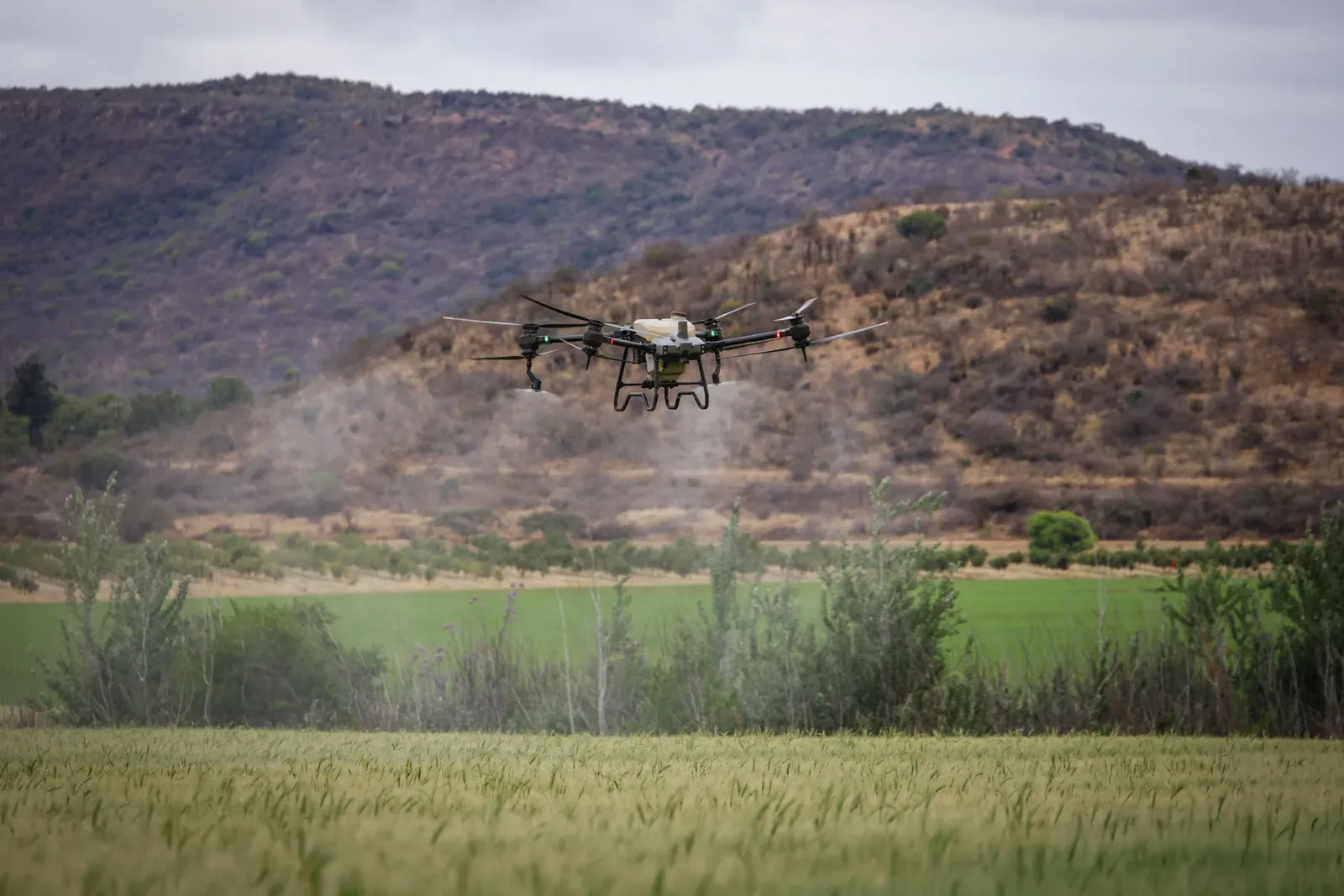
The uncomfortable truth is that the line between agricultural sprayer drone with autonomous waypoints and loitering munition with target recognition is, from a firmware perspective, embarrassingly thin. Swapping the pesticide tank for a shaped charge is mechanical engineering, not rocket science.
Final thoughts
The AI drone swarms observed in Ukraine in 2025 are, technically, semi-autonomous groups with terminal guidance — not true emergent swarms. The distinction matters to lawyers and engineers.
Russian electronic warfare forced the move to autonomy. It wasn't a doctrinal choice; it was technical survival.
The CCW process in Geneva is stuck. Civil operators should brace for reactive, uneven national regulation, not a global treaty.
Anyone working with embedded AI in commercial drones needs to understand that their tech stack is a few lines of code away from being dual-use. Internal governance matters. Document your design decisions now.
What to watch in 2026: the first truly coordinated swarm — with distributed consensus and no supervising operator in the loop — will likely debut in combat before any international legal framework exists. Whoever writes the rules after the fact writes weak rules. And the civil sector will pay part of the bill.