Autonomous Drone Swarms in Ukraine: What the War Teaches Us About AI in Civil Drones
The AI-driven swarm tactics being battle-tested in Ukraine have direct consequences for civilian UTM, counter-drone defense at critical infrastructure, and the auditable-autonomy standards that shared airspace will soon demand.

In October 2024, a video from Ukraine's 414th Battalion — the so-called "Magyar's Birds" — showed four FPVs coordinating an attack on a single armored target, dividing sectors in real time. This wasn't a lab demo. It was the field: active jamming, degraded radio range, decisions partially delegated onboard. Scenes like that are what fuel the serious — and frequently mistranslated — conversation about autonomous drone swarms in civil aviation.
The useful question isn't whether we'll see swarms flying over refineries, substations, and cities. We will. The question is what Ukraine is teaching us, for free and in real time, about auditable autonomy, UTM under electromagnetic stress, and defense against coordinated threats. A lot. And some of it contradicts the current marketing pitch.
What Drone Swarms Actually Are, Operationally
A drone swarm is a group of three or more unmanned aircraft that share perception and decision-making through machine-to-machine communication, executing a common mission with dynamic task allocation and without each unit relying on a dedicated human pilot. That's different from multi-drone operations, where each aircraft has its own operator, and different from pre-programmed light shows, which are choreography — not adaptive cooperation.
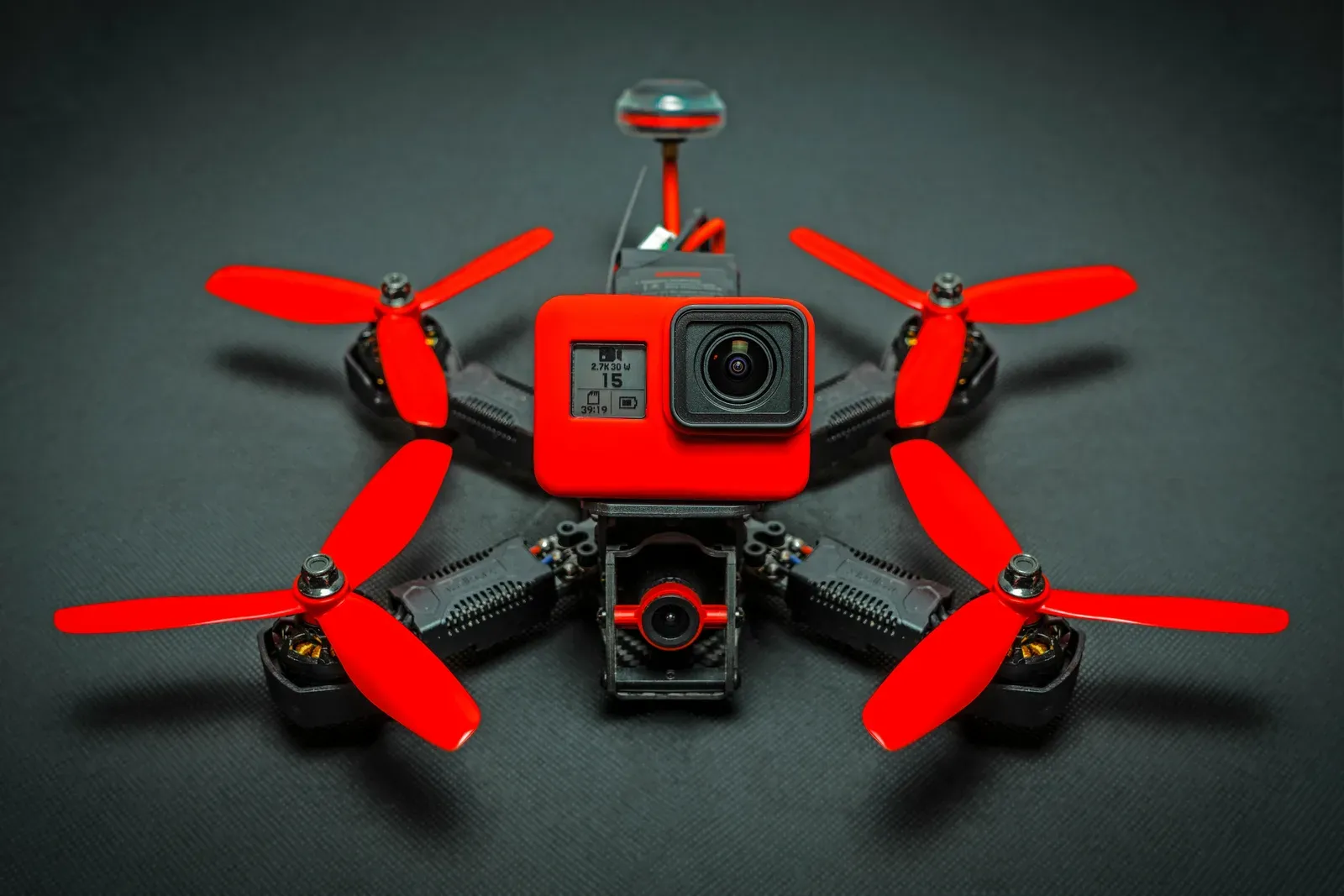
In practice, three technical capabilities separate a real swarm from a slickly produced tech demo: distributed consensus, reliable GNSS-denied navigation, and tolerance to link loss. Distributed consensus decides who takes over a task when a node fails. Navigation can lean on visual-inertial odometry, SLAM, and terrain-based methods. And link-loss tolerance keeps the mission going even when comms degrade.
The Unintentional Lab: What the War Proved About Onboard AI
Since 2023, systems like Ukraine's Saker Scout have used neural-network target recognition running on edge computing, keeping part of the mission alive even when the video link drops. Germany's Helsing has pushed terminal autonomy forward, while Anduril and Shield AI have demonstrated coordination across multiple aircraft in GNSS-degraded or GNSS-denied environments.
The technical takeaway for the civil world is blunt:
- Computer-vision models running on edge devices can slash the cost floor for industrial inspection.
- Radio mesh networks let multiple nodes stay connected even under partial connectivity losses.
- Image- and map-based navigation techniques enable flight without exclusive dependence on GNSS.
- Human-on-the-loop autonomy already has operational applications in defense, but the civil market still lacks the regulatory vocabulary to describe it clearly.
For the civil sector, the bigger point is that autonomous drone swarms are no longer a distant hypothesis. Onboard AI, aircraft-to-aircraft comms, and autonomous navigation have all matured enough to shorten the gap between demo and commercial deployment.

UTM Implications: The Current Model Can't Handle Swarms
The Unmanned Traffic Management framework designed by the FAA (LAANC), by EASA (U-space, regulation 2021/664), and Brazil's SARPAS-NG draft all rest on a silent premise: one aircraft, one operator, one flight plan. A swarm breaks all three axes at once.
When 20 drones split an inspection mission over a refinery and reallocate segments among themselves every 400ms, what exactly enters strategic deconfliction? The nominal route? The aggregate envelope? And if one node fails and another takes over its sector, crossing another operation's corridor — is that tactical replanning, or a new submission?
Three concrete gaps regulators need to address before 2027:
- Remote ID for swarms — one ID per unit creates useless spectrum noise; a single mission ID loses forensic granularity. The hybrid solution (group ID + per-unit query on demand) isn't in any current standard.
- Dynamic contingency envelope. Static geofencing doesn't represent the system's actual behavior.
- Auditable decision logs. If the onboard AI decided to divert 80m to the left because it "thought" it saw a worker on the platform, that decision has to be recoverable — a black box, but for inference.
Counter-Drone at Critical Infrastructure: The Problem Just Changed Shape
Before 2022, C-UAS at hydroelectric plants, ports, and refineries was designed against a lone DJI Mavic flown by a curious civilian or an industrial spy. RF detection, directional jamming, done. Russia's Shahed-136 swarm attacks — dozens simultaneously, on different trajectories, some acting as decoys — showed that doctrine aged overnight.
In Brazil, assets like the Itaipu hydroelectric complex, the Ponta da Madeira terminal, and the Camaçari petrochemical hub operate C-UAS perimeters based mostly on passive RF detection and human alerting. Against a heterogeneous swarm (fiber-optic tethered + radio + silent autonomous), that stack detects half and neutralizes a third. Being generous.
What Ukraine pushed to the defensive state of the art:

- Sensor fusion (Ku-band radar + acoustic + EO/IR) with classification running at the edge, cutting detection-to-decision time from 40s to under 8s.
- Low-cost kinetic interceptors — Fortem's DroneHunter F700 and net-launch solutions have demonstrated cost-per-interception below US$15k, viable for civil operators.
- High-power microwave (Epirus Leonidas) capable of taking down multiple targets per pulse. Still expensive, but the cost curve is bending.
Brazil's Blind Spot
C-UAS regulation in Brazil is essentially nonexistent for private operators. Jamming is an exclusive state prerogative (Law 9.472/97, Anatel). A utility that detects a hostile swarm over its substation today can, legally, call the Federal Police and pray. That has to change — and it'll change before the first serious incident, not after.
Auditable Autonomy: The Standard Nobody Wants to Write, But Everyone Will Need
Here's the uncomfortable question. When Enel's inspection swarm, covering 340km of transmission line in rural Minas Gerais, autonomously reprograms priorities because it spotted a thermal anomaly on a tower, who answers if it collides with a non-cooperative ultralight? The remote pilot who approved the mission? The vision-model vendor? The integrator?
EASA published its Concept Paper on AI (Issue 02) in 2023, defining autonomy levels 1A/1B/2/3 with escalating explainability requirements. It's the most serious sketch out there. The FAA, through ASTM F38, moves slower. In Brazil, silence.
What a defensible civil standard needs to contain, as I read it:
- Immutable logging (chained hash) of onboard AI decisions — minimum 30-day retention.
- Per-mission autonomy envelope with mandatory human reversion under specified conditions (loss of two nodes, entry into controlled airspace, detection of cooperative traffic within X meters).
- Joint integrator-operator liability model with compulsory insurance proportional to the autonomy level. Painful to write. More painful to pay for. And the only workable path.
- Mandatory adversarial testing (GNSS spoofing, meaconing, visual degradation) before certification.
Civil Use Cases Already Benefiting — And Those Coming Next
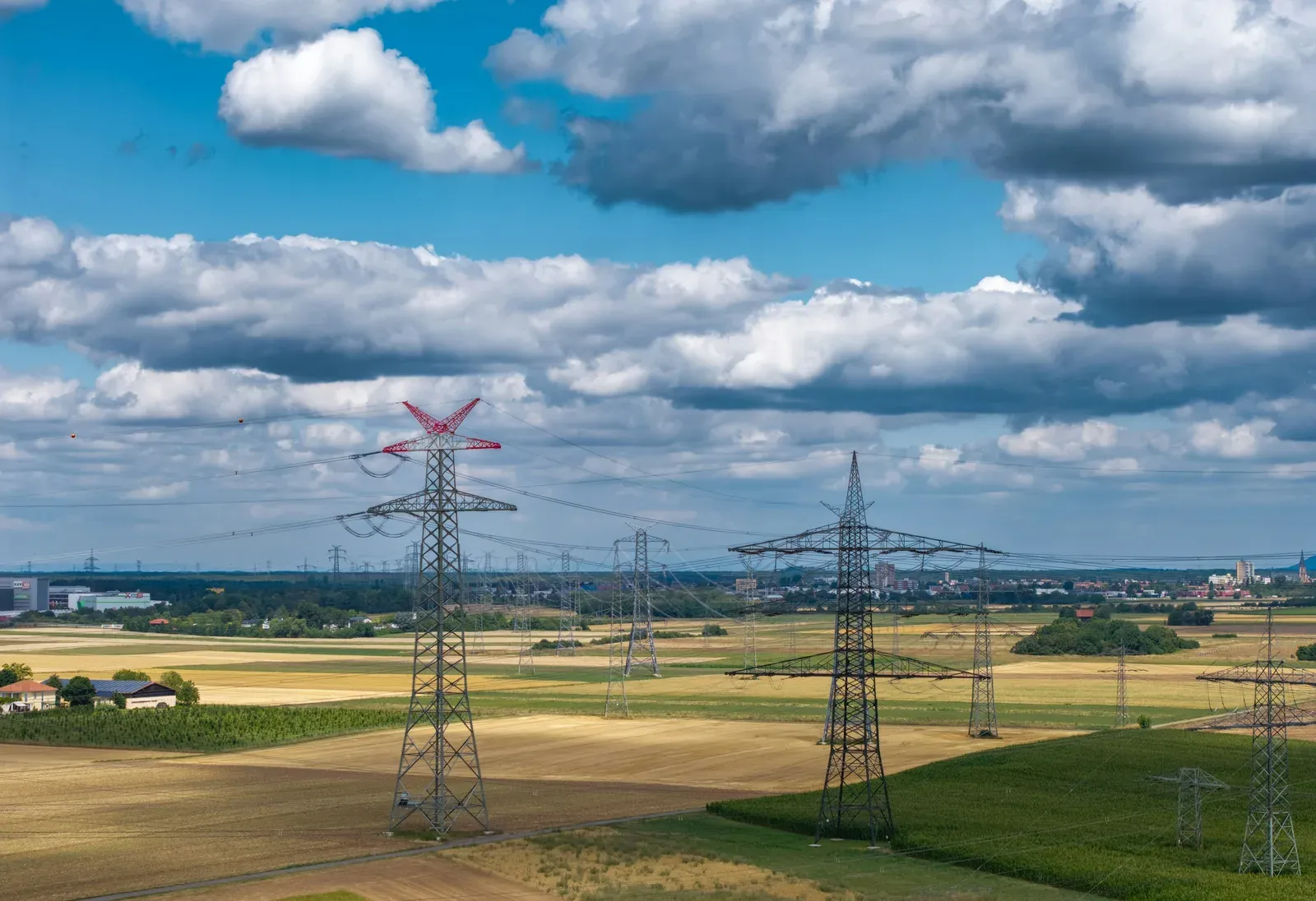
Not everything is a threat. The same technology enables real gains. Percepto has been running small swarms (3-5 units) for continuous inspection at industrial plants in the US and Israel since 2022. Skydio, with the X10, already delivers impressive obstacle-avoidance autonomy — Duke Energy has more than 400 units in the field for substation inspection.
Brazilian scenarios ripe for the next 24-36 months:
- Coordinated emergency response — fire departments in São Paulo and Rio testing swarms of 4-6 drones for landslide-area search (the 2022 Petrópolis operation would have benefited).
- Deforestation monitoring with hybrid fixed-wing + multirotor swarms, covering 8x more area per flight-hour than a single-drone mission.
- Integrated port inspection — Santos and Suape have already modeled it; UTM just needs to catch up.
- Precision agriculture in Mato Grosso soybean fields, with coordinated spraying swarms. XAG and DJI Agras are already piloting this in China; in Brazil, the bottleneck is aerial pesticide regulation, not the technology.
Final Thoughts
Looking at autonomous drone swarms in Ukraine, the temptation is to sort everything into neat boxes: that's war, this is civil, everyone stays in their lane. It won't work. The same companies (Anduril, Shield AI, Quantum Systems, Tekever) serve both markets, the same engineers migrate, the same perception models get recycled. Porosity is the rule.
Three editorial bets for the next 24 months:
- Brazil's ANAC will have to publish specific guidance for multi-aircraft operations with cooperative autonomy by 2026. If it doesn't, the market operates in a gray zone and someone crashes.
- C-UAS will stop being a defense-only topic and become a mandatory capex line for critical-infrastructure operators formally listed as such.
- Auditable autonomy becomes the new "GDPR of drones" — it'll arrive late, poorly explained, and whoever gets ahead of it gains real competitive advantage.
What to watch now: the first Brazilian civil-swarm pilots in controlled environments (conversations are underway at ITA and CPQD), and the next revision of Europe's U-space, which will likely be the regulatory template copied here. As it always has been. For better and for worse.