Brazil's Army Buys Chinese Drones While the West Bans DJI: The Sovereignty Paradox
As Washington and Brussels tighten the screws on DJI, Brazil's Armed Forces are quietly deploying Mavic 3 and Matrice 300 platforms across the Amazon. The contradiction says more about industrial reality than political will.
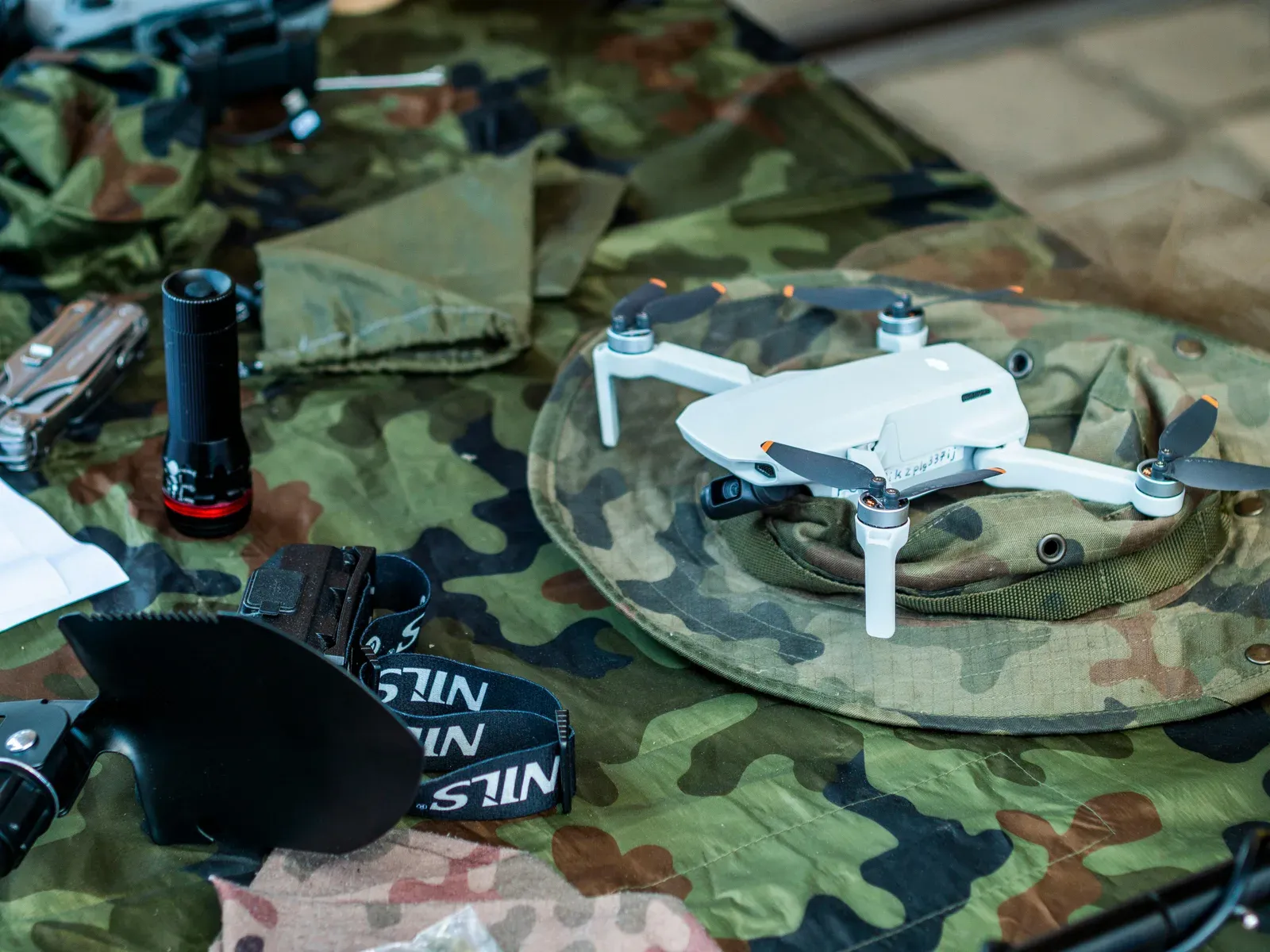
In June 2024, the Pentagon added DJI to its list of companies with suspected ties to the Chinese military. A few months later, the Brazilian Army quietly bought Matrice 300 RTK and Mavic 3 Enterprise units for intelligence, surveillance and reconnaissance missions deep in the Amazon. The contradiction looks obvious — but it points to something deeper: industrial limits, tight budgets and technological dependence on a market China has already locked down.
The conversation around Brazilian military drones is no longer purely technical. It now touches sovereignty, cybersecurity, supply chains and operational capability in strategically sensitive border regions.
What Counts as a Military Drone in Brazil
In the Brazilian context, a military drone is any Remotely Piloted Aircraft System used by the Armed Forces for:
- intelligence
- surveillance
- reconnaissance
- logistics
- electronic warfare
- target designation

The segment ranges from nano drones carried by infantry platoons up to MALE platforms like the Hermes 900, operated by the Brazilian Air Force since 2011. Yet in the light tactical tier, the field is dominated by Chinese hardware — overwhelmingly from DJI.
What the Brazilian Army Is Actually Buying
Over the past few years, procurement notices from the Amazon Military Command and various border units have openly included DJI models for real-world operations.
The most-used platforms include:
- Matrice 300 RTK
- Matrice 350 RTK
- Mavic 3 Thermal
- Mavic 3 Enterprise
They all bring the same package: thermal imaging, integrated RTK, 40+ minutes of flight time, simple operation and — crucially — a price that no domestic competitor can match. Few Brazilian manufacturers play seriously in the small tactical quadcopter space.

Why Brazil's Military Still Depends on DJI
The main reason is economic. A Brazilian-made equivalent — with thermal sensors and stabilized gimbals — can cost several times what DJI charges. Add to that the limited production capacity of domestic OEMs.
Companies such as:
- XMobots
- Santos Lab
- Stella Tecnologia
- Akaer
- AEL Sistemas
have strong engineering portfolios, but industrial scale is another story. Equipping hundreds of military units quickly with Brazilian-built platforms simply isn't financially viable today.
Why the US and Europe Are Restricting DJI
The restrictions coming out of Washington and parts of Europe rest on a mix of technical and geopolitical arguments. The central one is China's 2017 National Intelligence Law, which obliges Chinese firms to cooperate with state intelligence bodies when asked.
That triggered concerns around:
- telemetry
- data collection
- transmission of sensitive information
- remote system access
The Countering CCP Drones Act, passed by the US House in 2024, accelerated the trend. Across Europe, several countries have started limiting DJI use in critical infrastructure, military contracts and sensitive government operations. None of this happens in a vacuum — it shapes how Brazil thinks about its own fleet.
The Supply Chain Problem Nobody Talks About
Here's a detail that often gets skipped. Even drone makers labeled "Western" depend on Chinese components. Brushless motors, CMOS sensors, ESCs and a long list of electronic modules still ship from Shenzhen and other Chinese industrial hubs.
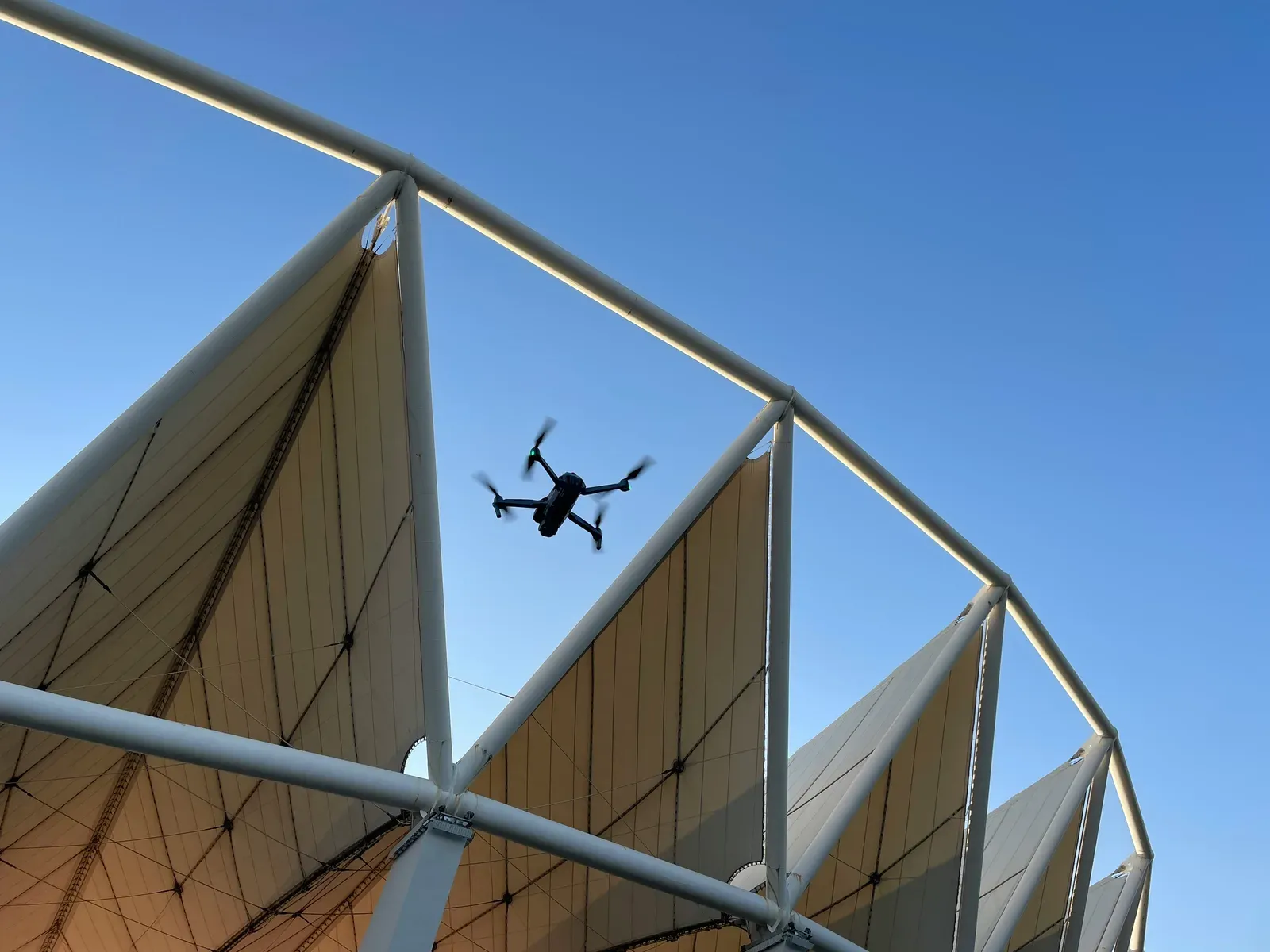
Banning DJI doesn't end Chinese dependence. It just moves it one layer down the bill of materials. For Brazil, that makes any short-term push for full technological independence essentially fiction.
The Sovereignty Dilemma
Sovereignty rhetoric tends to crash into practical limits. To replace Chinese platforms quickly, Brazil would need to:
- expand industrial capacity
- guarantee state orders
- create permanent funding programs
- speed up certification
- build a national supply chain
Without that, the dependence on foreign solutions for short-range tactical operations isn't going anywhere. The problem isn't really about technology. It's industrial.

What It Would Take to Cut the Dependence
Industry analysts point to a handful of priority moves.
Mandatory firmware auditing
Platforms used in critical missions should run only with nationalized telemetry and auditable firmware.
A national incentive program
Something modeled on the American Blue sUAS program could give Brazilian manufacturers the demand signal they need.
Operational separation
Chinese drones could be confined to:
- training
- non-sensitive operations
- low-risk logistics
Meanwhile, auditable platforms would take priority in border ISR, special operations and counterterrorism.
What to Watch Over the Next Few Years
Three moves will define where this goes.
1. The Army's SARP program
New Class 1 and Class 2 requirements are expected to be defined by 2026.
2. Expansion of the domestic industry
Brazilian companies are pushing to grow production volumes and operational capacity.
3. Telemetry regulation
Anatel, the national telecom regulator, may tighten rules around data sent to foreign servers.
Together, these factors will set the ceiling for Brazil's military tech independence over the coming years.
Can Brazil Reach Real Technological Autonomy?
Right now, the country sits in a hybrid zone. There's competent engineering, real technical knowledge and growing demand. But heavy reliance on foreign platforms for large-scale tactical operations remains the norm.
The US and Europe can afford to restrict Chinese manufacturers because they have mature industrial alternatives. Brazil doesn't — at least not yet. Air sovereignty won't be solved with political speeches. It depends on:
- investment
- scale
- production
- long-term industrial strategy
Final Thoughts
The rise of Brazilian military drones tells a complicated story. The Armed Forces have to juggle:
- operational cost
- technological capability
- cybersecurity
- industrial independence
For now, DJI still offers the best balance of price, availability and performance in the light tactical segment. At the same time, international pressure around telemetry and data control keeps building.
In the coming years, the real question for Brazil won't be whether to restrict Chinese drones. It will be whether the country can build enough industrial muscle to replace them — without crippling what the Armed Forces can actually do in the field.