Airport Drone Incursions Push Europe's Civilian C-UAS Market Into Overdrive
A technical and commercial breakdown of the late-2025 drone incursions at Nordic and British airports, and which counter-drone architectures — RF, radar, EO/IR, acoustic — actually hold up in civilian airspace.
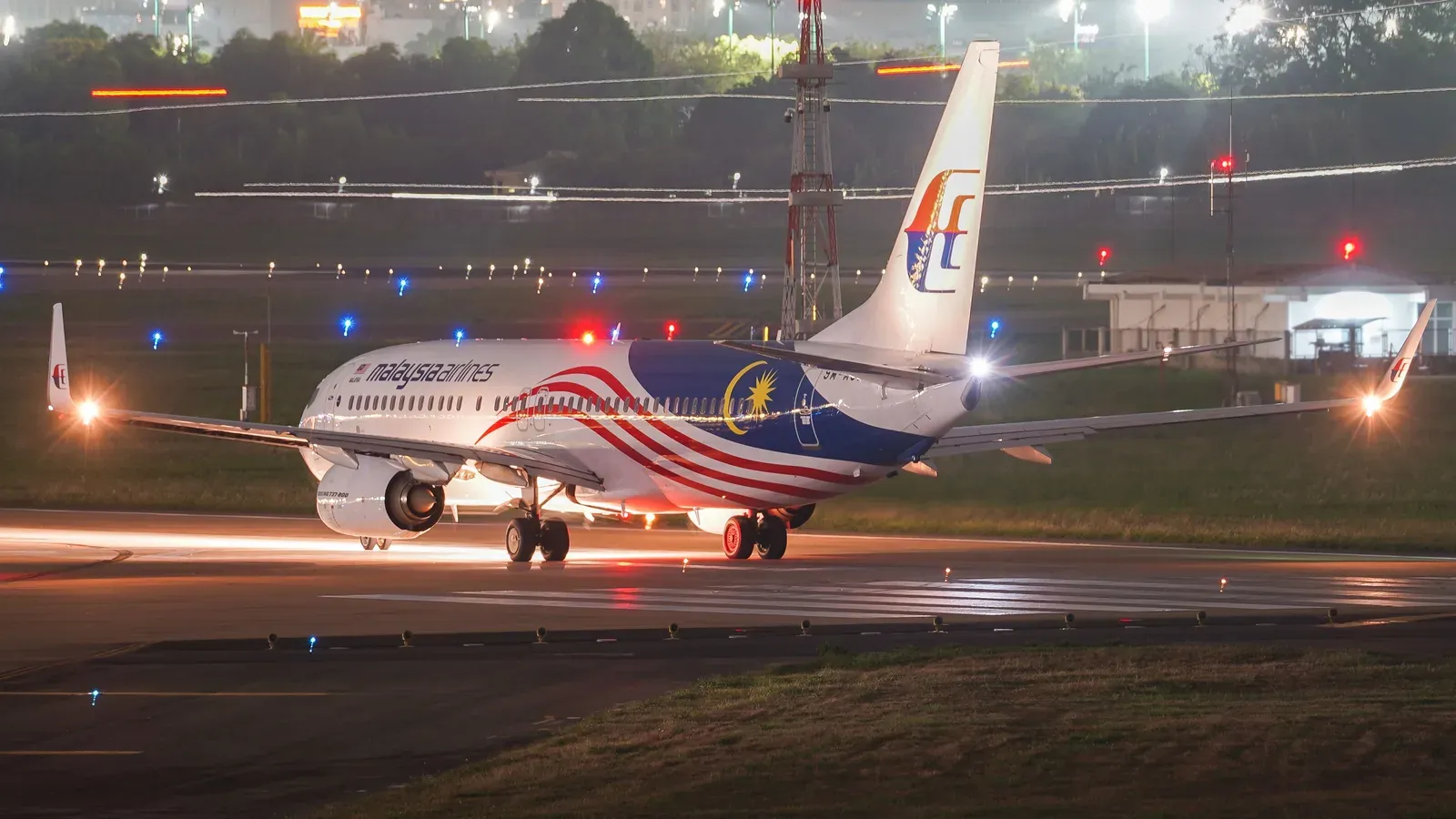
Four nights. Five airports. An estimated €47 million in losses across Copenhagen, Oslo and Aalborg alone between 22 and 26 September 2025, according to preliminary Eurocontrol figures released in October. It was that sequence — compounded by the incursions at Manchester and East Midlands in November — that pulled the airport counter-drone market out of the defence trade-show circuit and onto the boardroom agenda of civilian operators. Frankly, it should have happened sooner.
What the Scandinavian incidents exposed wasn't the sophistication of the intruders (most were flying profiles consistent with commercial 3–15 kg platforms). It was the fragility of civilian protocols: airports with no dedicated detection layer at all, relying on tower visual sighting and a manual decision to close the runway. A 1998 method for a 2025 problem.
What a Civilian C-UAS Actually Is — and How It Works Around an Airport
A civilian C-UAS (Counter-Unmanned Aircraft System) is a layered architecture that detects, classifies, tracks and — where the law permits — mitigates unmanned aircraft in restricted airspace. In an airport environment, it integrates radio-frequency sensors, low-RCS Doppler radar, EO/IR cameras with computer vision, and optionally acoustic arrays, feeding a consolidated alert to ATC and airport security within 8 to 30 seconds.
Simple on paper. Ugly on the tarmac of a Heathrow running 1,300 movements a day with Cat III ILS that tolerates zero false positives.

Foto: Magda Ehlers / Pexels
Why RF Alone No Longer Cuts It
For years, the standard answer was passive RF sensing — listening for the signature of the link between drone and remote controller. It worked well while the market was 80% DJI on OcuSync. It doesn't anymore.
The drones spotted over Aalborg, according to the preliminary report from Denmark's Forsvarets Efterretningstjeneste, were flying autonomously, with no active ground link during parts of the mission. In that scenario, a Dedrone RF-360 or a comparable Robin Radar unit simply sees nothing. Listening is blind when the target is silent.
Add the proliferation of modified firmware (the ecosystem that emerged after the 2024 Autel EVO code leak is a chapter of its own) and the conclusion is obvious: RF remains a mandatory layer, but never the only one. Anyone selling RF-only detection to a Category I airport today is selling peace of mind, not security.
Micro-Doppler Radar: Expensive, but What's Left When RF Fails
X- and Ku-band radars optimised for RCS below 0.01 m² — the category that includes Echodyne EchoGuard, Robin Radar IRIS and Blighter A400 — have established themselves as the backbone of serious architectures. They pick up the rotational signature of the rotors (micro-Doppler) even when the drone is running silent.
The problem is well known: cost and clutter. An IRIS runs around €180–220k per unit, and a mid-sized airport needs 4 to 8 nodes for decent operational perimeter coverage. Worse: seagulls, crows and small drones share enough of the Doppler envelope to generate hundreds of false positives a day without a well-trained fusion layer.

Foto: Tommy L / Unsplash
My read is that this is where the technical fight of the next 18 months plays out — not in the sensor itself, but in the classification software. Thales, with EagleSHIELD, and Israel's D-Fend, with EnforceAir2, are betting heavily on models trained specifically for northern-hemisphere avian noise. It makes sense.
EO/IR and Acoustics: The Layers Nobody Praises but Everybody Needs
Electro-optical and infrared cameras with automated PTZ, tied to computer-vision models, do the job no other sensor does: visual confirmation for the operations commander. Without that frame, no tower authorises a runway closure based on a dot on the radar alone.
Acoustics is the architecture's poor relative. Short range (rarely above 500 m), severe degradation with winds over 25 km/h, sensitivity to turbine noise. Even so, systems like Squarehead's Discovair are being specified as a complementary layer around taxiways and thresholds, where ambient noise is more predictable.
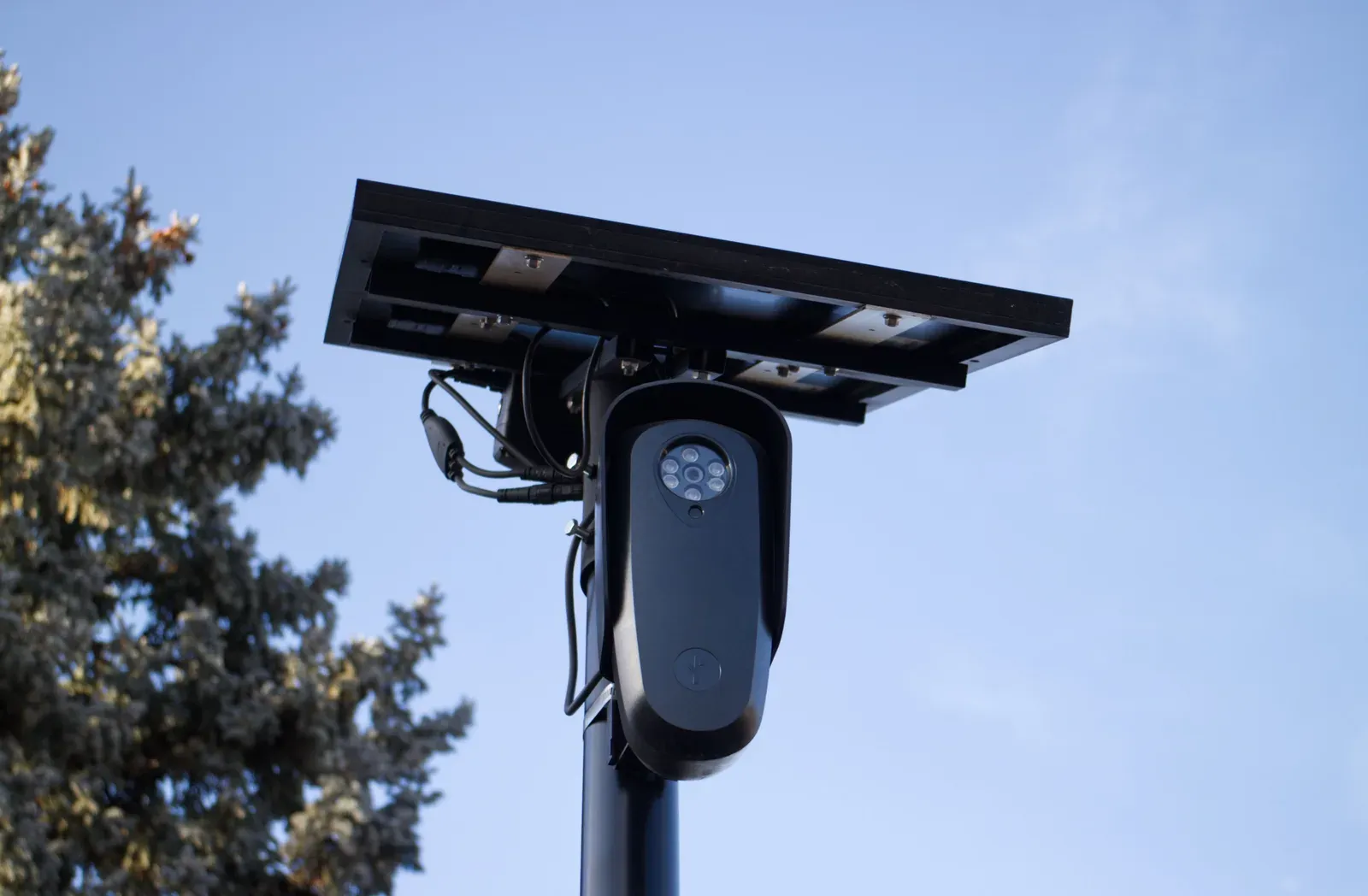
Foto: Will Freeman / Pexels
The Stack That's Consolidating
- Primary detection: micro-Doppler radar in a perimeter ring (4 to 8 nodes)
- Secondary detection: multi-band passive RF (2.4/5.8/900 MHz + sub-GHz)
- Confirmation: EO/IR with automatic slew-to-cue via track fusion
- Tactical fill-in: acoustics at critical points (thresholds, VIP apron)
- Command layer: unified C2 integrated with AFTN/AMHS and the local UTM
Mitigation: Europe's Regulatory Taboo
Detecting is one thing. Neutralising is another entirely — and this is where the European civilian market stalls. GNSS jamming and spoofing are prohibited under CEPT spectrum rules outside strictly authorised military and police applications. In Opinion 01/2025, published in July, EASA signalled openness to authorising kinetic and RF mitigation at airports, but only under the command of state security forces — never the airport operator.
In practice, that means an airport can spend €12 million on a top-tier detection stack and still depend on a police vehicle that shows up 20 minutes later to actually bring the intruder down. The uncomfortable truth is that civilian Europe detects well and responds badly.
The UK, post-Brexit and post-Gatwick 2018, went further: the Air Traffic Management and Unmanned Aircraft Act of 2021 and its 2024 amendments allow designated operators to deploy RF countermeasures under CAA supervision. Germany and France are studying a similar path. Scandinavia isn't there yet.
What's Actually Being Bought Right Now
Between October and December 2025, the public moves came fast. Copenhagen Airports signed a €38 million framework contract with MyDefence (Danish, Wingman + Watchdog sensors). Avinor, in Norway, opened an emergency tender worth NOK 420 million covering Oslo, Bergen and Trondheim. Heathrow accelerated the Phase 2 rollout of its Operational Airspace Awareness system, with Thales's Osprey integrated into its C2.
The point nobody discusses enough: most of these contracts are for detection and integration, not mitigation. Operators are buying visibility because that's what the law lets them buy. Mitigation stays in the hands of the state — and the state, in most countries, still has no consolidated doctrine for operating inside an active airport zone.
Foto: Nihar Reddy Jangam / Unsplash
Final Considerations
The 2025 wave of incursions will accelerate contracts — that much is certain. But anyone expecting the airport counter-drone race to solve the problem in 18 months is going to be disappointed. The bottleneck is no longer technological; the sensors exist, they work, and they're within reach for Tier 1 operators. The bottleneck is jurisdictional.
- Single-sensor architectures (RF-only, radar-only) are inadequate in 2026. A multi-layer stack is the floor.
- The technical battle of the next few years is fusion and classification software, not hardware.
- Without regulatory clarity on who mitigates and how, airports will keep paying for detection and getting hit on response.
- Watch the British model closely: if it works at Heathrow through 2026, it becomes the reference for EASA.