The Two-Ton Threshold: Heavy-Lift eVTOL Cargo Drones Move From Demo to Duty Cycle
Past coverage celebrated maiden flights. The 2025 inflection is operational: Chinese offshore rig runs, US Air Force contracts, and Danish startups pushing toward 1,000+ kg payloads with credible duty cycles, not press-event hops.
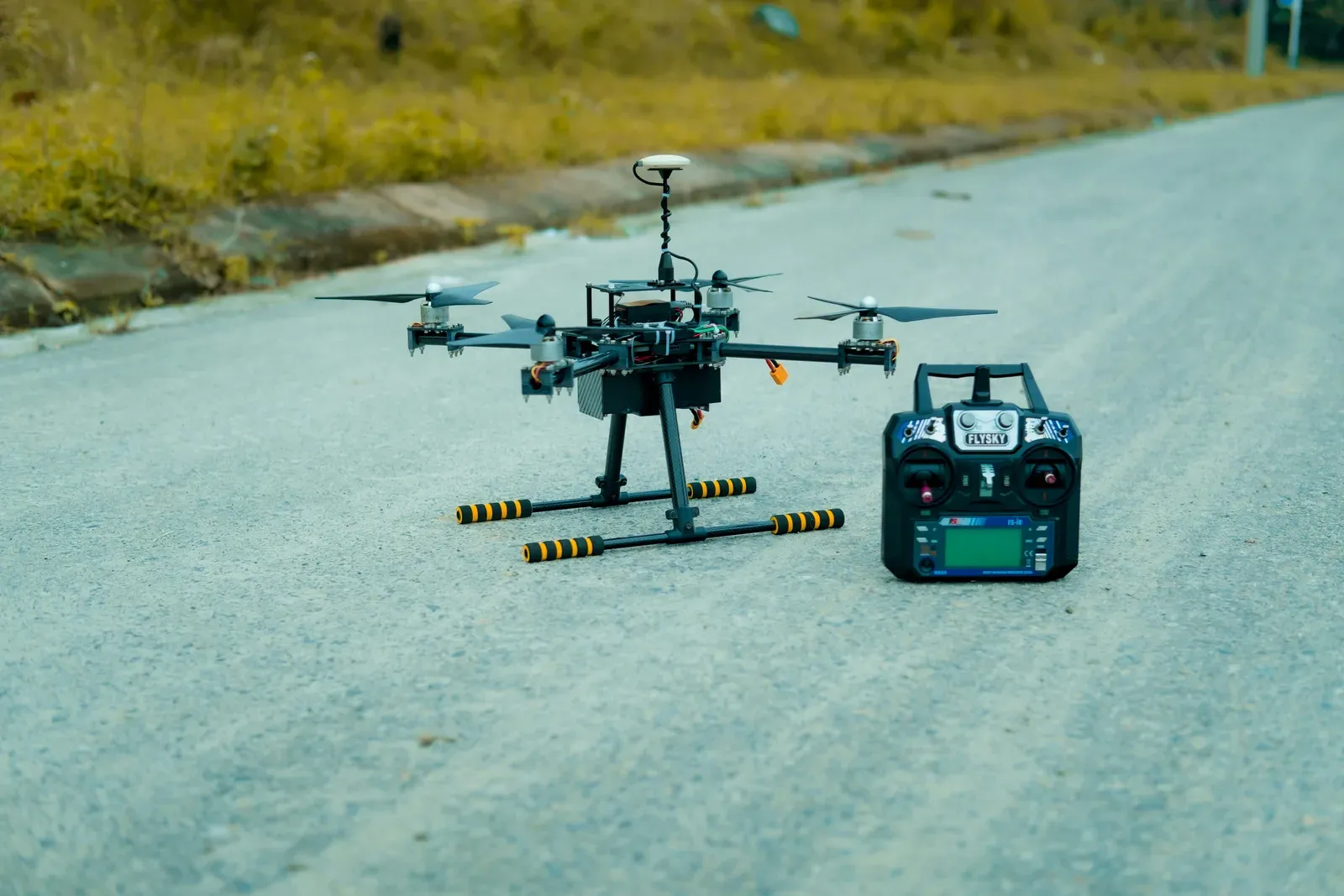
At the 2024 Zhuhai Airshow, a stubby quadcopter the size of a delivery van lifted 1.2 tonnes off the apron and held a stable hover for the cameras. Pretty. But what mattered came six months later, when that same airframe — AutoFlight's CarryAll — started doing actual offshore rotations to CNOOC platforms in the Bohai Sea. The heavy-lift cargo drone category has finally crossed from airshow theater into duty-cycle reality, and 2025 is the year operators stop asking whether a heavy-lift cargo drone works and start asking how many hours per week the airframe can be billed for.
The interesting threshold, in my reading, is two tonnes. Below that, you're competing with helicopters in a narrow performance envelope. Above it, the economics of the heavy-lift cargo drone market start to look genuinely disruptive — particularly for offshore energy, military resupply, and remote mining logistics. Several platforms are now credibly knocking on that door.
What Counts as a Heavy-Lift Cargo Drone in 2025
A heavy-lift cargo drone is an uncrewed aerial vehicle — typically eVTOL or hybrid-electric — designed to transport payloads of 200 kg or more over distances exceeding 100 km, with a duty cycle suitable for scheduled commercial operations rather than one-off demonstrations. The category sits above small-package delivery drones (sub-50 kg) and overlaps the lower end of traditional rotorcraft cargo missions, particularly the AS350 and Bell 206 class.
Three architectural families dominate the heavy-lift cargo drone conversation: lift+cruise eVTOLs (AutoFlight, Pyka), tilt-rotor or tilt-wing concepts (Elroy Air's Chaparral, the now-restructured Sabrewing), and large multirotors with hybrid generators (Malloy T-650, Volocopter VoloDrone). Each makes a different bet about where the payload-range-cost curve bends.
Foto: Max Nüstedt
The Operational Inflection: Five Programs Worth Watching
Coverage of the heavy-lift cargo drone segment has been demo-flight heavy for years. Maiden hops generate headlines; revenue hours don't. So here's what shifted in 2024-2025.
AutoFlight CarryAll (China)
400 kg useful payload, 250 km range. Began contracted offshore wind and oil platform resupply with CNOOC in Q4 2024. Operating cost reportedly under $400/flight-hour, roughly 60% below an equivalent AS350 mission.
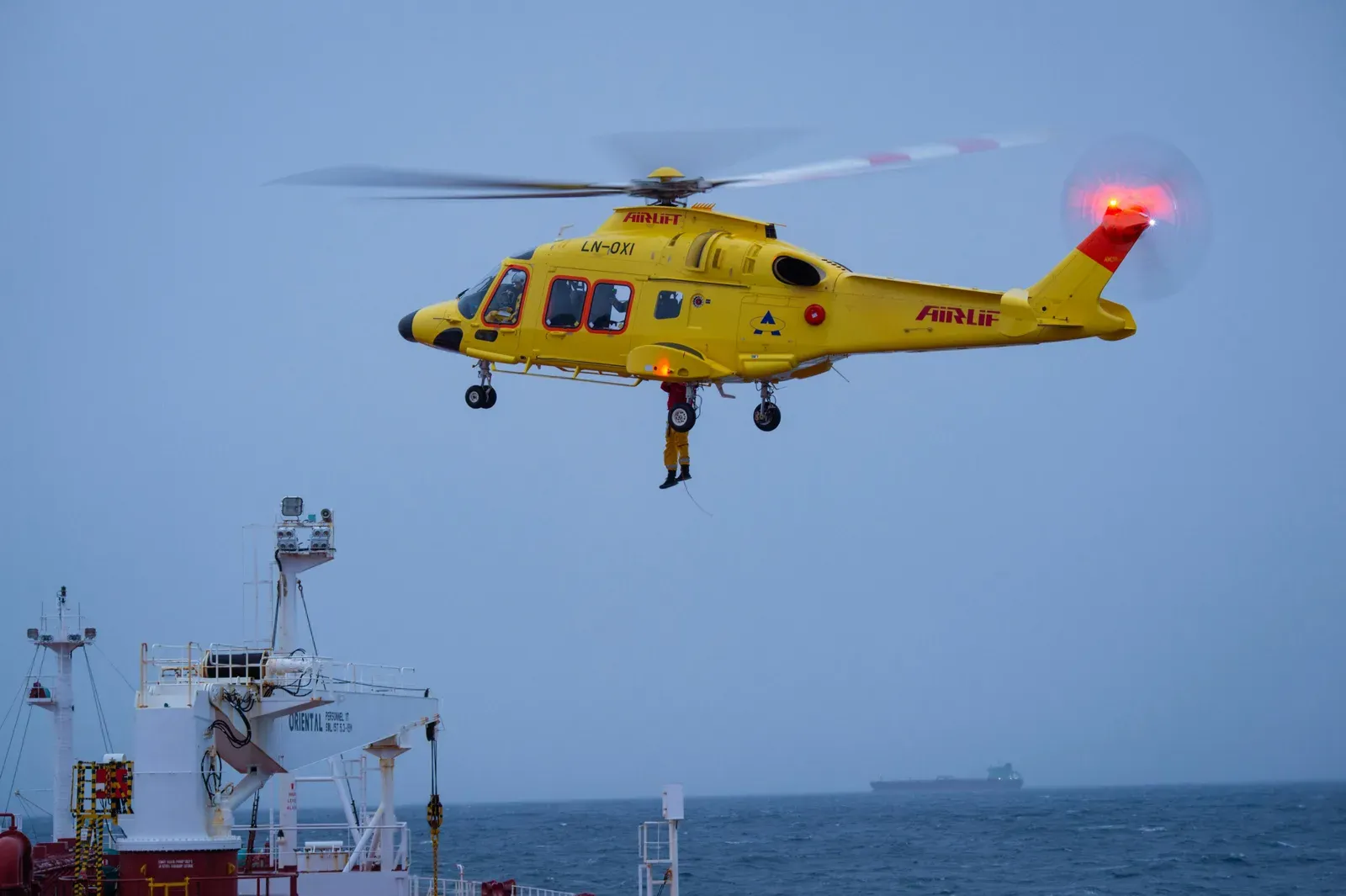
Foto: Oleksiy Yeshtokyn,🇺🇦
Pyka Pelican Cargo (US)
180 kg payload electric fixed-wing. Awarded a US Air Force contract in February 2024 under AFWERX; first operational deliveries at Travis AFB in 2025.
Elroy Air Chaparral (US)
226 kg payload hybrid VTOL. FedEx pilot program structurally on pause, but the US Air Force took delivery of the first production unit in late 2024.
Malloy T-650 (UK/Australia)
300 kg payload heavy multirotor. UK Royal Navy and US Marine Corps both running operational evaluations through 2025.
Voliro / Lift Aircraft Hexa-class
Smaller, but the duty-cycle data they're publishing is genuinely useful for the broader heavy-lift cargo drone category.
The Danish Wildcard and the 1,000 kg Question
Copenhagen-based Cento Aerospace (and a handful of similar early-stage players in Northern Europe) is openly targeting a 1,000 kg+ payload class — explicitly to swap out helicopters for North Sea wind farm logistics. The pitch is concrete: a Siemens Gamesa 14 MW turbine nacelle needs a steady flow of consumables and spares, and an Airbus H175 sortie runs roughly €4,500/hour. Cut that by even 40% and offshore operators stop sending polite emails — they sign.
Whether any of these European projects actually flies a thousand kilos this decade is a separate question. Battery energy density is still the binding constraint. Lithium-ion at 280 Wh/kg simply does not close the math for a heavy-lift cargo drone carrying a 1,000 kg payload plus 200 km range plus reserves. So you see hybrid turbogenerator architectures (Sabrewing tried this, with mixed results), or hydrogen fuel cell concepts (HevenDrones, Doosan Mobility), or aggressive bets on silicon-anode and solid-state cells maturing on schedule.
My take: the 500-700 kg heavy-lift cargo drone class is where the credible 2026-2027 deliveries will land. The 1,000+ kg headlines are real R&D, but not real schedules.
Regulatory Reality: BVLOS, Type Certification, and Who's Actually Cleared
None of this matters without airspace access. And here's where the geography of progress gets uncomfortable for Western operators.
China's CAAC issued the world's first type certificate for an autonomous eVTOL — EHang's EH216-S — in October 2023, and has been notably aggressive about granting operational permits for cargo missions over water and sparsely populated terrain. AutoFlight obtained a type certificate for the CarryAll variant in March 2025. This is why the Bohai Sea operations are real and the Gulf of Mexico equivalents are still slide decks.
In the US, the FAA's Part 108 BVLOS rulemaking — long-delayed, finally moving in 2025 — will determine whether heavy-lift cargo drone operators like Pyka and Elroy can scale beyond military customers. EASA's SC-VTOL framework in Europe is technically rigorous but slow; the first heavy-cargo type certificate under it is unlikely before 2027. The regulatory bottleneck, frankly, is the single biggest variable in this market — not the airframes.
Where the Economics Actually Pencil Out
Strip away the marketing decks and three heavy-lift cargo drone use cases survive scrutiny today:
Offshore platform resupply
Short hops (50-150 km), repetitive, expensive helicopter baseline, water below means lower third-party risk. The natural beachhead.
Military contested logistics
DoD willing to pay a premium for the unmanned attribute itself. USMC's Tactical Resupply UAS program is the cleanest demand signal in the market.
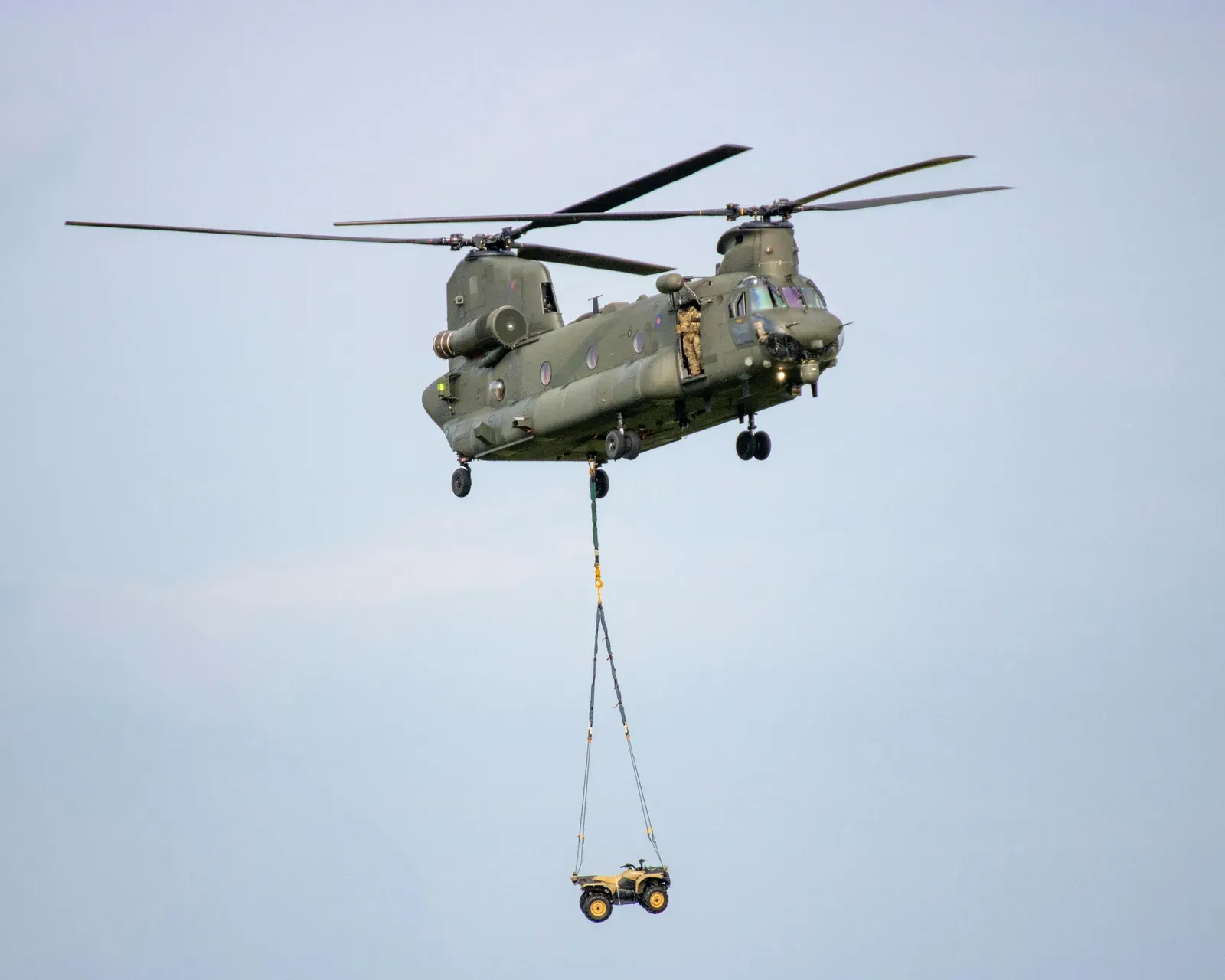
Foto: Kimberley Madigan
Remote mining and energy infrastructure
Pipeline checks plus parts delivery on Canadian and Australian sites. Rio Tinto has run trials at the Pilbara iron ore complex; results are guarded but operational.
What does NOT pencil out yet: middle-mile e-commerce, intra-city cargo, or any mission where ground transport plus a human driver remains competitive. The hype cycle keeps trying to force those use cases. The numbers keep refusing.
The Duty Cycle Problem Nobody Wants to Discuss
Here's the thing rarely said out loud at conferences: a press-event flight tells you almost nothing about whether a heavy-lift cargo drone survives 1,500 hours of salt-spray, ham-fisted ground handling, and the occasional bird strike. Helicopter operators know this in their bones. Drone operators are learning it expensively.
Battery degradation curves under repeated 1C-2C cycling at full payload remain proprietary data — and where independent testing has happened (the UK's Connected Places Catapult published partial results in late 2024), the picture is sobering. Battery packs sized for 200 missions are showing meaningful capacity fade by mission 120. That changes the unit economics significantly. A heavy-lift cargo drone that needs a $40,000 pack swap every four months looks different from one that needs it every twelve.

Foto: Dr Failov
Maintenance-cost-per-flight-hour is the metric to watch in 2026 disclosures. Not payload. Not range. Duty cycle economics.
Takeaways for Operators and Fleet Planners
- The 200-500 kg heavy-lift cargo drone payload class is operationally real today; the 1,000 kg class is a 2027-2028 conversation at the earliest.
- China leads in operational hours and type certification velocity; the US leads in defense contracts; Europe leads in regulatory rigor and slowness.
- Offshore energy is the only commercial heavy-lift cargo drone use case currently surviving end-to-end cost scrutiny without a defense subsidy.
- Demand line-of-sight on battery cycle life, not just maximum payload, when evaluating procurement. Press-event specs lie by omission.
- Watch FAA Part 108 finalization and the first EASA SC-VTOL heavy-cargo certificate. Those two events will reshape the addressable heavy-lift cargo drone market more than any new airframe announcement.
The honest summary: the heavy-lift cargo drone category is no longer speculative, but it is not yet mass-market either. It's in the awkward middle where early adopters are paying for the learning curve so the next wave doesn't have to. If you operate offshore assets or remote infrastructure, the 2026 procurement window is the one to plan for. If you're waiting for headline-grade 1,000 kg deliveries on a Tuesday, keep waiting. The hardware will get there. The duty cycle data will get there slower.
To stay up to date with the transformations shaping the future of uncrewed aviation, also explore our articles on Careers in the Drone Industry, Drone Pilot Salaries in 2026, and AI Embedded in Safety Systems. These topics provide valuable insights into not only the evolution of drone technology, but also the professional and regulatory opportunities emerging as the industry continues to mature.