Ukraine's 'AI Drone Wall': What Practitioners Should Learn From Battlefield Autonomy
Defense headlines fetishize the 'swarm.' The transferable lessons are in the engineering: cheap onboard inference, last-mile terminal guidance under jamming, and the counter-UAS arms race those tactics force on civil airspace.
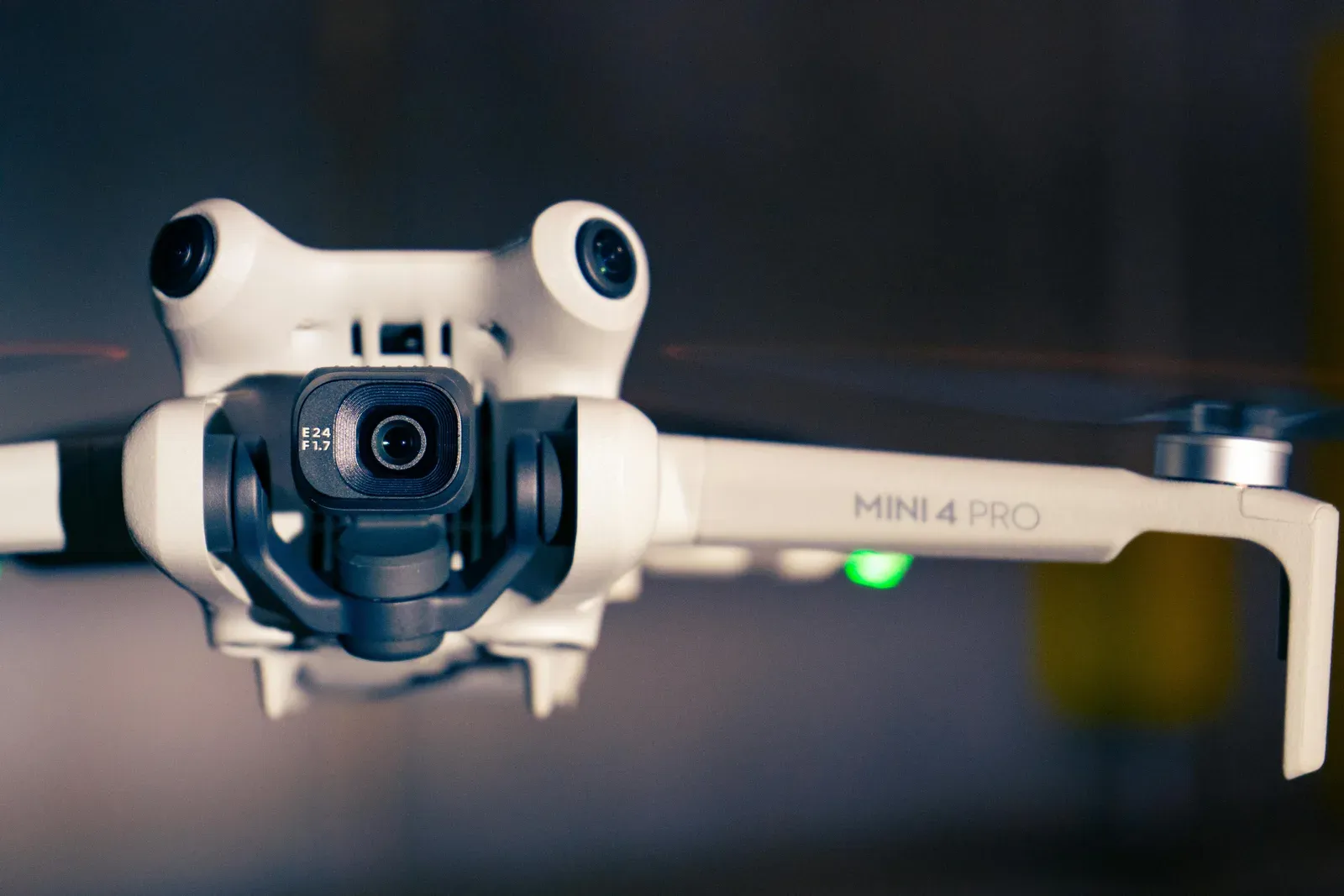
Forty dollars of Chinese-made FPV airframe, a $15 Raspberry Pi-class compute board, and a terminal-guidance model trained on six months of Russian armor footage. That's the unit economics behind the strikes hitting tanks 30km behind the contact line in Donetsk Oblast through 2024 and 2025. The AI drone swarm narrative dominating defense press releases is, frankly, the wrong frame for civil operators trying to learn from this war.
The real engineering story is smaller and more transferable than the AI drone swarm headline suggests: cheap onboard inference, last-mile guidance that survives GPS denial, and the counter-UAS escalation those tactics are forcing onto every airspace authority from EASA to the FAA. If you fly commercially, this is your near future — not the swarm, but everything underneath it.
What an AI Drone Swarm Actually Is (and Isn't)
An AI drone swarm is a group of unmanned aircraft that coordinate flight, targeting, or sensing decisions using onboard machine-learning inference rather than continuous human teleoperation — typically sharing state over a mesh radio link and degrading gracefully when individual nodes are lost. Useful definition. Mostly absent on the battlefield.
What Ukraine actually fields, in volume, is something narrower than an AI drone swarm: single-aircraft autonomy with terminal-phase computer vision. The operator flies the FPV most of the way, then hands off to an onboard model in the final 300–800 meters, after jamming severs the video link. Saker Scout, the most-cited Ukrainian system, was reported by its developers in late 2023 to identify and engage targets independently — but at one-aircraft scale, not coordinated packs.
True multi-agent AI drone swarm operations (think DARPA OFFSET, or the Chinese Zhuhai 2022 demos with 48 coordinated airframes) remain rare in combat. The reason an AI drone swarm rarely shows up at scale is boring: bandwidth, time synchronization, and the fact that one smart drone per target is cheaper than ten dumb ones coordinating. Headline writers hate this. Engineers should not.

Foto: ++ LiN
The Three Transferable Lessons
Strip the geopolitics and the AI drone swarm marketing layer, and three engineering shifts matter for civil drone work over the next five years.
1. Onboard inference got absurdly cheap
A Jetson Orin Nano ($249 retail, less at volume) runs YOLOv8 at 30+ FPS on 1080p video while drawing under 15W. That's enough for real-time object detection, tracking, and basic decision logic on any airframe with 500g of payload margin — the same compute envelope an AI drone swarm node would need. Five years ago this required a 2kg compute pod and a generator.
For civil operators, the implication is direct. Powerline inspection, stockpile volumetrics, livestock counting, search-and-rescue thermal triage — all of these are now solvable with on-airframe inference, no cloud round-trip, no LTE dependency. The Ukrainian war proved the compute works under vibration, dust, EMI, and -15°C. Your pipeline inspection over the Bakken in February is a softer problem than a contested Donbas tree line.
Foto: Red Shuheart
2. GNSS-denied navigation is now a solved-ish problem
Russian electronic warfare — Pole-21, Shipovnik-Aero, the various Krasukha variants — has made the eastern Ukrainian front the most GPS-jammed airspace in history, and the operating environment any future AI drone swarm will have to assume. Operators adapted with visual-inertial odometry, terrain-relative navigation, and last-mile vision lock-on. Skydio's been shipping civilian VIO since the R1 in 2018. The war forced refinement, not invention.
For commercial pilots, this matters because GPS spoofing is already bleeding into civil airspace. The FAA logged a substantial spike in GNSS interference reports across the eastern Mediterranean and Baltic through 2024, and Finnair suspended Tartu flights in April 2024 over spoofing. If your inspection mission assumes clean RTK fix, you have a fragility problem. The fix exists. Most fleets haven't bought it yet.
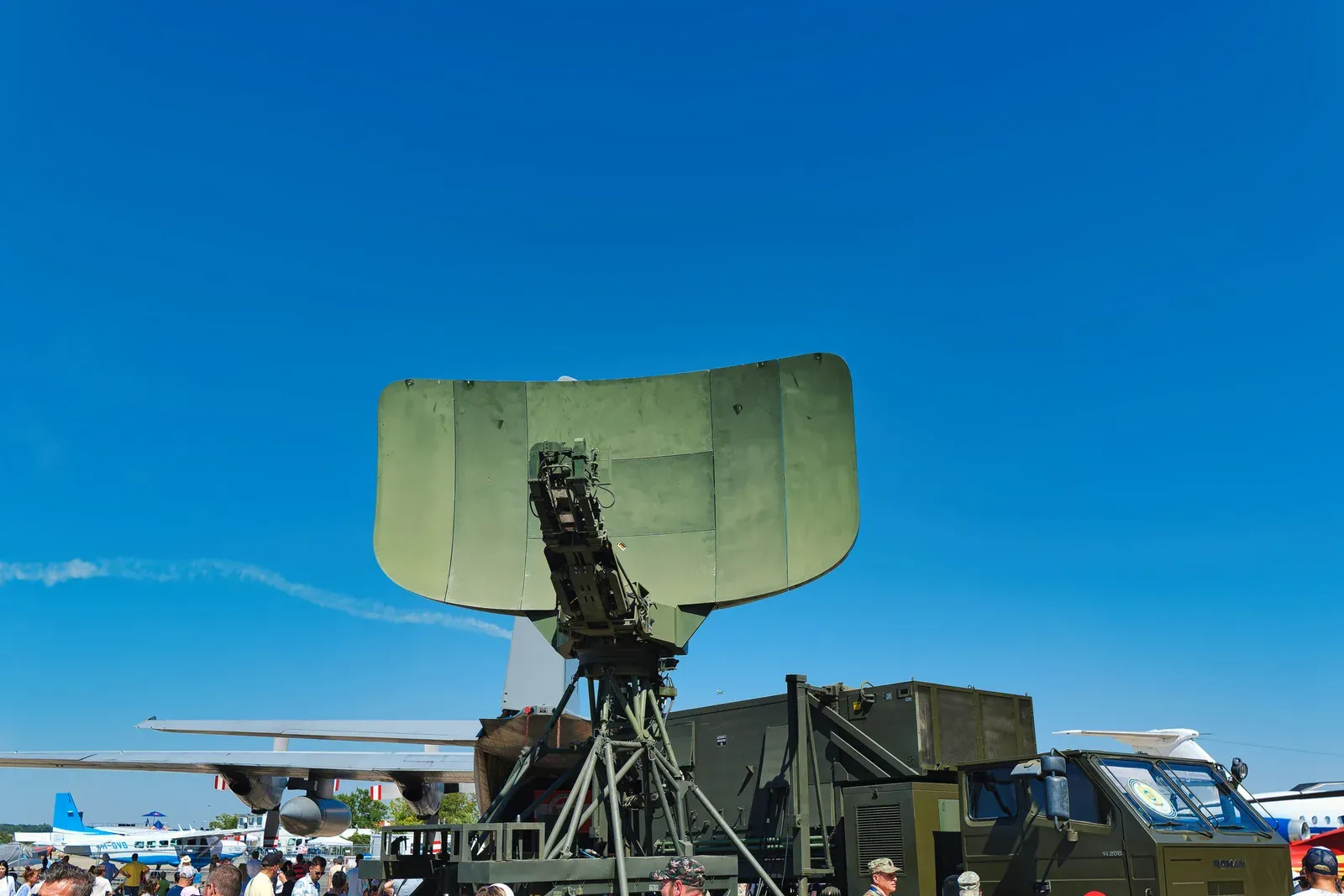
Foto: Gabriel Vasiliu
3. The counter-UAS arms race is coming for civil airspace
This is the part nobody wants to talk about. Every effective tactic in Ukraine — cheap FPV, autonomous terminal guidance, mesh-coordinated approach that edges toward a true AI drone swarm — is being studied by every interior ministry on earth. The civil-aviation consequence is more aggressive Remote ID enforcement, expanded geofencing mandates, and the normalization of RF-detection and kinetic-intercept systems around critical infrastructure.
What This Means for Commercial Operators
Three concrete shifts to plan for, in roughly the order they'll hit your operation:
- Remote ID will get teeth. FAA Part 89 compliance has been mandatory since March 2024 but enforcement has been soft. Expect that to change. EASA's U-space rollout (regulation 2021/664, phased through 2024–2026) effectively makes Remote ID the precondition for any BVLOS authorization.
- Counter-UAS will privatize. Dedrone, D-Fend, Citadel Defense, and Echodyne are already selling to stadiums, prisons, and data centers. If your inspection flight path runs near one, expect interrogation — and in some jurisdictions, soft-kill jamming that doesn't care about your Part 107 waiver.
- BVLOS approvals will demand jamming-resilient navigation. The FAA's Part 108 NPRM (expected 2025) is widely anticipated to require demonstrated GNSS-denied performance for routine BVLOS. EASA's SORA framework already rewards it in the operational safety objectives.
The Hardware Stack Worth Watching
On the airframe side, the consolidation is happening fast. NVIDIA's Jetson line dominates onboard AI compute. Auterion's Skynode (used in the U.S. DoD's Blue UAS-cleared Freefly Astro and others) is becoming the de facto open autopilot for serious commercial work. ModalAI's VOXL 2 ships VIO and obstacle avoidance as a stack, not a science project — the kind of building block any AI drone swarm program would standardize on.

Foto: Brecht Corbeel
On the software side, watch what comes out of the Replicator initiative — the Pentagon's stated goal of fielding thousands of attritable autonomous systems by August 2025. Whatever AI middleware survives that procurement gauntlet (Shield AI's Hivemind, Anduril's Lattice, Skydio's autonomy stack) will define the commercial reference architecture for the rest of the decade. The dual-use bleed is unavoidable.
A quick-take on the swarm hype
I'd argue 90% of AI drone swarm press releases describe choreography, not autonomy — pre-programmed waypoints with a shared clock. Real coordinated decision-making under adversarial conditions is hard, and the people doing it well aren't tweeting about it.
The Regulatory Whiplash Nobody's Pricing In
Here's the uncomfortable truth: civil aviation regulators are watching Ukraine and quietly concluding that the current Part 107 / Open Category framework was designed for a threat model that no longer exists. The assumption that a hobbyist-grade drone is a noise complaint, not a security event, dies the moment a single $400 quadcopter with terminal vision — or, eventually, a small AI drone swarm — can find a substation transformer from 5km out.
Expect, over 2025–2027: tighter payload-class definitions, mandatory cryptographic Remote ID (not the current broadcast-only flavor), and — this is the controversial one — restrictions on which AI models can be deployed on commercial airframes near sensitive infrastructure. The EU AI Act's high-risk classification already touches this. The U.S. will catch up, awkwardly, through NDAA Section 1709-style procurement bans rather than clean rulemaking.
Operators who built their business on DJI Matrice fleets and the assumption of stable rules are going to feel this. Hard.
Takeaways
- The AI drone swarm headline is mostly marketing. The real Ukraine lesson is single-airframe terminal autonomy at commodity-hardware prices.
- Onboard inference (Jetson-class compute, sub-15W) is now production-ready for civil inspection, SAR, and agriculture — no excuses left.
- GNSS-denied navigation is the new baseline. If your fleet doesn't have VIO or terrain-relative fallback, your next BVLOS application will struggle.
- Counter-UAS deployment around civil infrastructure is escalating faster than civil regulators are coordinating. Plan flight paths defensively.
- Watch Replicator, Part 108, and U-space milestones in 2025 — they'll define the commercial autonomy stack, including any near-term AI drone swarm capability, through 2030.
The honest position: the war didn't invent the AI drone swarm, or any of the underlying tech. It compressed a decade of civil R&D into 30 months of forced iteration and made the bill of materials public. That's a gift to commercial operators paying attention. Most aren't. Be the exception.
As AI drone swarm technology pushes regulators worldwide toward stricter drone airspace security, resilient BVLOS operations, and expanded Remote ID enforcement, Brazil is preparing its own regulatory transformation through RBAC 100.
The new framework could significantly impact commercial drone operations, operational authorization, and compliance requirements for professional pilots and companies operating in the Brazilian drone sector.
RBAC 100: What Really Changes for Drone Operators When ANAC’s New Regulation Comes Into Effect