Zipline's Texas Push Tests Whether Fixed-Wing Delivery Beats Quadcopter Economics
Three architectures — Zipline's tethered-drop fixed wing, Amazon's MK30 VTOL, Wing's hybrid — are now competing in the same suburbs. The interesting question is unit economics per delivery, not which logo wins.

Mesquite, Texas. A suburban cul-de-sac where, on any given Tuesday afternoon in 2025, you might watch a Zipline drone delivery descend on a thin cord from a fixed-wing aircraft circling at 90 meters, dropping a Walgreens prescription onto a driveway. Three blocks over, a Prime Air MK30 quadcopter is hovering above a different driveway. Same zip code, two architectures, two very different cost structures.
This is the moment Zipline drone delivery stops being a Rwanda-medical-cargo story and becomes a test case for whether fixed-wing economics can beat the quadcopter playbook in dense American suburbs. Amazon flies in College Station. Wing operates in Frisco and Dallas-Fort Worth via DoorDash. Zipline's Platform 2 is now serving Walmart, Walgreens, and Mendocino Farms across the same metro. The logos are noise. The unit economics are the signal.
What Zipline's Platform 2 Actually Is
Zipline Platform 2 (P2) is a hybrid Zipline drone delivery system built around a fixed-wing aircraft that loiters at altitude while a tethered "droid" descends on a cable to place the package on a doorstep or driveway. The aircraft never lands at the customer; the droid handles the final 90 meters. Range is roughly 16 km from the dock, payload up to 3.6 kg, and the operating model relies on docks bolted onto existing retail or restaurant locations.
That architectural choice matters for any Zipline drone delivery deployment at scale. Fixed-wing flight is energetically cheaper than rotor-borne hover — by a wide margin. A quadcopter pays a hover tax every second it's stationary over a delivery point. Zipline pays that tax only on the droid's winch motor, which is moving a much smaller mass.

Foto: Erik Mclean
The obvious counter-argument is complexity. A tethered drop adds a moving part, a cable, a winch, and a precision-landing subsystem. Quadcopters just… land (or near-land, in the MK30's case). More mechanism, more failure modes. Frankly, I'd take that trade if the energy math holds — and it's why Zipline drone delivery looks compelling on paper for the right payload band.
The Three Architectures, Side by Side
Each operator has placed a different bet on the physics-versus-simplicity spectrum:
- Zipline P2 — fixed-wing cruise + tethered droid. Long range, low energy per km, but requires docks and overhead loiter. The Zipline drone delivery model is the clearest expression of "cruise cheap, hover never."
- Amazon Prime Air MK30 — hexacopter VTOL, drops package from low hover. Simpler ops envelope, higher energy per delivery, FAA Part 135 certified for BVLOS in College Station and West Valley Phoenix since late 2024.
- Wing — small hybrid VTOL that transitions to forward flight, then hovers to lower a small payload by tether. Optimized for sub-1.5 kg loads, partnered with DoorDash and Walmart since 2023.
The shorthand: Zipline wants to be FedEx by air. Amazon wants to be an Amazon van replacement. Wing wants to be DoorDash without the Civic. Different unit-economic curves, different break-even payloads, different defensible territories.
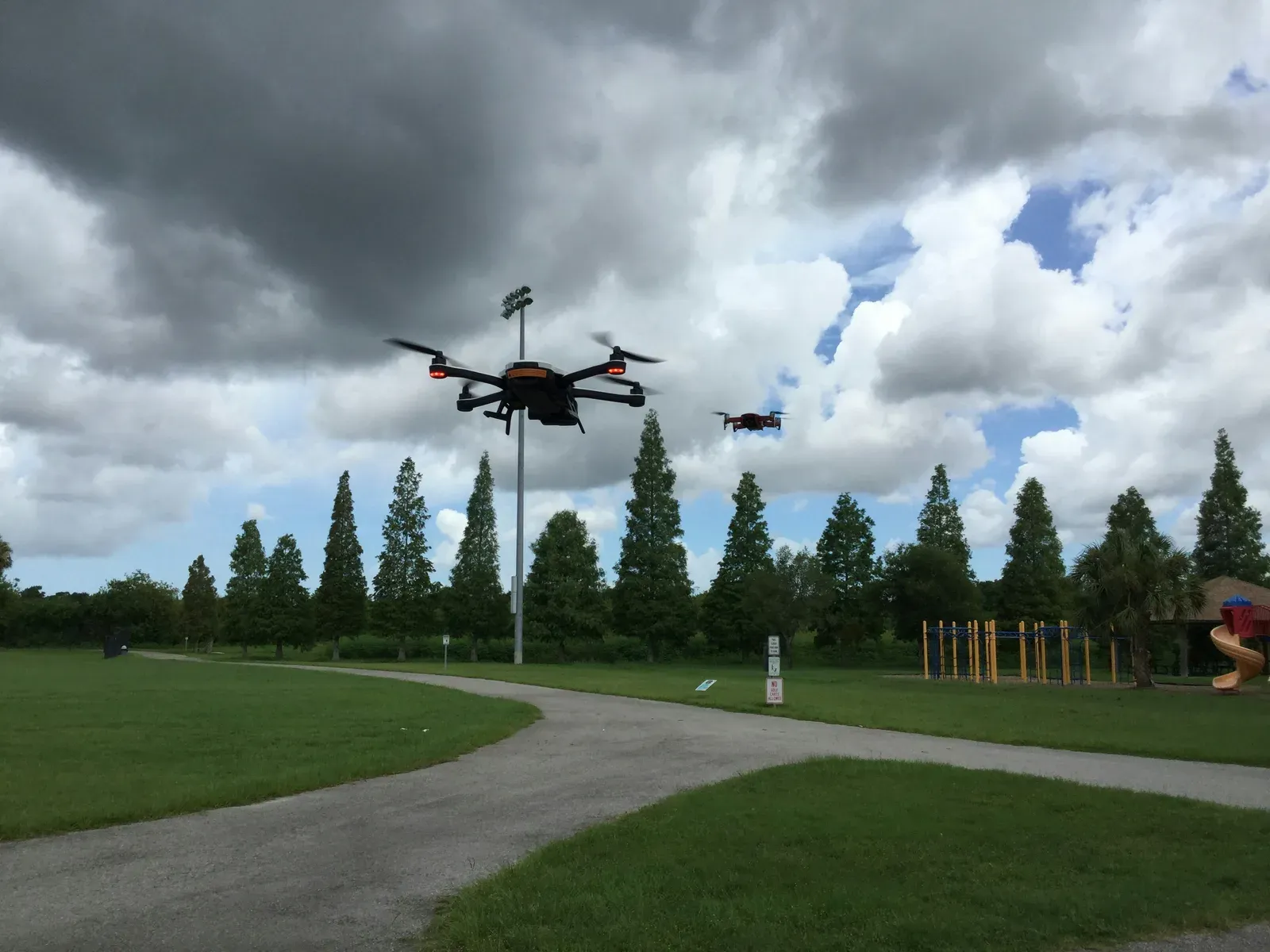
Foto: Anita Denunzio
Unit Economics: Where the Numbers Actually Land
Nobody publishes audited cost-per-delivery. What we have is reverse-engineered. McKinsey's 2024 last-mile note pegged drone delivery at $1.50–$3.50 per drop at scale, against $5–$11 for a courier-van stop in suburban USA. Those numbers are optimistic — they assume utilization above 20 deliveries per aircraft per day, which only Zipline drone delivery has demonstrated outside test markets (Rwanda fleet averaged 25–30 in 2024).
Break it into the four cost buckets that actually move the needle:
- Energy — fixed-wing wins by 3–5x per delivered kg-km. Not close.
- Capex amortization — depends entirely on aircraft cycles before retirement. Zipline claims 500,000+ cumulative deliveries across its fleet; per-airframe cycle counts aren't public.
- Labor — the hidden killer. FAA waivers for one-pilot-to-many-aircraft (the M:N ratio) determine whether you have a courier replacement or a courier with rotors. Zipline got a Part 135 BVLOS expansion in 2024 that pushes M:N favorably. Amazon's MK30 BVLOS authorization in May 2024 did the same.
- Ground infrastructure — Zipline docks bolt onto a Walmart roof. Amazon needs a dedicated delivery center footprint. That's a real estate line item that doesn't show up in glossy decks.
My read: at 3+ kg payloads and 8+ km service radius, the Zipline drone delivery architecture is genuinely cheaper. Below 1.5 kg and inside a 4 km radius, Wing is probably more capital-efficient. Amazon sits awkwardly between them — heavier than Wing, shorter-ranged than Zipline, and burning more energy than either per delivery. That's not a comfortable middle.
The Texas Test: Why DFW Is The Right Petri Dish
The Dallas-Fort Worth metroplex offers something no other US region does at scale: low-density suburbs, permissive state-level airspace rhetoric, multiple willing retail anchors, and a population that orders takeout aggressively. Wing has been logging commercial flights with DoorDash out of Frisco since April 2023. Zipline activated its first Walmart P2 dock in Mesquite in early 2025. Walgreens followed with a Dallas-area Zipline drone delivery deployment shortly after.

Foto: Talena Reese
What's being tested isn't technology — all three platforms work. What's being tested is whether a household will substitute drone delivery for a car trip when both are available at the same price point. Early signal from Wing's DoorDash partnership: re-order rates in active zones are roughly 2x the metro average for the same merchants. That's a real behavioral signal, not a press-release one.
Regulatory tailwind matters here too. The FAA's Part 108 rulemaking for routine BVLOS — kicked into NPRM in 2024 — is what unlocks the M:N pilot ratios that make any Zipline drone delivery operation profitable. Without Part 108, every operator is stuck in waiver-by-waiver purgatory. With it, the unit economics improve roughly 40% on the labor line alone, by industry consensus.
Where Zipline's Bet Could Break
Three failure modes worth watching for Zipline drone delivery.
First, the droid. Tethered descent in 25-knot Texas crosswinds is non-trivial. Zipline's precision-landing demos look clean on YouTube; the question is reliability at the 99.5th percentile across 100,000 deliveries. A single dropped package on a Tesla windshield is a viral video. A hundred is a regulatory pause for the entire Zipline drone delivery program.
Second, dock density. P2's range advantage only matters if you don't have to put a dock every 5 km anyway. If retail anchors demand exclusivity (Walmart won't share a dock with Target), the network economics of Zipline drone delivery collapse toward Amazon's. This is a commercial problem dressed as a technical one.
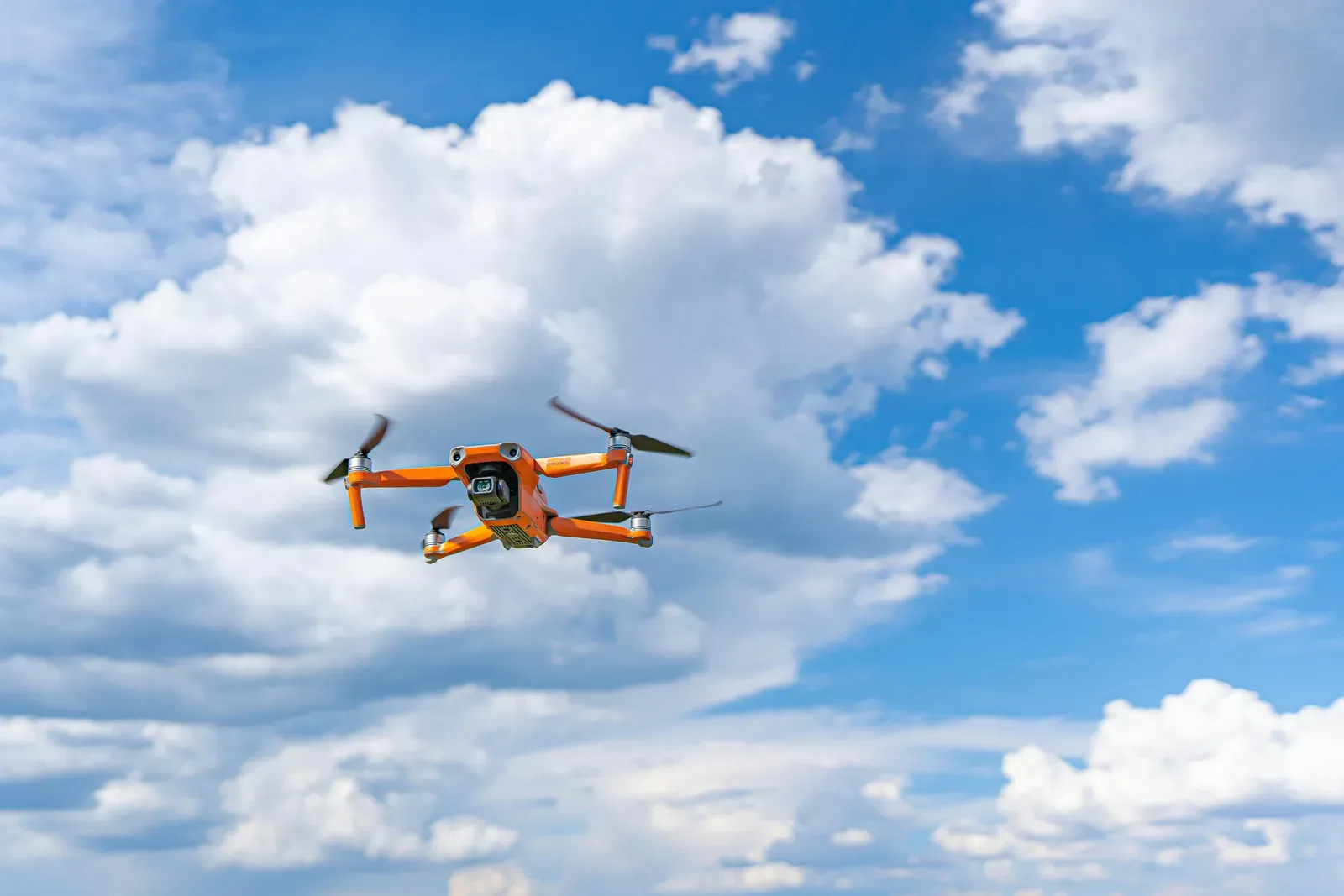
Foto: Castorly Stock
Third, Remote ID and community pushback. Every drone broadcasting Remote ID over a suburb is also broadcasting a noise complaint vector. Wing has acknowledged adjusting flight paths in Frisco after HOA pressure. The acoustic signature of a fixed-wing loitering at 90m is different from — and arguably more persistent than — a quadcopter's 30-second hover. For Zipline drone delivery, that's an unsolved social-license question.
Takeaways
- The Zipline drone delivery architecture — fixed-wing + tethered droid — has the strongest energy economics above 3 kg and 8 km. That's a defensible niche, not a universal win.
- Amazon's MK30 is the most exposed to Part 108 outcomes — its cost structure needs M:N relief more than the others.
- Watch dock-density agreements with retail anchors. Exclusivity clauses could quietly determine which architecture — and whether Zipline drone delivery in particular — wins a given metro.
- The right metric isn't deliveries-per-day or press-release count. It's cost per delivered kg-km, and nobody's publishing it honestly yet. When somebody does, the competitive map redraws overnight.
The aircraft are no longer the biggest uncertainty in the drone industry. The economics are becoming clearer. The technology already works. What will ultimately determine who scales, who survives, and who disappears is regulation.
In the United States, Part 108 is expected to redefine the economics of BVLOS drone operations. In Brazil, a similar shift is approaching through ANAC’s new regulatory framework.
For operators, training centers, and companies across the Brazilian drone sector, this next phase will not simply change compliance requirements. It will reshape how drone businesses are structured, certified, and operated in the years ahead.