The DJI Ban Is Coming: A Realistic Guide to Alternatives for Commercial Operators
A hands-on comparison of NDAA-compliant platforms versus Chinese-made drones for mapping, inspection, and spraying operators — moving past political headlines to weigh payload, software, and total cost of ownership.
The DJI ban in the United States keeps generating questions among commercial operators — and not just American ones. If restrictions harden and start bleeding into contracts with multinational clients, development-bank financing, or public tenders, what replaces a Matrice 350 RTK or a Mavic 3 Enterprise? The answer depends on payload, software workflow, and above all the level of NDAA compliance your client actually demands.
By December 2025, the conversation had spilled well beyond the U.S. Congress. Operators worldwide were quietly modeling how a broader restriction could ripple through supply chains and international contracts.
This piece sets the political theater aside and compares with numbers Chinese platforms against NDAA-compatible alternatives across three use cases that matter: photogrammetry and LiDAR, industrial inspection, and agricultural spraying. The goal is to understand the operational impact of the DJI ban without turning the analysis into a cheerleading exercise for any single manufacturer.
What the DJI Ban Actually Is — and Who It Hits
The DJI ban is the bundle of U.S. regulatory measures most notably the Countering CCP Drones Act and Section 1709 of the NDAA 2024 — that restricts or prohibits the purchase, operation, and certification of drones built by companies the Department of Defense has flagged as tied to the Chinese state. In practice, federal agencies, government contractors, and, increasingly, operators in critical sectors (energy, defense, infrastructure) need to migrate to Blue UAS platforms or audited equivalents.

Outside the U.S., there is no equivalent blanket ban. But anyone flying for American utilities, offshore energy majors, U.S. subsidiaries, or funds with strict ESG compliance is already seeing contract clauses that demand hardware off the CISA list. It's a quiet contagion effect and it's spreading faster than most companies want to admit.
The Real Cost of Switching Manufacturers
Here's the number nobody likes to hear: a Matrice 350 RTK with D-RTK 2 and Zenmuse L2 runs around $22,000 in the U.S. market. The closest NDAA-compliant equivalent a Skydio X10D with a third-party LiDAR payload, or a Freefly Astro on a Wingtra-like workflow clears $40,000, sometimes $55,000 depending on the integrator. For spraying, the gap is even more brutal: a DJI Agras T50 sells for roughly $35,000; comparable U.S. alternatives with similar flow rates (Hylio AG-272) start at $69,000, and that's before you factor in local technical support, which is essentially nonexistent outside a handful of U.S. states.
Frankly, anyone telling you this transition is painless is selling you something.
Mapping and Photogrammetry: Where Alternatives Actually Make Sense
This is the least traumatic scenario. For topographic surveys with RTK/PPK, mature options exist outside the DJI ecosystem that compete on the technical merits — and in some categories, beat them.
- Wingtra One Gen II: fixed-wing VTOL, Sony RX1R II full-frame 42MP sensor, native PPK, 59-minute endurance. Covers roughly 1,000 acres at 400 ft AGL in a single flight. Price: ~$25,000.
- senseFly eBee X (AgEagle): a historical benchmark in mapping; NDAA-compliant since 2023.
- Quantum Systems Trinity Pro: German-built eVTOL with MicaSense sensor and Qube 240 LiDAR integration. A favorite among European mining operations.
- Freefly Astro + Sony ILX-LR1: Blue UAS-approved multirotor, PPK workflow via Emlid or Trimble.
If your shop already runs Pix4D, Agisoft Metashape, or Global Mapper, the pipeline barely changes. What changes is cost per acre — CAPEX jumps 30 to 60 percent up front, though fixed-wing durability tends to spread that across two to three years of heavy operation.
Industrial Inspection: Skydio's Home Turf
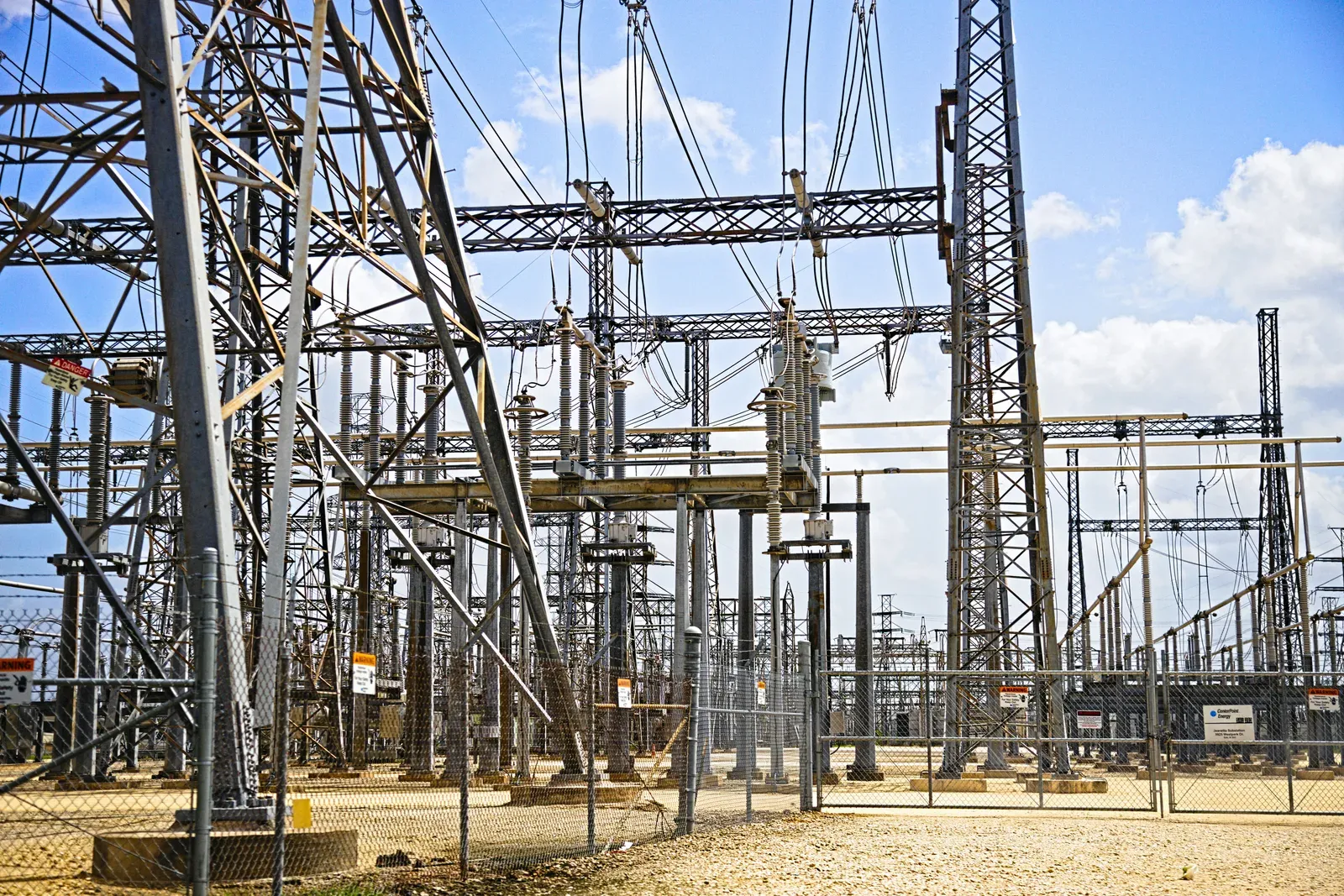
If there's one segment where compliant alternatives have genuinely taken ground, it's industrial inspection. The Skydio X10 and its military variant X10D dominate this niche for one simple reason: six AI-driven navigation cameras enable autonomous flight inside substations, tanks, galleries, and turbines — no white-knuckled joystick pilot required.
Duke Energy has been running a fleet of more than 400 Skydios since 2023. Pilot programs at utilities and offshore operators across Europe and Latin America are pointing in the same direction. The obvious counter: the X10 costs nearly triple a Mavic 3T and doesn't offer a thermal sensor at the H20T's resolution. True. But if your client demands U.S. Remote ID compliance and an audited supply chain, that debate is over.
For heavier long-range inspection, the Parrot Anafi USA remains a compact option with 32x zoom and FLIR Boson thermal — modest specs, but Blue UAS-listed and broadly accepted by federal agencies.
Agricultural Spraying: The Compliance Problem Nobody Solved
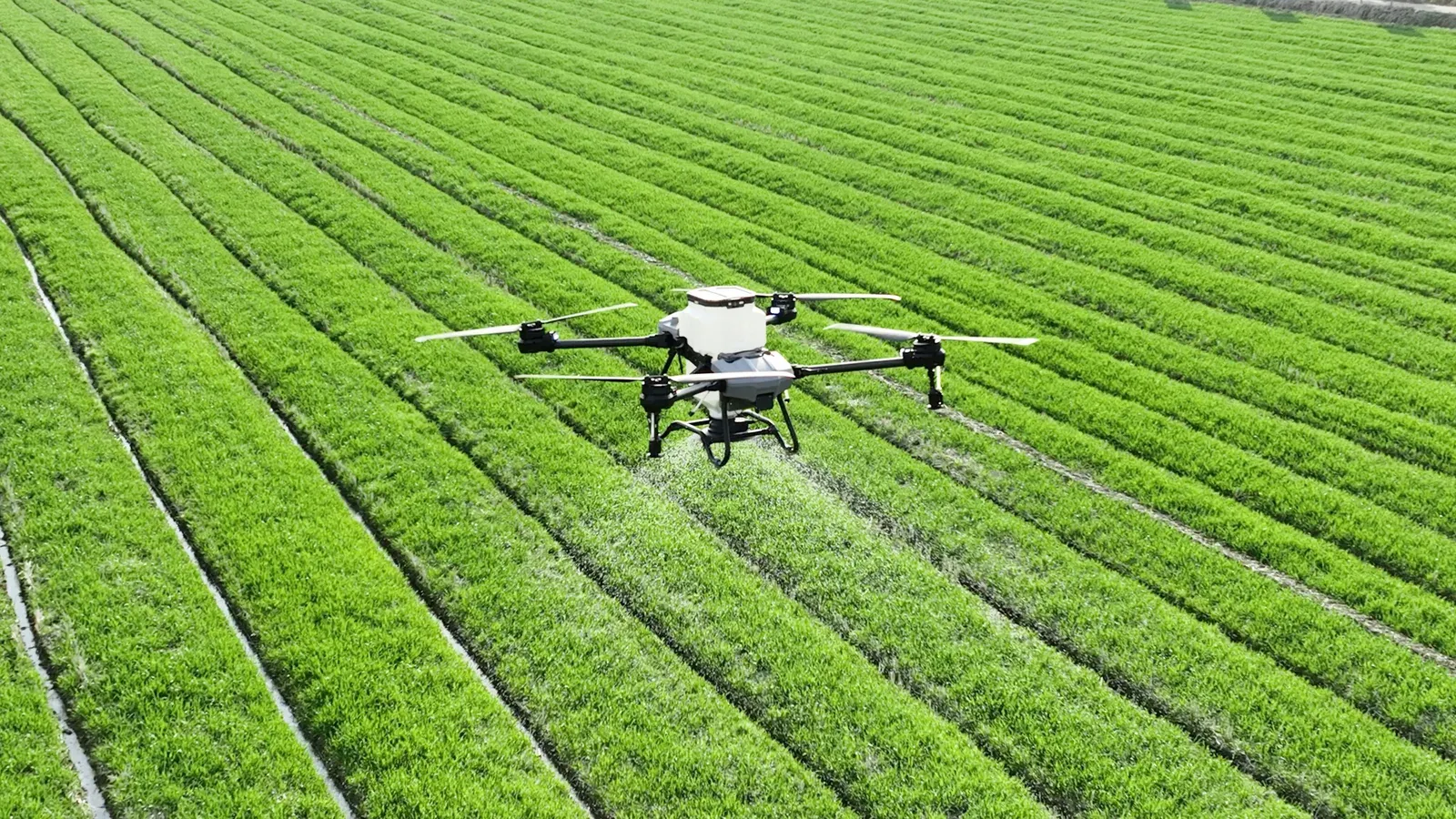
Here's the uncomfortable truth: no NDAA-compliant platform today matches the unit economics of a DJI Agras T50 or XAG P100. Hylio, out of Texas, is the most serious contender — the AG-272 carries a 27-liter tank at 26 L/min and holds an FAA exemption for BVLOS swarm operations of up to three aircraft under Part 137. But the support network is thin, spare parts can take weeks, and the cost per sprayed acre still runs 40 to 70 percent above the Chinese competition.
For the row-crop operator who needs to cover 2,000 acres in a single pre-harvest day, the math simply doesn't work. Period.
What rarely gets said out loud: commercial agriculture, because it usually doesn't sell directly to the federal government, has minimal regulatory exposure. It's the sector under the least pressure to move — and it will probably be the last to migrate, if it migrates at all.
Software, UTM, and the Hidden Cost of Transition
Swapping hardware is the easy part. What actually breaks operations is the data pipeline. DJI's integrated ecosystem creates dependencies that many operators built around without ever noticing. Migration means rebuilding the whole workflow.
- Audit which workflows currently depend exclusively on DJI apps (mission planning, telemetry, post-processing).
- Test open substitutes: QGroundControl, Auterion Mission Control, DroneDeploy, Esri Site Scan.
- Retrain pilots — the learning curve on a Skydio or Freefly is not trivial, marketing brochures notwithstanding.
- Revalidate procedures with your civil aviation authority and spectrum regulator for the new radios, especially when frequencies differ from those cleared for DJI products.
Final Thoughts on the DJI Ban
My read, without hedging: anyone flying for U.S. clients, critical energy infrastructure, or defense should have started a transition pilot back in 2024. Anyone flying purely in commercial ag with no U.S. exposure can — and probably should — wait another 18 to 24 months before moving CAPEX. Everyone else lives in the middle, and the decision comes down to three questions.
- Future contracts: will any RFP in the next 24 months require NDAA compliance? If yes, start the pilot now.
- Actual payload needs: do you really need a 2-million-points-per-second LiDAR, or does a 20MP RGB camera close the job? The answer swings your budget by $30,000.
- Local support: is there a dealer with spare parts in-country? If the honest answer is "we import direct," plan for three to six weeks of downtime per incident.
A hybrid setup — keeping DJI for domestic work and running a smaller NDAA-compliant fleet for sensitive contracts — is, right now, the rational play for most mid-sized operators.
The DJI ban isn't a single event. It's a slow process with asymmetric effects across sectors. Treat it as binary — "replace everything" or "ignore it" — and you'll be wrong on both sides.