DJI Ban in the US: How the Global Drone Market Reorganizes in 2026
An editorial look at how the American clampdown on DJI is redrawing supply chains, prices, and fleet decisions in markets still tied to the Chinese manufacturer — Brazil and the EU included.
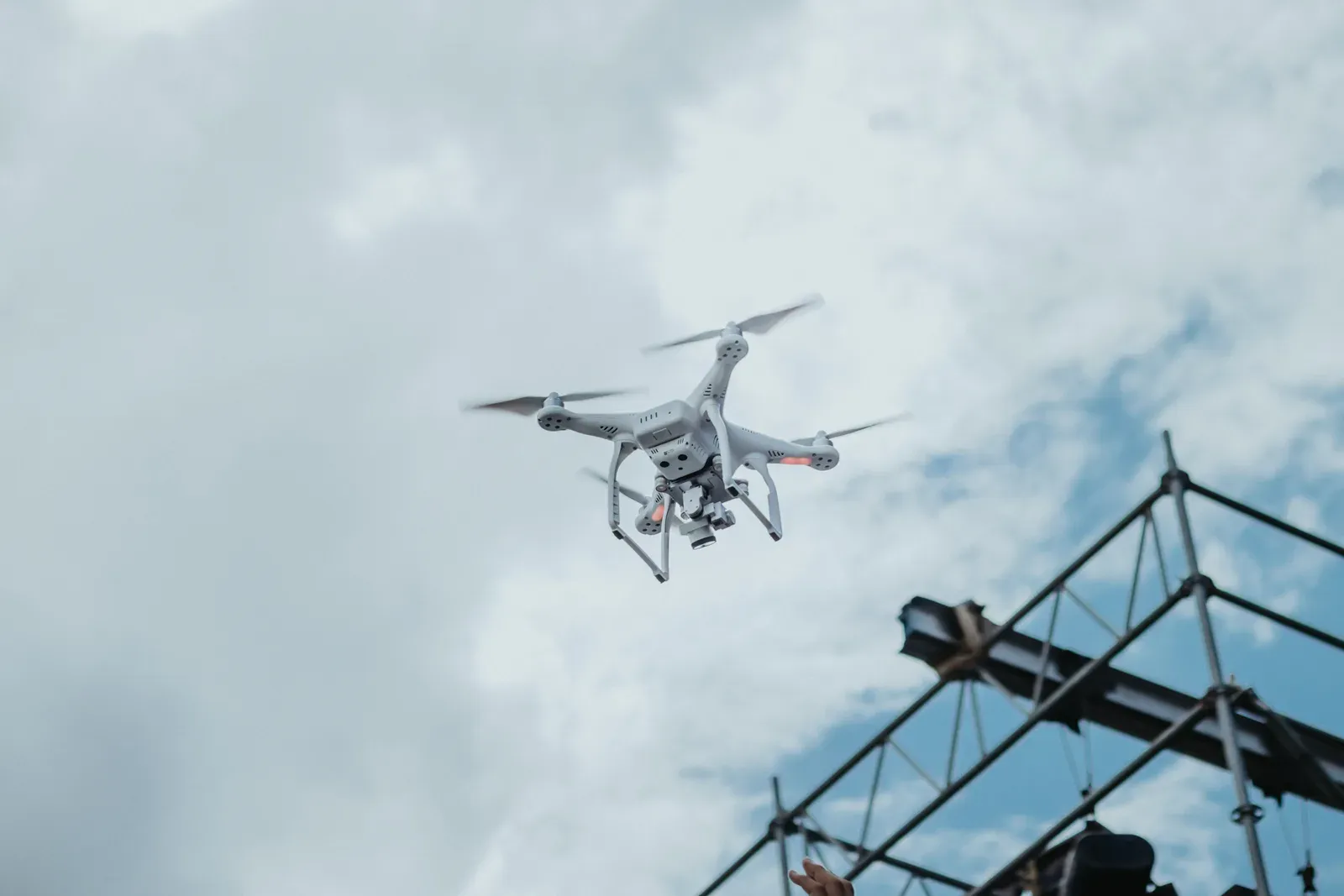
December 2025. The US National Defense Authorization Act takes effect without the clause that would have given DJI and Autel a formal window for a security audit — and, in practice, pushes the two largest Chinese civilian drone makers onto the FCC's Covered List. This is the scenario global operators have been modeling since the Countering CCP Drones Act of 2024, and it is no longer hypothetical. The DJI ban in the United States has stopped being a regulatory risk and become a fixed variable in fleet planning.
Frankly, the question that matters is no longer whether DJI will be banned — it's how the rest of the global market reorganizes around a company that, according to DroneAnalyst's 2024 estimates, still holds roughly 70% of the sub-25kg segment worldwide. Brazil, the European Union, Latin America, and Southeast Asia inherit the awkward task of deciding whether to follow Washington, stay regulatorily neutral, or simply absorb the inventory that will no longer flow to Miami.
What the DJI Ban Actually Does
The DJI ban is the set of US federal restrictions that prevents new DJI and Autel Robotics equipment from being marketed on FCC-licensed spectrum, while also blocking their use in federal contracts and in publicly funded programs (DoD, DHS, DoI). It does not confiscate drones already in the field, but it closes the door to fleet renewal, new SKU homologation, and access to federal funding. The practical effect is a mid-term commercial death sentence.
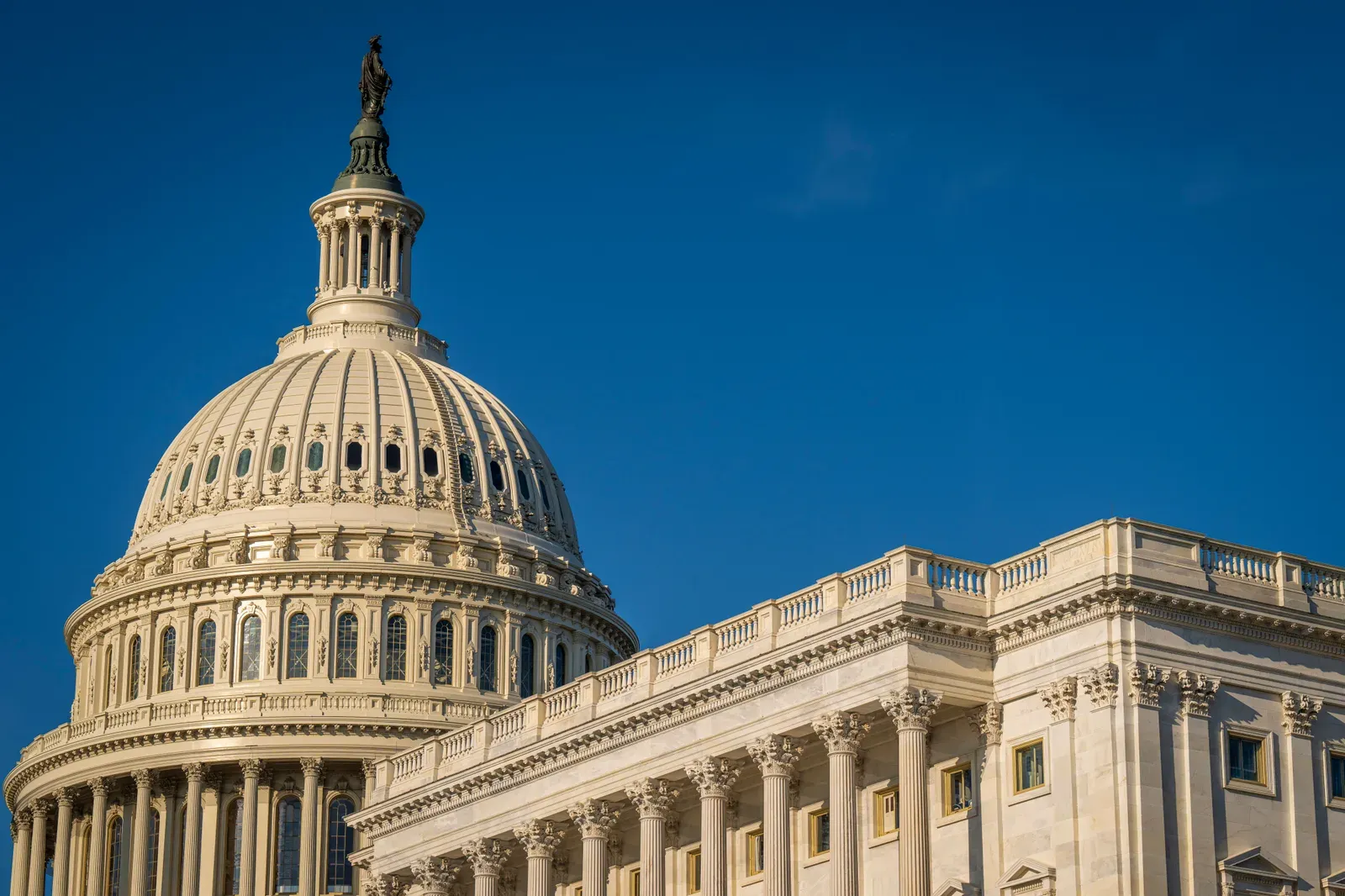
It's worth separating two layers that mainstream press tends to blur. First, the American Security Drone Act (2023), which already blocked federal purchases of drones from "countries of concern". Second, and harder-hitting, the Covered List inclusion via Section 1709 of the NDAA 2025 — that one hits the commercial civilian market. A transmission-line inspector in Ohio flying a Matrice 350 RTK homologated before the cutoff keeps flying. But the next Matrice? It doesn't enter the country.
Who Gains Ground: The Contenders for the American Vacuum
The US market is worth, roughly, US$ 2 billion a year in commercial hardware. That's too much money to leave orphaned. Four names have been positioning aggressively since 2024:
- Skydio — walked away from consumer in 2023 precisely to focus on enterprise and defense. The X10 has become standard in Duke Energy inspection and in DFR (Drone as First Responder) police programs. Price tag: 3x an equivalent Mavic 3 Enterprise.
- Parrot — the French company, with the Anafi Ai and Anafi USA, is the only European player with reasonable scale. Obvious beneficiary inside NATO.
- BRINC and Teal (Red Cat) — public safety and defense niches. The Teal 2 already won contracts under the US Army's Short Range Reconnaissance program.
- Anzu Robotics — the curious case. Licenses DJI hardware, assembles in the US, and runs firmware audited by Aloft. Political solution, not a technical one.
My read: none of these replaces DJI on cost-per-flight-hour. They replace it on compliance, which is a different thing. A surveyor closing mapping jobs at R$ 8 per hectare with a Mavic 3 Enterprise doesn't migrate to a US$ 15,000 Skydio X10 and keep the margin. They migrate and pass the cost through — or they lose the contract.

Brazil: Regulatory Neutrality and the Inventory Effect
ANAC (Brazil's civil aviation authority) shows no sign of following the FCC. RBAC-E No. 94, revised in 2023, is manufacturer-agnostic — what matters is technical homologation and Remote ID (still under public consultation in Brazil, with a mandate expected from 2027 onward). Anatel homologates DJI normally. Which means: operators in Brazil keep buying the Mavic 3, Matrice 350, and the new Matrice 4 without any formal obstacle.
The side effect that does matter is the inventory effect. Asian and European distributors that lost the American channel need to move units. In 2025, Brazilian importers already reported a 12–18% drop in Enterprise-line pricing compared to the previous year (source: monitoring of authorized DJI Brasil channels, DroneShow 2025). If you're building a LiDAR or PPK photogrammetry fleet, the window is now.
The obvious counterargument: long-term dependency. If a future Brazilian government decides to follow Washington — and there is precedent with Huawei on 5G, when Brazil wavered for two years — companies that standardized on a 100% DJI fleet get exposed. Serious fleet managers are already doing what Sabesp piloted in 2025: running contracts with two suppliers, DJI for production and a secondary vendor (in that case, XAG for agriculture and Autel EVO Max 4T for redundant inspection).

European Union: The Divergence Nobody Wants to Admit
EASA is not following the US. Regulation 2019/947 and the Class Identification Label (C0–C6) treat DJI like any other manufacturer that meets technical requirements. The European Commission, through DG GROW, did open a 2024 consultation on "strategic dependency in civilian drones," but the March 2025 output was lukewarm — it recommended supplier diversification without imposing restrictions.
Why? Simple. Europe has no substitute. Parrot alone cannot meet the continent's demand for inspection, precision agriculture, and mapping. Wingtra (Switzerland), Delair (France), and Quantum Systems (Germany) cover fixed-wing and defense niches, but commercial multirotor is DJI or nothing. Germany, in fact, authorized the purchase of the Matrice 30T for Bavarian firefighters in 2025 — a decision made with full awareness of the American debate.
Supply Chain: Where the Real Pressure Sits
Here's what few people say out loud. The DJI ban doesn't just change who sells drones — it changes who builds the sensors. Hesai (LiDAR) and Sony (CMOS payload cameras) supply virtually the entire enterprise market, DJI included. An expanded American sanction on components — the same model we saw with semiconductors — would freeze Skydio as hard as it froze DJI.
- High-density batteries (LiPo 6S and up): dominated by CATL and BYD, both Chinese.
- RTK/PPK modules: u-blox (Switzerland) and Trimble (US) split the market, but integration firmware is mostly Asian.
- Sub-2kg LiDAR sensors: Livox (DJI subsidiary), Hesai, Ouster. Two out of three are Chinese.
- Gimbals and stabilization: near-monopoly by DJI and Gremsy.
In other words: even the "American" drone has Chinese DNA in its BOM. Untangling that takes five to eight years, by RAND Corporation's most optimistic estimate ("US Drone Industrial Base," June 2024). Until then, it's regulatory theater.
What Brazilian Operators Should Do in 2026
- Use the pricing window through the second half of 2026 to refresh DJI Enterprise equipment, especially the Matrice 350 RTK and Matrice 4 Enterprise.
- Don't standardize your fleet on a single vendor. Reserve 20–30% of CAPEX for a second manufacturer — Autel, Parrot, or Skydio, depending on the use case.
- Document your data chain of custody. If your client exports to the US (mining, oil & gas, commodity-driven agribusiness), they will ask where your flight data travels. Having an answer ready is worth contracts.
- Track Brazil's Remote ID rollout. ANAC's 2025 public consultation points to a model close to the FAA's, and that changes firmware homologation.
Final Thoughts
The DJI ban is, at its core, a geopolitical decision dressed up as cybersecurity. It can be both at once — those aren't mutually exclusive. What matters for operators is that the global market will live, for at least three years, under a two-price regime: the US paying dearly for domestic alternatives, the rest of the world absorbing Chinese surplus at a discount. Whoever gets this and diversifies without paranoia comes out ahead. Whoever waits for regulatory clarity will be buying drones at double the price in 2028.
What to watch: the next NDAA (2026–2027 cycle) is expected to address components, not just finished products. If it passes, the game changes again. And then the conversation stops being about DJI and starts being about the viability of any commercial drone under US$ 5,000 in the West. Consider yourself warned.