Brazil's RBAC-E 94 Rewrite: What Operators Should Expect From ANAC's Next Drone Rulebook
Most coverage recaps the 2017 rule. This brief maps the operator-level consequences of ANAC's ongoing overhaul: risk-based categories, BVLOS pathways, Remote ID and how it interacts with DECEA's SARPAS Next.
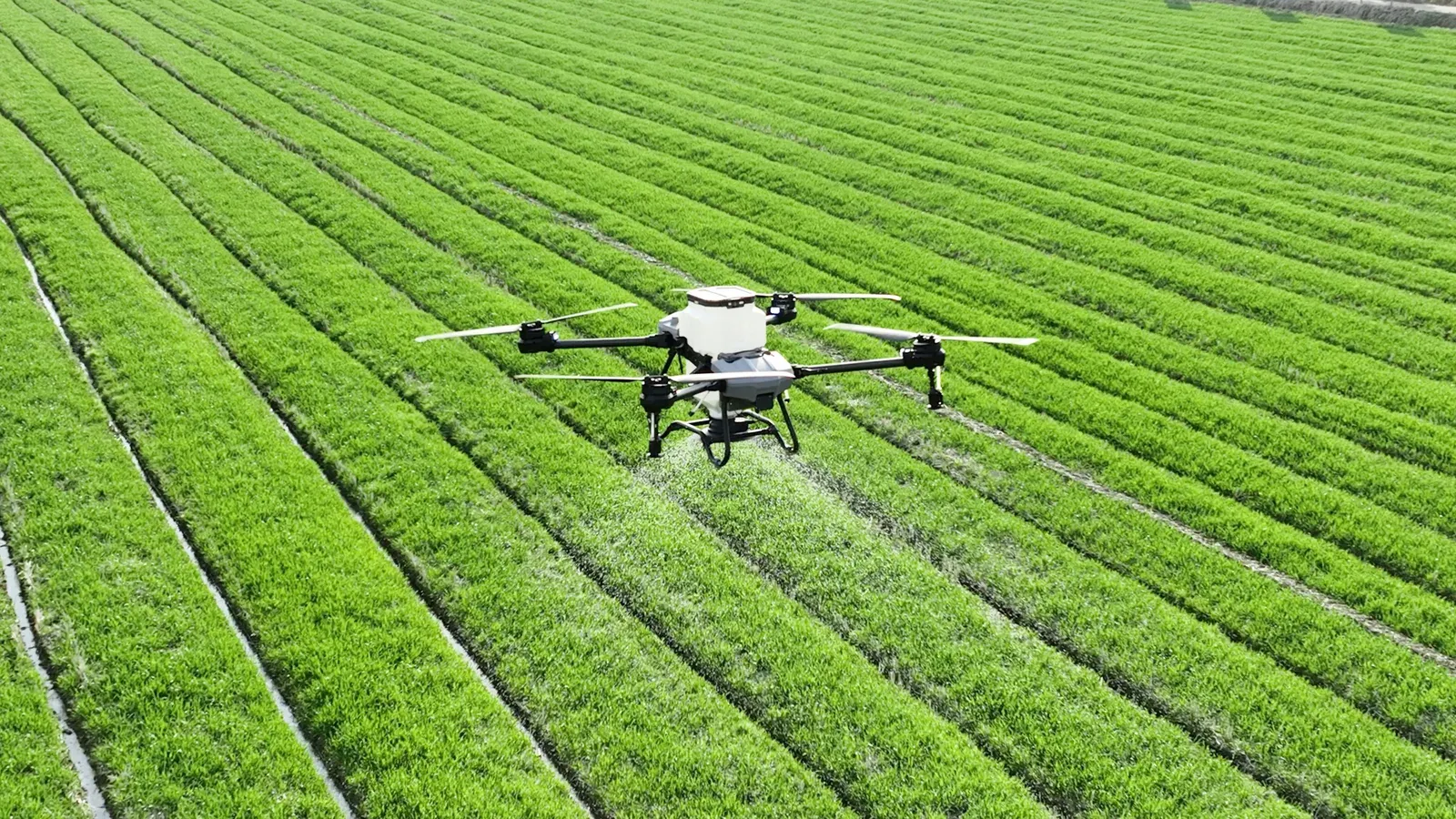
Eight years is a long time in the world of agricultural drones and regulation. RBAC-E 94, drafted in 2017 when a DJI Phantom 4 was still considered a serious professional tool, is finally being pulled apart at ANAC. And the RBAC-E 94 revision now on the agency's docket isn't cosmetic — it reshapes categories, opens formal BVLOS pathways, and forces the rulebook to talk to DECEA's airspace stack. Operators of agricultural drones who read only the old text are about to be caught flat-footed by these changes in agricultural drones legislation.
What follows is a practitioner-focused map of what's coming for agricultural drones, what's still uncertain, and where the friction with SARPAS Next and Remote ID will land. Not a recap of 2017. A forward brief for the agricultural drones industry.
The RBAC-E 94 Revision: A New Era for Agricultural Drones
The RBAC-E 94 revision is ANAC's structural overhaul of Brazil's 2017 civil drone regulation, replacing the weight-and-visual-line-of-sight framework with a risk-based model closer to EASA's Open/Specific/Certified tiers, formalizing BVLOS approvals, integrating Remote ID, and aligning with DECEA's airspace access system SARPAS Next. It affects every operator flying above 250g for non-recreational purposes, including those utilizing agricultural drones for large-scale farming.
That definition is the short version. The long version is messier, and honestly, more interesting for those working with agricultural drones.
Why the 2017 Rule Broke for Modern Agricultural Drones
The original RBAC-E 94 organized aircraft into Class 1 (>150kg), Class 2 (25–150kg), and Class 3 (<25kg), and then bolted on operational rules: 400ft ceiling, 30m horizontal from uninvolved people, VLOS by default, BVLOS only via bespoke waiver. It worked — barely — when the fleet was mostly sub-2kg quadcopters shooting real estate, but it failed to account for the rise of agricultural drones.
That's not the fleet anymore. Petrobras is flying tethered and long-range platforms over refineries. Vale runs autonomous inspection missions in Carajás. Agri operators are dropping 40kg XAG and DJI Agras units across soy fields in Mato Grosso, hundreds of hectares per shift. These agricultural drones are transforming farming practices. Iris Automation and Daedalean-style detect-and-avoid tech is knocking on the door. The class-by-weight logic simply doesn't tell a regulator whether a mission involving agricultural drones is safe.
On top of that, ANAC's waiver backlog for BVLOS was a well-known bottleneck through 2023–2024. Operators of agricultural drones waited months for missions that, in Europe, would be handled through an SORA submission in weeks. The pressure to reform was internal as much as external, driven by the efficiency of agricultural drones.

Foto: Christian Harb
Risk-Based Categories: Impact on Agricultural Drones Operators
The revision imports the logic — not the exact labels — of the EASA model. Expect three operational buckets, roughly:
- Low-risk operations: sub-25kg, VLOS, populated-area limits similar to today's Aeromodelo/Class 3 sub-2kg tier. Minimal paperwork. Register, fly, log. This category might include smaller agricultural drones used for scouting.
- Specific/authorized operations: anything outside the standard envelope — BVLOS, night ops over populated areas, heavier platforms, swarm missions. Requires a risk assessment submission (Brazil's version of SORA) and operator authorization. Many advanced agricultural drones will fall into this category.
- Certified operations: cargo delivery at scale, passenger-carrying eVTOL, high-energy platforms. Full aircraft certification, licensed remote pilot, ops manual, the works. This is where Eve Air Mobility and companies like Speedbird Aero's delivery corridor pilots will live, potentially alongside heavy agricultural drones.
The devil is in the risk assessment. If ANAC adopts a genuine SORA-equivalent methodology — with published Ground Risk Class and Air Risk Class tables — operators of agricultural drones gain predictability. If instead the agency invents a Brazilian variant with vague criteria, we'll trade one bottleneck for another in the agricultural drones sector. My read: they'll borrow heavily from JARUS SORA 2.5 but keep discretionary language. Bet accordingly for your agricultural drones business.
BVLOS Pathways: A Real Process for Agricultural Drones
BVLOS is the headline. Under current rules, every beyond-visual-line-of-sight mission requires a case-by-case authorization touching ANAC, DECEA, and sometimes ANATEL for the datalink. Operators describe it as a nine-to-fourteen-month exercise. The revision is expected to codify pre-approved BVLOS scenarios — think powerline inspection corridors, offshore-to-platform flights, linear infrastructure, and large-scale operations with agricultural drones — where an operator meeting defined criteria gets a streamlined green light.
Concretely, that likely means: a certified detect-and-avoid system (or a mitigant like segregated airspace via NOTAM), a documented C2 link with defined latency and loss-of-link procedures, remote pilot competency evidence, and a mission-specific ConOps. Companies already flying under experimental waivers — Nauru Airlines' Pacific work aside, in Brazil think of Speedbird Aero's iFood corridors in Aracaju and the ANAC/DECEA sandbox for medical logistics — have essentially been building the template for future drone operations, including those involving agricultural drones.
The obvious counter-argument is that scenario-based approvals are still restrictive compared to a fully performance-based regime. True. But going from bespoke waivers to standard scenarios is the leap that unlocks commercial scale for agricultural drones. Everything after is fine-tuning for the agricultural drones market.

Foto: Dawid Zawiła
Remote ID and SARPAS Next: Connecting Agricultural Drones
Remote ID is coming. The question is which flavor.
The FAA went with broadcast-only (Part 89, enforced September 2023). EASA allowed both broadcast and network. Brazil is signaling a hybrid — broadcast for local law enforcement pickup, network for integration into DECEA's UTM ambitions. That second half is where SARPAS Next matters for agricultural drones.
If the RBAC-E 94 revision mandates network Remote ID feeding SARPAS Next, ANAC and DECEA will finally have a live picture of the low-altitude environment — and operators of agricultural drones will finally have automated deconfliction instead of paper coordination.
Two things worth watching:
- Whether Remote ID applies retroactively to fielded aircraft (a hardware retrofit problem for fleets of DJI M300s and older Matrice 210s) or only to newly registered models. This is particularly relevant for existing agricultural drones.
- How ANATEL handles the radio spectrum question. Broadcast Remote ID in the US uses Bluetooth/Wi-Fi in unlicensed bands. Brazil's homologation regime for RF devices is notoriously slow, and this could stall rollout by 12–18 months even after the rule publishes for agricultural drones.
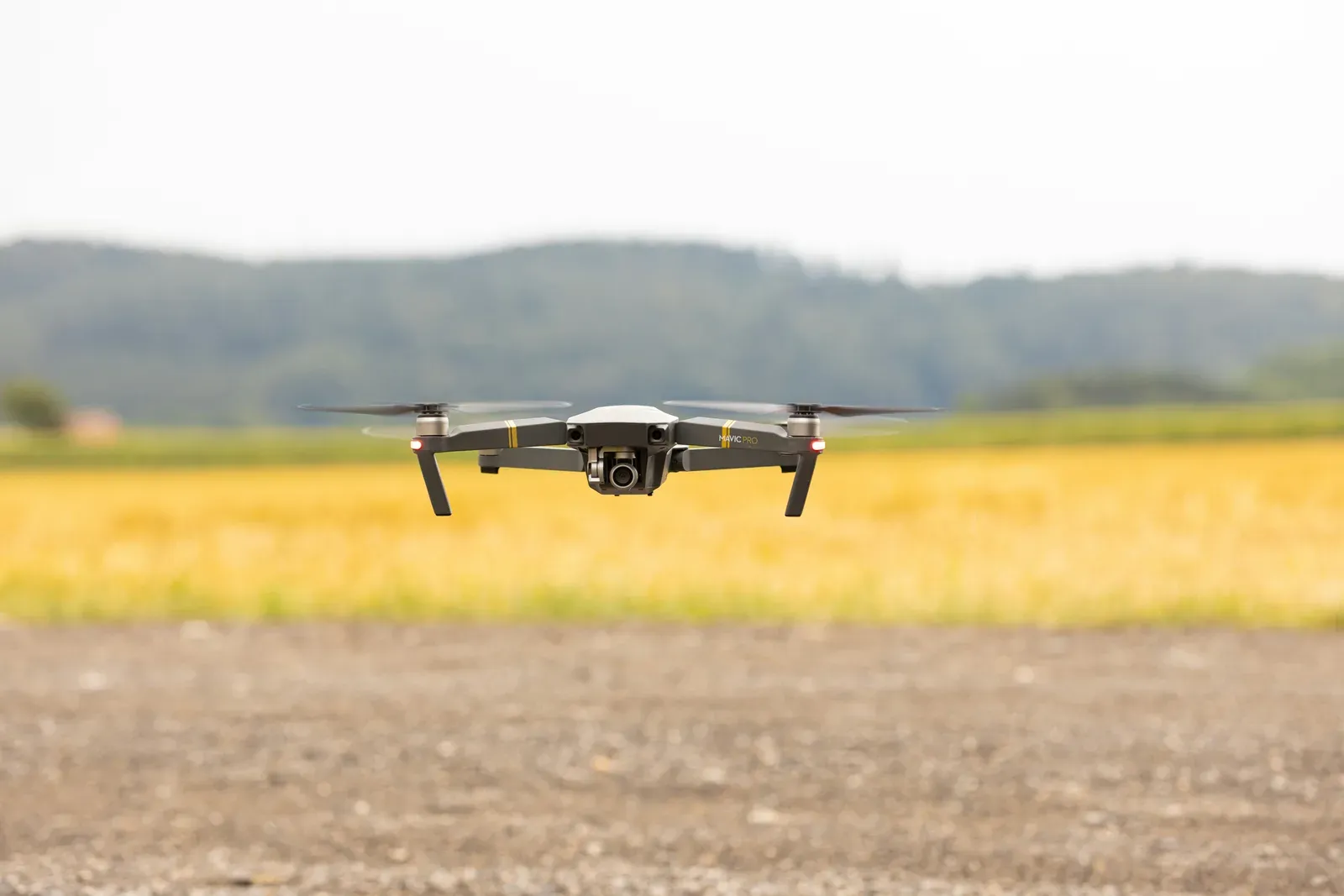
Foto: Andreas Schantl
What Agricultural Drones Operators Should Be Doing Right Now
The rule isn't published yet. Public consultation drafts have circulated, and ANAC's regulatory agenda flags publication windows that keep slipping. Don't wait for the Diário Oficial notice to prepare your agricultural drones fleet.
Audit your fleet for Remote ID readiness. Ask manufacturers — DJI Enterprise, Autel, Skydio, XAG — for their Brazil-specific Remote ID roadmap. If they hedge, that's an answer. This applies to all drone types, especially agricultural drones.
Start drafting SORA-style risk assessments now for your recurring mission profiles. Even under the current rule, ANAC increasingly wants risk-based justifications in waiver requests. The muscle transfers for agricultural drones operations.
Formalize your ops manual. Under the specific category, an operations manual with SOPs, emergency procedures, maintenance logs, and pilot competency records will likely be non-optional. Most Brazilian operators today run on a shared Google Drive folder. That won't survive an audit in the agricultural drones industry.
Track SARPAS Next integrations. If your mission software (DroneDeploy, Pix4Dcapture, UgCS) doesn't plan to interface with SARPAS Next's API, expect friction for your agricultural drones.
Comment during public consultation. ANAC has historically been receptive when operator associations — ABRAPHE, ABEAT — submit coordinated feedback. Silence gets you the rule the largest players lobbied for, affecting the future of agricultural drones.

Foto: Diana Măceşanu
The Uncomfortable Truth About Timing for Agricultural Drones
ANAC's regulatory calendar has slipped before. The RBAC-E 94 revision was informally targeted for 2024, then late 2025. A realistic operator planning horizon is publication in 2026, with a transition period of 12–24 months. Meaning the effective enforcement date could land in 2027 or 2028.
That's not a reason to wait. It's a reason to move now, while there's still time to shape it and to build operational habits that align with where the rule is clearly headed. Frankly, the operators who treat this as a compliance headache in 2027 will be behind the ones treating it as a competitive lever in 2025, especially in the sector of agricultural drones.
Takeaways for the Agricultural Drones Industry
The RBAC-E 94 revision moves Brazil from weight-class rules to a risk-based framework aligned with EASA/JARUS SORA logic — expect low-risk, specific, and certified tiers. This will significantly impact the operation of agricultural drones.
BVLOS gains formal pathways via standard scenarios, likely including linear infrastructure and delivery corridors for agricultural drones.
Remote ID will probably be hybrid (broadcast + network), tied into SARPAS Next as the seed of a Brazilian UTM for agricultural drones.
Operators should audit fleet Remote ID readiness, draft SORA-style risk assessments now, and formalize ops manuals — the transition period will be shorter than it looks. This is crucial for agricultural drones operators to operate compliantly.