DJI Agras T100 and T55: When the Sprayer Becomes a Crane and Rewrites Farm Economics
The jump to a 100 L payload and a lifting winch turns the agricultural drone from sprayer into multi-purpose platform. A critical read on what shifts in CAPEX, operational workflow, and the fight with XAG.
What actually changes from the T50 to the DJI Agras T100
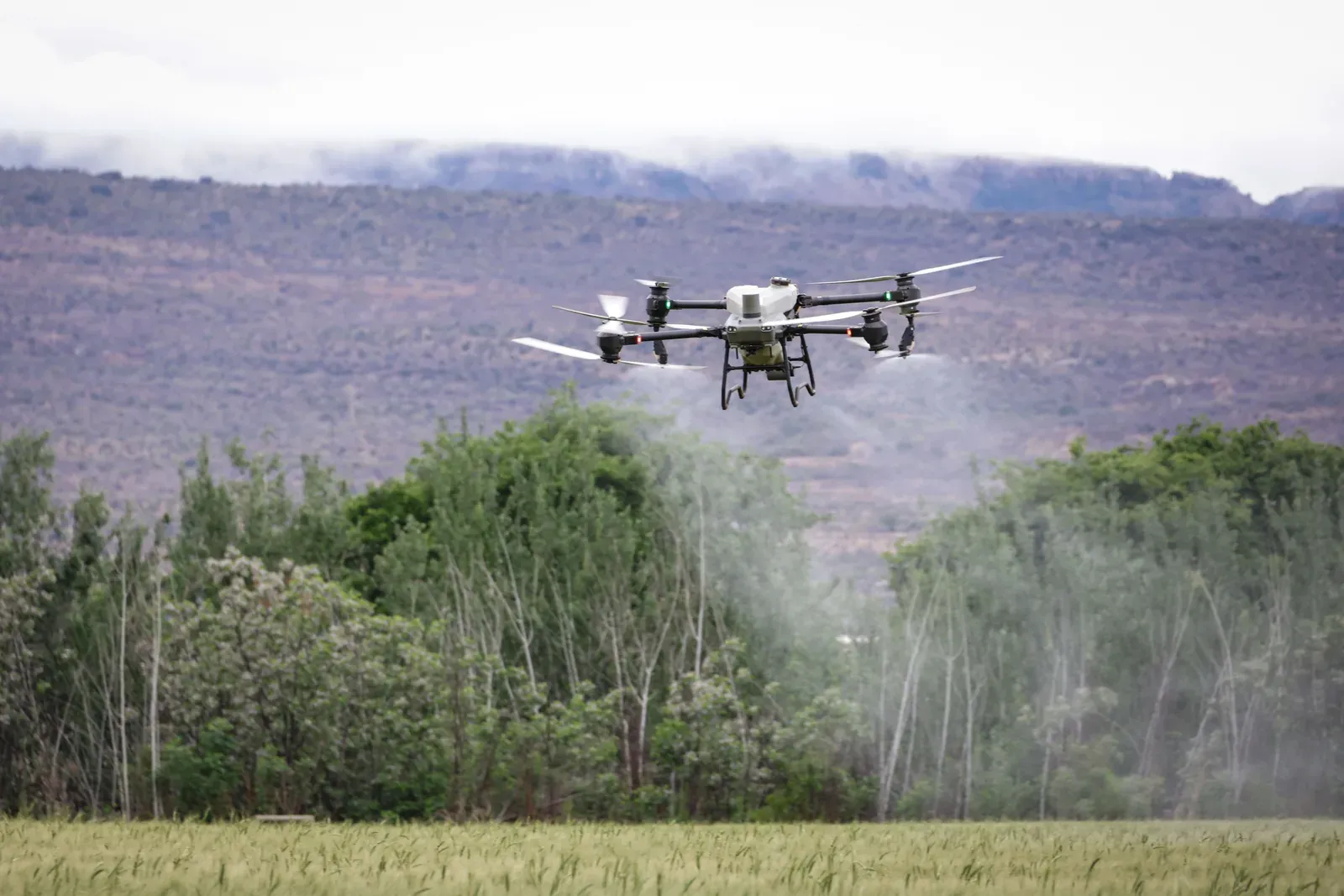
One hundred liters. That single number reshapes the conversation around agricultural aerial spraying and turns the DJI Agras T100 from "just a bigger drone" into a multi-role field platform. Beyond spraying, it can broadcast seeds and other solid inputs and handle lifting operations of up to 80 kg. Its smaller sibling, the T55, follows the same script with a 70-liter tank and its own winch system.
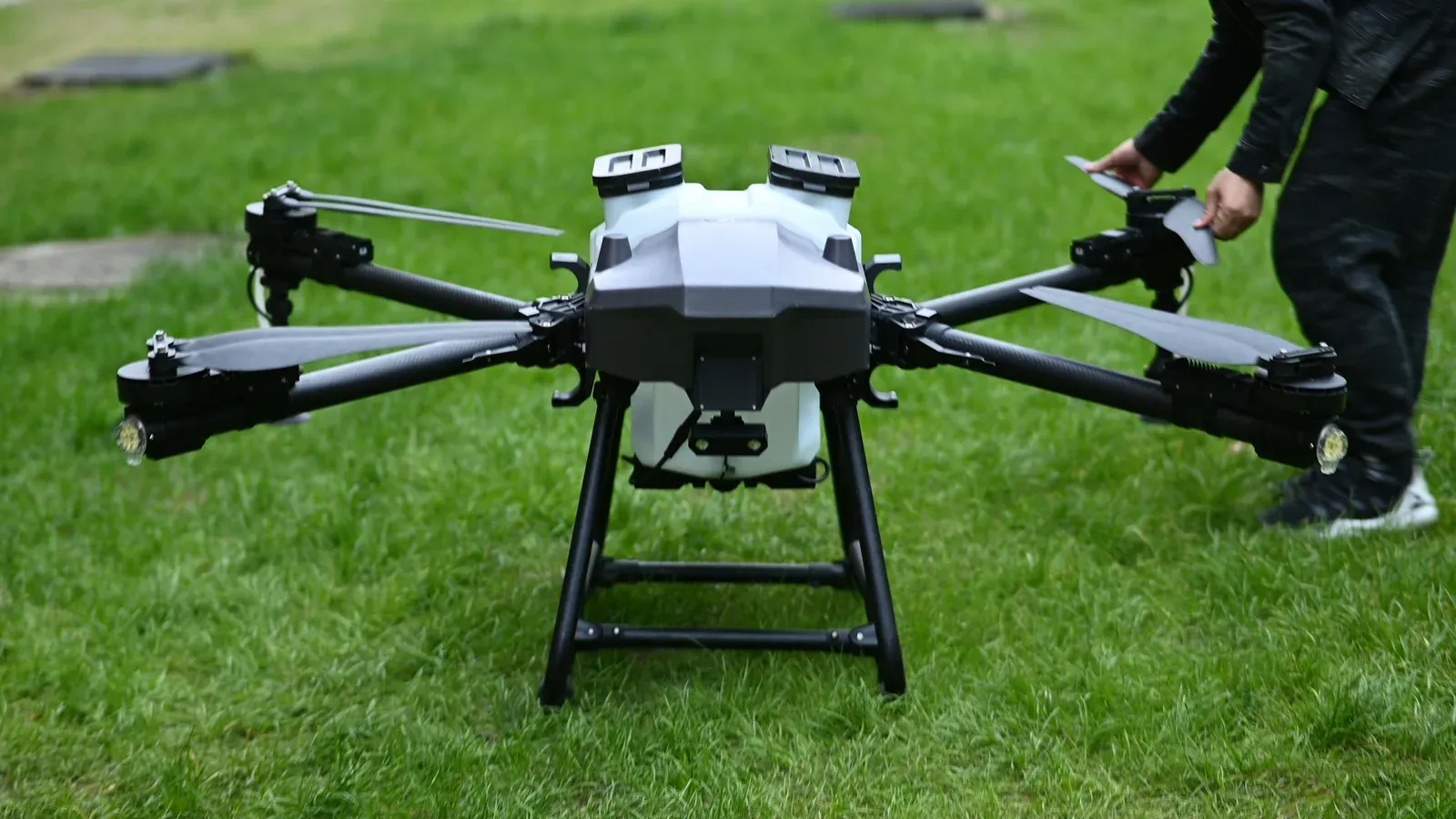
Unveiled by DJI at the end of 2024, the Agras T100 pairs a 100-liter spray tank with a 150-liter solid spreader, front and rear LiDAR, phased-array radar, and a binocular FPV camera. Both models run on 30,000 mAh quick-swap batteries fed by a 13 kW charger.
For the grower, though, the real question isn't what these drones can do on paper. It's how much of that capability actually translates into productivity, efficiency, and return on investment.
The new CAPEX math
The T100 is a real step up in capacity, but the numbers don't ride on tank size alone. The productivity gain only materializes when refills are genuinely the main bottleneck of the operation. On many farms, the real drag is clean-water logistics, moving between plots, or weather windows.
Drop a T100 into a small operation with few refill points and you may end up paying for capacity you'll never fully use. The investment makes more sense at scale: service providers with heavy hectare portfolios, mills running their own fleets, grain farms with scheduled spraying calendars. For smaller operations, something like the T50 often strikes a better balance between capacity and actual need.
Operational workflow: where the T100 wins and where it stalls
In tests published by DJI itself, the T100 hit up to 90 hectares per hour under controlled conditions. In the field, wind, obstacles, logistics, and terrain routinely eat into that number. Treat the factory figure as a capacity ceiling, not a guaranteed throughput.
Then there's the duty cycle. Heavier applications shorten flight time per battery, and battery swaps plus charging start showing up directly on the productivity ledger. Keeping the drone in the air continuously requires a real strategy around batteries, charging, and water refills, otherwise you're paying for downtime.
There's a regulatory layer too. Fully loaded, the operation's weight puts it squarely inside Brazil's ANAC rules and, depending on the scenario, DECEA airspace procedures. Not a blocker, but definitely a variable that has to sit in the plan before purchase, not after.
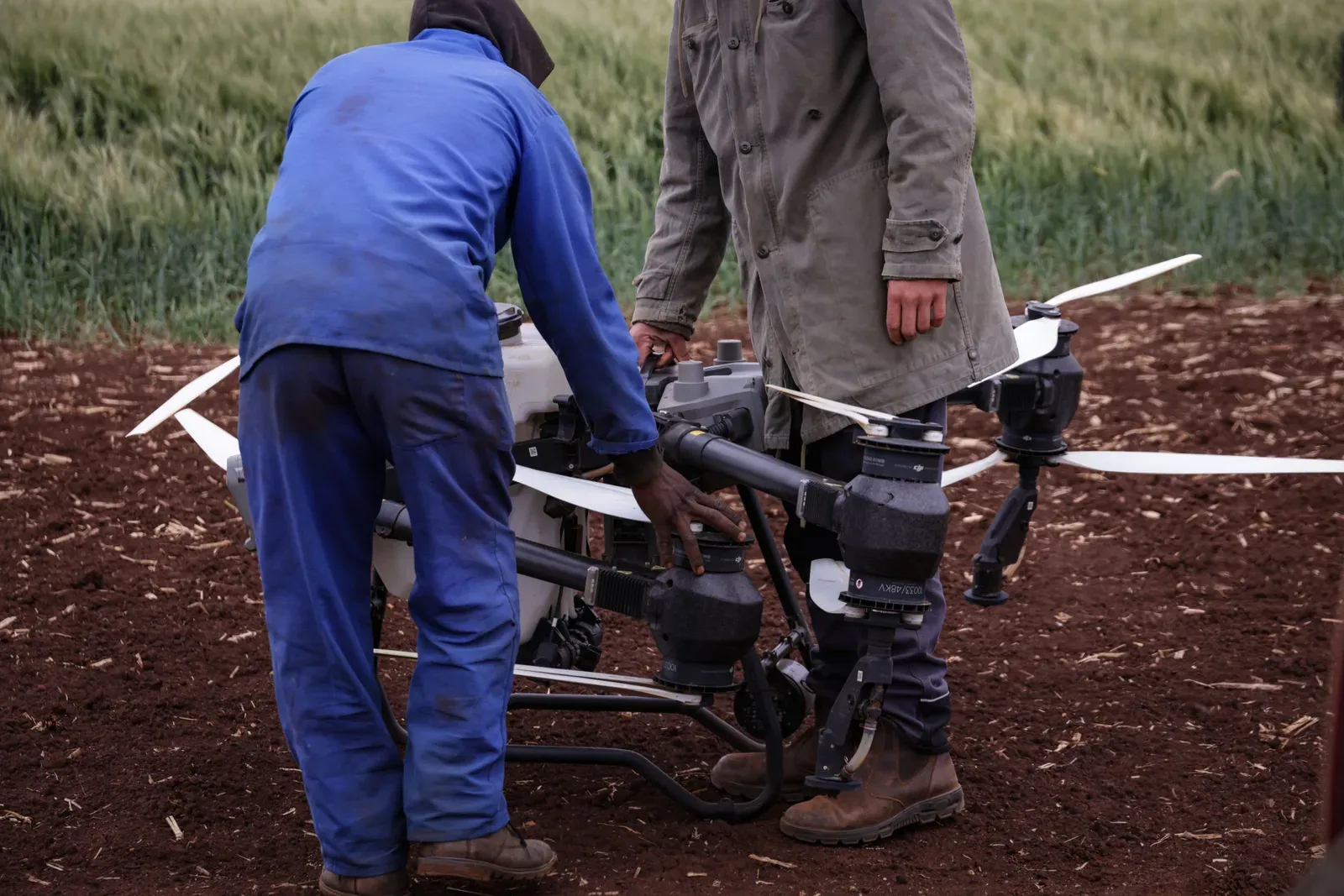
In the end, T100 productivity isn't a function of drone speed. It's the sum of endurance, batteries, refill logistics, field conditions, and regulatory compliance.
The fight with XAG and the Brazilian market
XAG has been expanding its agricultural footprint too. The P150, announced for 2025, pushes the same story of higher capacity and energy efficiency, while the P100 Pro remains one of the brand's workhorses.
More than a spec sheet duel, the DJI vs. XAG contest plays out in service, parts availability, financing, and operator support. On the ground, those factors often weigh as much as flight capacity or tank size when it's time to sign the invoice.
The purchase decision shouldn't stop at the datasheet. For a farm operation, fast access to replacement parts, maintenance, and technical support can be the difference between a drone that flies through the application window and one that sits in the shed while the spray calendar slips.
And the winch? Feature or product in its own right?
Here's my editorial bet: the lifting function will define the second wave of adoption. Not through spraying — through internal farm logistics. Hauling inputs to hard-to-reach areas, moving seedlings in reforestation projects, delivering parts to a center-pivot that broke down in the middle of a plot. In forestry, Suzano and Klabin have been testing cargo drones since 2023. A T100 with an 80 kg winch enters that conversation at half the price of a dedicated cargo drone. That matters.
Final thoughts
The DJI Agras T100 doesn't replace the T50 across the board. It earns its price tag when the extra capacity actually removes a bottleneck. Otherwise, you're buying more machine than the operation can absorb.
Among the T100's differentiators, the lifting system deserves attention. Carrying loads stretches the drone's role well beyond spraying and could open the door to new field applications — provided they stay within the rules and authorized conditions.
The rivalry with models like the XAG P150 also underlines that the choice can't be made on specs alone. Capacity, endurance, and features matter, but parts availability, service, training, and regional support have a direct line to whether the operation keeps running.
Regulation belongs in the equation from day one. Before committing to a machine of this size, verify which rules apply to the intended operation and which authorizations you'll actually need.
Over the next few years, the interesting story will be how the market exploits these expanded capabilities. If uses beyond spraying take root and the regulatory framework keeps up, the T100 may stop being labeled simply as a high-capacity ag drone and start playing a broader role inside the operational backbone of the farm.