Autonomous Drone Swarms in Ukraine: How Combat AI Is Rewriting the Playbook for Civilian UAS
Ukraine's front line has become a live lab for drone swarms with on-board AI and GPS-denied navigation. Here's what that means for the next wave of inspection, public safety, and counter-UAS work.

Autonomous drone swarms are no longer a future concept. In October 2024, a cell from Ukraine's 92nd Regiment posted footage of four FPV drones coordinating an attack on a Russian column near Vovchansk, with no human pulling the trigger on the final leg. The last kilometer was flown by on-board computer vision, while the target was locked by a model running on a $249 Jetson Orin Nano. That kind of mission, now routine in the Donbas, is what the industry calls a partially autonomous drone swarm. The rapid evolution of autonomous drone swarms is already rewriting what we consider possible far beyond the battlefield.
The war has turned into an involuntary laboratory. Doctrine, inexpensive hardware, and on-board AI are moving into civilian applications within months. Today, autonomous drone swarms are influencing asset inspection, public safety, environmental monitoring, and counter-UAS systems. It is worth examining what is being learned in Kupiansk and why it matters to a Part 107 pilot in Denver or a SISANT/DECEA operator in Belo Horizonte.
What an autonomous drone swarm actually is
A drone swarm is a group of three or more UAS operating in coordination, sharing perception and splitting tasks, with a single operator (or none) in the decision loop. Coordination rests on three layers: inter-unit communication (mesh or relay), shared perception (computer vision, LiDAR, RF sensing), and a decision agent — usually a neural network running locally, without relying on a link back to base.
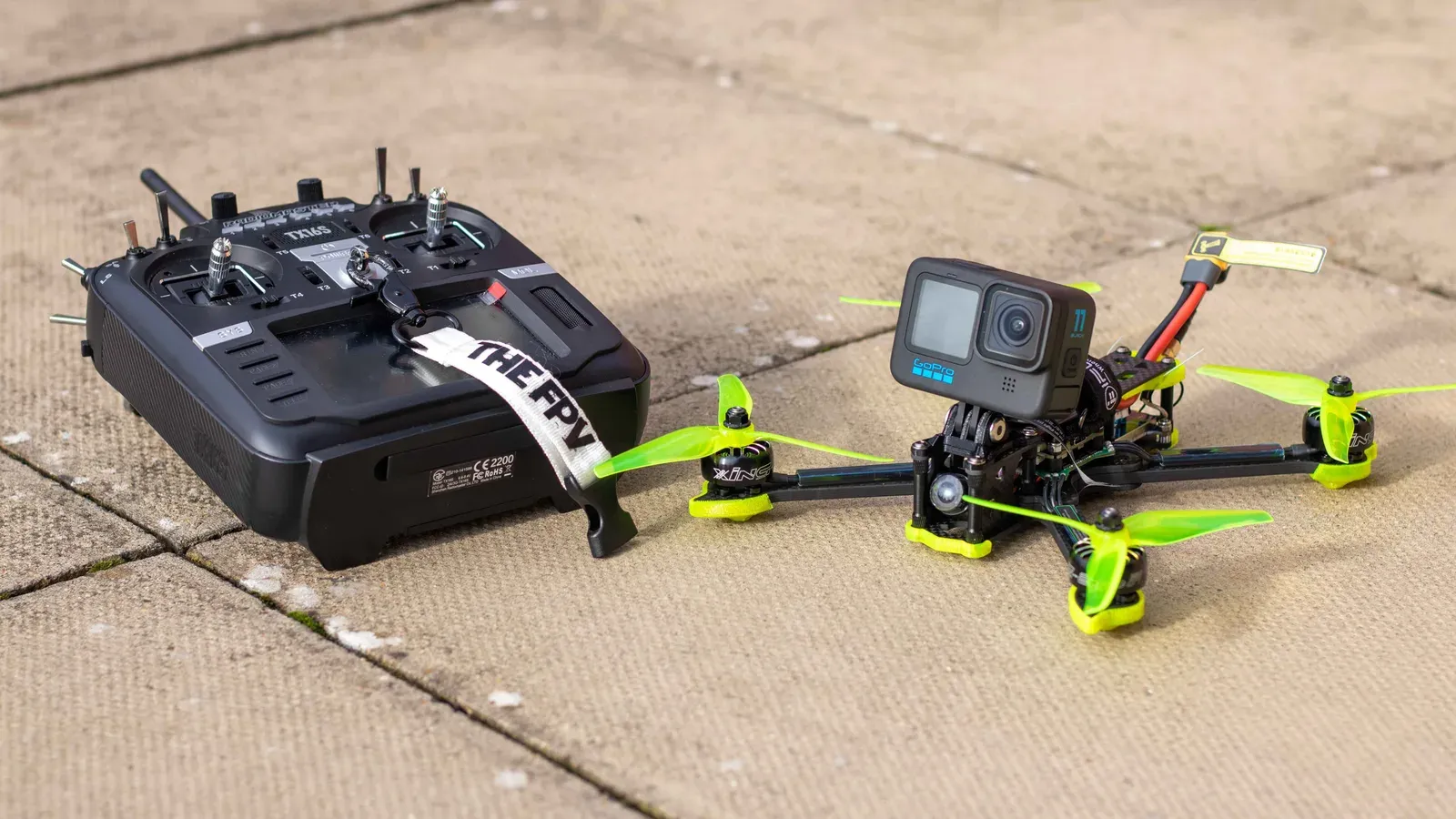
That's different from formation flying (drones following parallel waypoints, like Intel's light shows) and different from teleoperated multi-drone missions (several pilots, one shared target). A true swarm demands distributed autonomy. In Ukraine, that's what companies like Swarmer and Auterion have been delivering at scale — Swarmer claims missions with up to 8 units coordinated by a single operator since the second half of 2024.
What the Ukrainian front has proven about autonomous drone swarms
The war in Ukraine has become the world's largest testing ground for autonomous drone swarms. Russian electronic warfare, including GNSS jamming across entire corridors, GPS spoofing, and RF jamming on the 2.4 and 5.8 GHz bands, forced a race toward real autonomy. If the link drops, the swarm has to keep going. If GPS lies, the units need another reference to navigate. That pressure pushed autonomous drone swarms and coordinated flight doctrine forward.
Three concrete advances explain why autonomous drone swarms have evolved so quickly over the past 18 months:
GPS-denied visual navigation (VIO + terrain matching): Units reach the target by comparing camera frames against pre-loaded satellite imagery. Reported accuracy is 3 to 8 meters over flights of up to 15 km.
Terminal guidance via embedded AI: Detection models running on a Jetson Orin or Raspberry Pi 5 lock onto the target during the final 400 to 800 meters. The mission becomes immune to jamming because the communication link is no longer needed.
Mesh coordination between units: When one aircraft is lost, another immediately takes over as the relay. The network reorganizes itself automatically. The operator sees the outcome, not the process.
Together, these capabilities are transforming autonomous drone swarms into practical systems that can complete complex missions with minimal human intervention.
What has not been proven is a large autonomous drone swarm with more than 30 units operating safely in a civilian urban environment with dynamic obstacles and real air-traffic constraints. DARPA's OFFSET demonstrations have shown that 250 units can be coordinated over open terrain. Doing the same above a downtown avenue is another story entirely.
Translating the doctrine: industrial inspection with autonomous drone swarms
This is where autonomous drone swarms turn military doctrine into civilian ROI. Mining, oil and gas, and pulp companies already operate fleets of dozens to hundreds of drones, but almost all on single-aircraft missions. The bottleneck is human, and autonomous drone swarms are designed to remove it.
Picture inspecting 200 km of transmission lines with a swarm of three Skydio X10s flying in relay. One covers the sector ahead while another processes thermography for the section just cleared. No operator standing in the field. It's technically feasible today. What still holds autonomous drone swarms back is BVLOS regulation, which remains case-by-case in most jurisdictions.
For infrastructure operators, autonomous drone swarms can reduce inspection time, improve operational resilience, and lower deployment costs.
Use cases where autonomous drone swarms already make short-term economic sense:
- Tailings dams: Continuous RTK photogrammetry with 3 to 5 rotating units, generating weekly orthomosaics.
- Pipelines and power lines: Linear coverage with automatic relay, eliminating the link-loss problem.
- Managed forests: Distributed LiDAR mapping. Several pulp majors are already testing autonomous drone swarms for large-scale forest surveys.
- Ports and refineries: 24/7 perimeter patrol with automatic hand-off between units, another practical application for autonomous drone swarms.
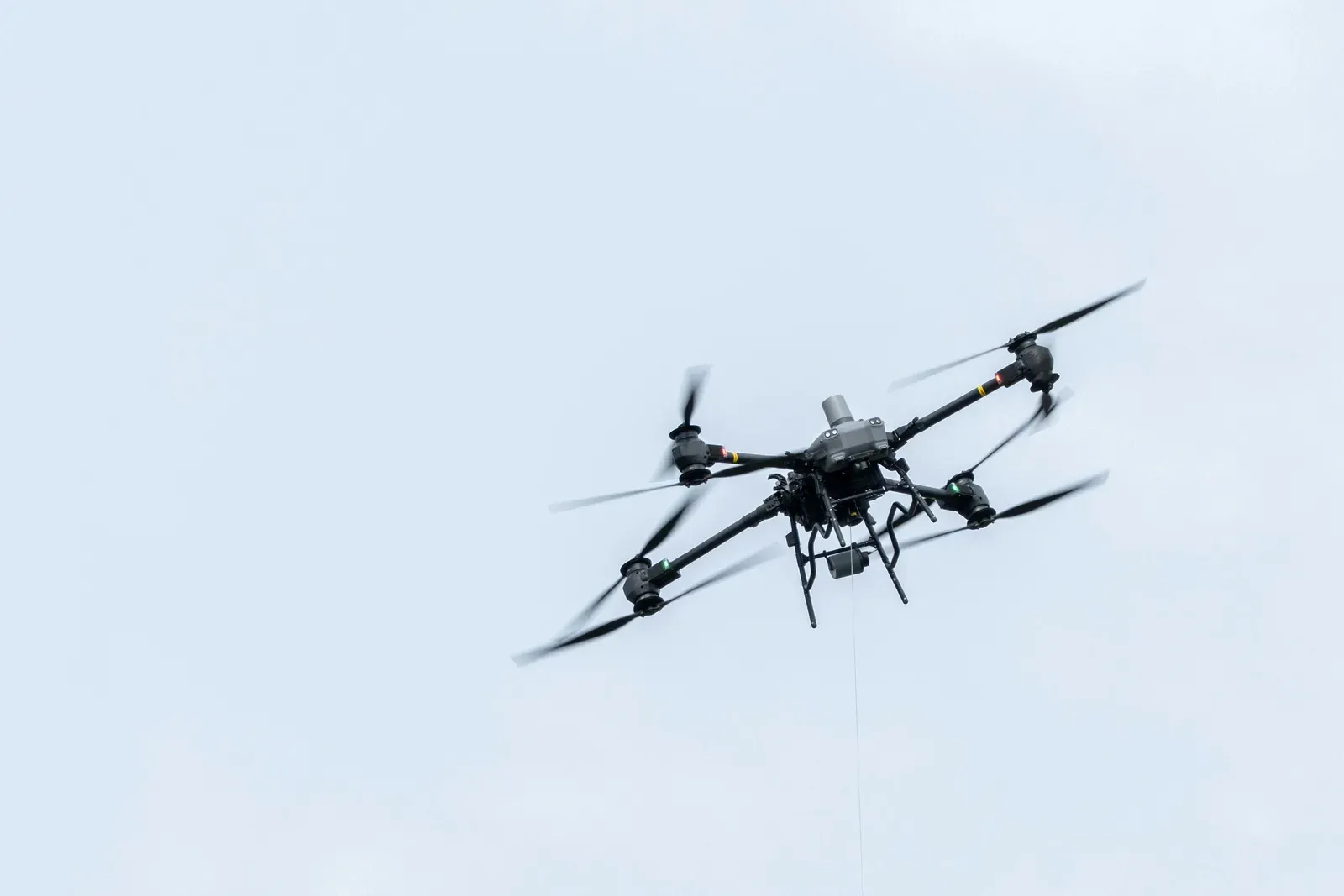
Public safety: the uncomfortable conversation
Frankly, this is where the autonomous drone swarms debate gets thorny. Police forces in São Paulo, Rio de Janeiro, and Minas Gerais already use drones in daily operations. The temptation to import autonomous drone swarm doctrine into policing is enormous. It is also the point where regulators should slow down.
The problem is not the technology. Autonomous drone swarms already work remarkably well. The problem is the legal and ethical context. Handing tracking decisions to AI in a country where facial recognition still produces disproportionate errors creates unacceptable risks. In my view, autonomous drone swarms only make sense in Brazilian public safety in two situations: search and rescue (SAR) and static perimeter monitoring.
The SAR case is much stronger. Firefighters in Santa Catarina could have saved critical hours with a coordinated-sweep swarm. That is a direct, practical, and ethical translation of autonomous drone swarm doctrine.
Counter-UAS: defending against a hostile swarm
If the technology is inexpensive, and it already is, the next question becomes obvious. How do you defend critical infrastructure against autonomous drone swarms? Airports, refineries, power plants, and prisons must be prepared for coordinated attacks.
Brazil still lags behind in this area. Counter-UAS regulation remains fragmented. There is no clear civilian protocol defining how an airport operator should respond when a non-cooperative autonomous drone swarm appears on final approach. The risk of incursions into sensitive airspace is real.
The Ukrainian front offers three important lessons for stopping autonomous drone swarms:
- Multi-sensor detection: RF monitoring alone cannot detect every autonomous target. Effective detection combines radar, RF, and acoustic sensors.
- Kinetic neutralization: Physical interception is often more effective than jamming when the target no longer depends on a communication link.
- Sensor networks: Ukraine's Sky Fortress relies on thousands of microphones to monitor airspace and improve early threat detection.
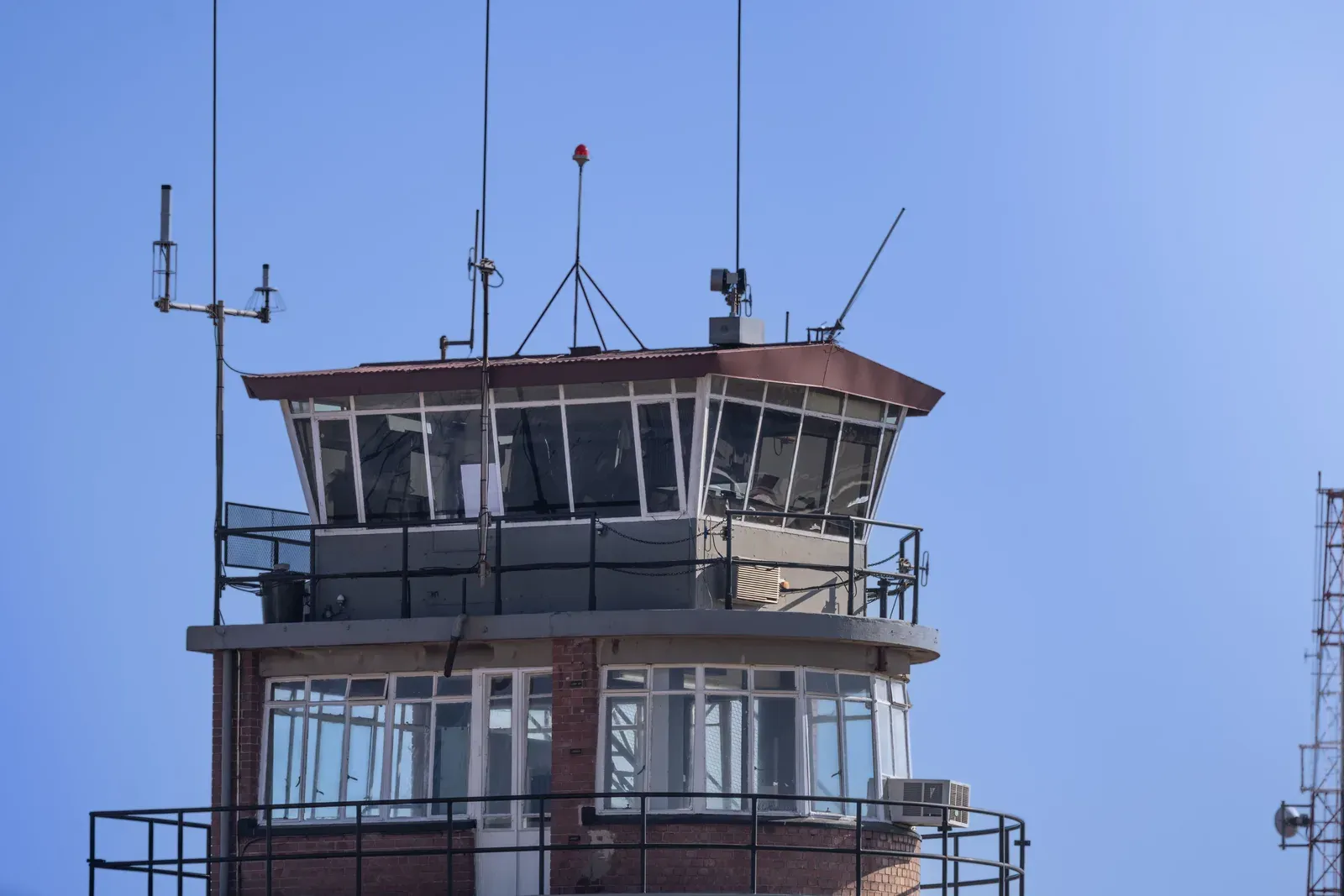
Remote ID and the regulatory gap
Countries slow on Remote ID and UTM will get caught flat-footed when commercial swarms arrive. Without Remote ID, there's no way to separate an authorized flight from a hostile group. Deep down, it's the same problem as a license plate — except it's in the air, and decisions happen in seconds. The window to regulate is closing.

Final thoughts
Autonomous flight doctrine is off the drawing board. It's being written in real time, and any operator who ignores drone swarms will wake up in 2027 at a competitive disadvantage. This is a productivity tool without precedent.
- What to watch: how national aviation authorities revise BVLOS frameworks to accommodate multi-aircraft operations.
- What to test now: a two-drone relay pilot — the first real step toward coordinated ops.
- What to push for: Remote ID adoption, to make safe operations viable.
- What to avoid: uncritical use of autonomy in public safety without ethical debate.
Drone swarms aren't the future. They're the present, running late. Anyone who wants to be part of this shift needs to start treating the aircraft as a node in an autonomous network. The swarm is here to stay.