DJI on the FCC Covered List: The Domino Effect Hitting Brazil's Drone Market
While DroneDJ and sUAS News cover the U.S. angle of the DJI ban, nobody is reading what it means for Brazil — the world's second-largest market for DJI Agriculture and heavily dependent on parts, firmware, and authorized service.

The Covered List is maintained by the U.S. Federal Communications Commission and catalogs equipment and services deemed a national security risk. Once a manufacturer lands on it, they lose authorization to sell new radio-equipped products which means, in practice, virtually every commercial drone inside U.S. territory. Huawei, ZTE, and Hikvision have been on the list since 2022.
Brazil is not a signatory. The country does not automatically mirror the U.S. list. Locally, ANAC (Brazil's civil aviation authority) now regulates civil unmanned aircraft under RBAC 100, published in June 2026, while Anatel handles homologation and telecom requirements for the equipment itself. So the U.S. ban on DJI does not, on its own, produce an equivalent ban in the Brazilian market.
Brazil is a major market for DJI — and that matters
In February 2024, DJI Agriculture disclosed that Brazil had overtaken the United States as the second-largest market for the brand's spray drones, trailing only China. The Agras T40 and T50 dominate operations in sugarcane, soy, and coffee. AsBraAg estimates that more than 12,000 Agras units were active in the country by the end of 2024, concentrated in Mato Grosso, Goiás, and western São Paulo state.
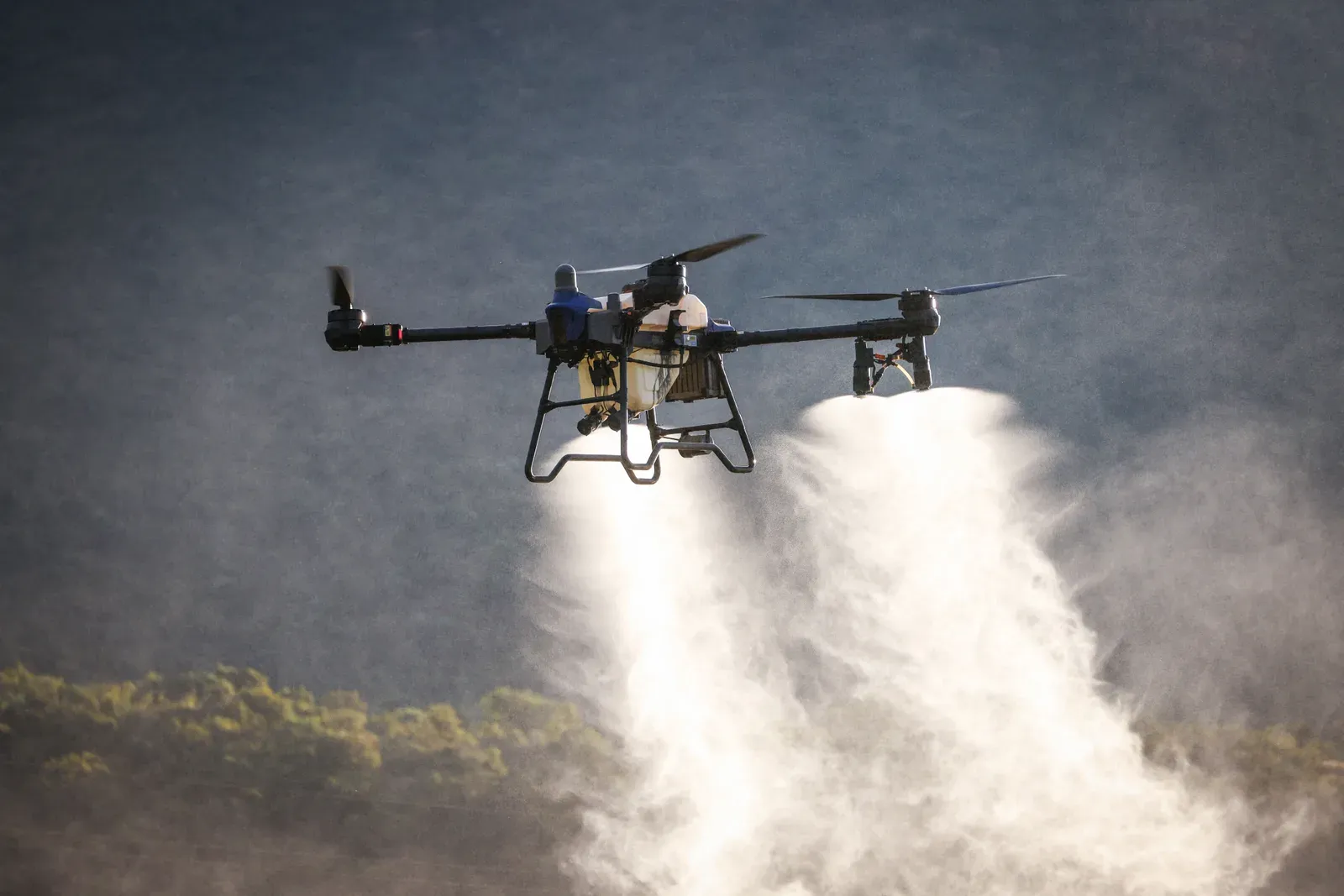
Foto: Magda Ehlers / Pexels
If the U.S. drops out of the game, DJI's math changes. Less production scale on premium civil SKUs, pressure on margins, and the part nobody talks about reallocation of critical spare-parts inventory toward markets that are still buying new equipment. Brazil should, in theory, benefit from that reshuffle. But there's a catch.
The catch: spare parts follow active production lines, not warehouse logic
When a model is discontinued in large markets, spare-parts production evaporates with it not overnight, but within 18 to 24 months. Operators who bought the Mavic 3 Enterprise in 2023 are already reporting 45- to 60-day waits for ESCs and RTK modules through authorized service centers in São Paulo (data gathered in November 2024 from three technical centers). If the Mavic 4 gets blocked in the U.S., that pattern is likely to worsen across the entire civil lineup.
Four ways the DJI FCC ban will hit Brazilian operators
- Price: losing the largest consumer market reduces fixed-cost dilution. Realistic expectation: an 8% to 15% pass-through on the real-denominated price by the second half of 2026, on top of FX effects.
- Service turnaround: longer queues at authorized centers (DJI Care Refresh included), with repair times likely stretching from today's 20–30 days to 40–60.
- Firmware and geofencing: in January 2025, DJI made it clear that it will tweak geofencing globally for political reasons (it removed U.S. restrictions after pressure). Brazil becomes a swing variable — for better or worse.
- Competition: Autel Robotics (also in the crosshairs), Skydio (which abandoned the consumer market), Parrot (Anafi USA), and second-tier Chinese players like Autel EVO and XAG are starting to look at Brazil with sharper appetite.
The XAG case: an alternative in a DJI-ban scenario
XAG, based in Guangzhou, is the world's second-largest ag-drone manufacturer and has operated in Brazil since 2022 through distributors in Cuiabá and Rondonópolis. The P100 Pro carries 50 liters and competes head-on with the Agras T50. It doesn't have DJI's service network — not yet. But if DJI stumbles on support during the 2025/2026 cycle, XAG has a 24-month window to build coverage. In my read, that's the most likely scenario.
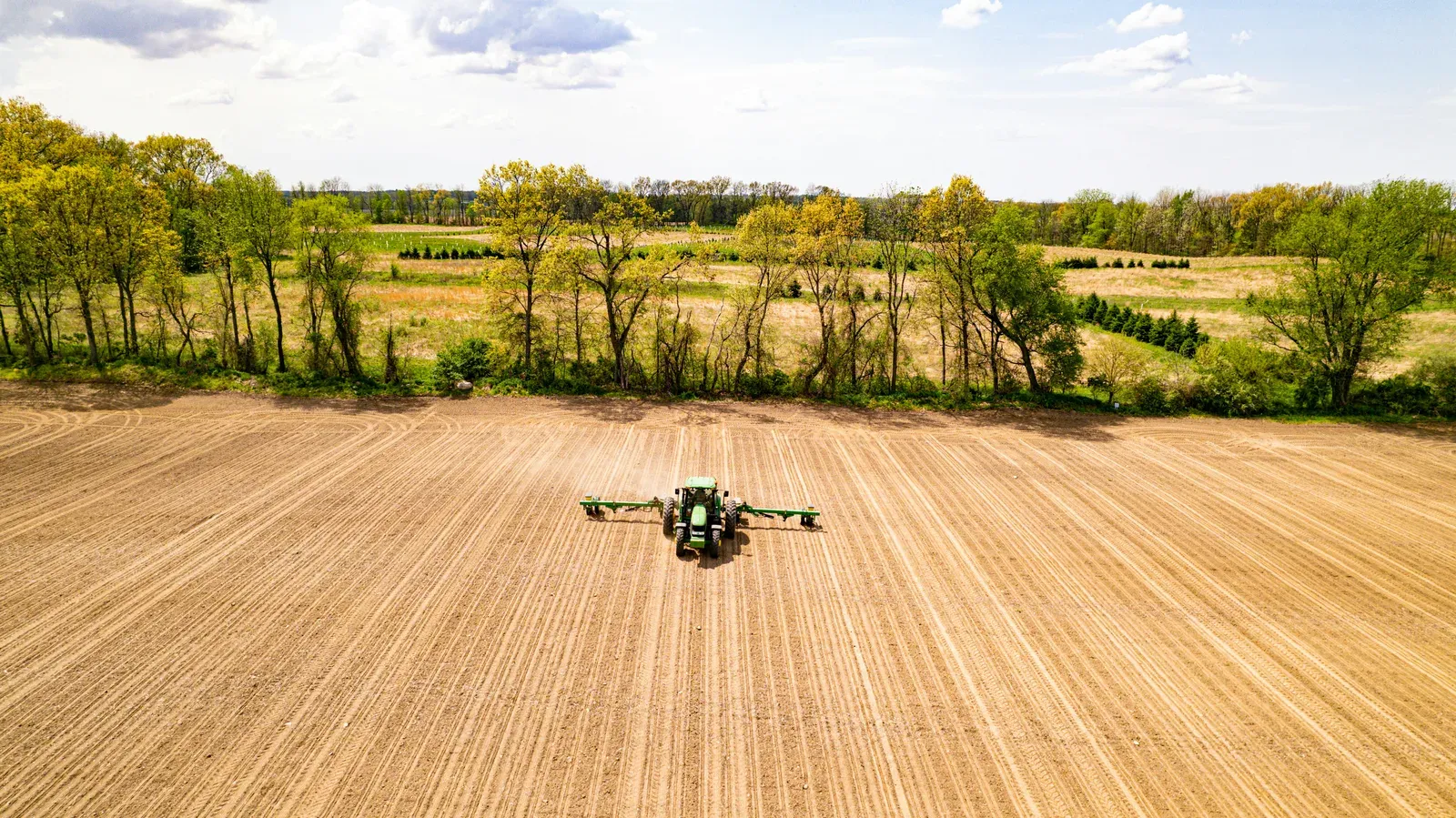
Foto: Loren King / Unsplash
On the enterprise side (mapping, inspection, public safety), the conversation is different. WingtraOne, senseFly (what's left of it), Wingtra Gen II, and Quantum-Systems Trinity Pro are already mature alternatives for photogrammetry and LiDAR. More expensive typically 2x to 4x the DJI equivalent but built on a European supply chain and free of the risk that an American veto contaminates the global chain.
What ANAC and Anatel can and can't do
Honestly, not much. ANAC regulates operations, not manufacturers. Anatel homologates products one by one. Neither has a mandate to intervene in international supply chains. What movement exists is political: in October 2024, Brazil's agribusiness caucus began informally discussing a BNDES credit line for domestic ag-drone manufacturing a project that, if it moves at all, moves slowly. Five years, minimum, for a scalable local alternative.
Meanwhile, Brazilian Remote ID (the local version of the standard discussed in the revised RBAC-E 94) is stuck in public consultation. If the country had a clear tracking framework, it would have more leverage to demand long-term support commitments from DJI. It doesn't. It loses.
What to do now: practical recommendations
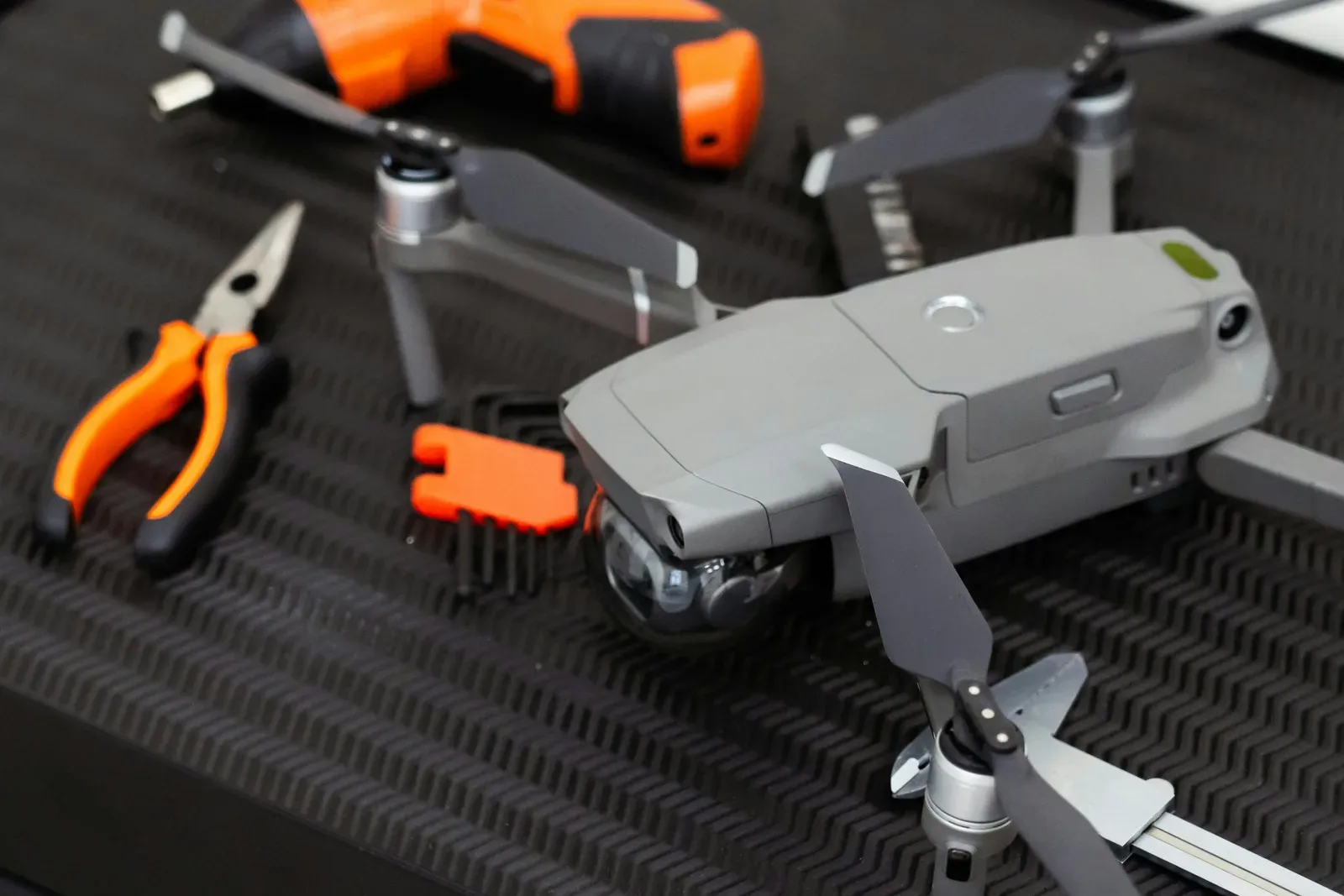
Foto: RUT MIIT / Unsplash
- Stock critical parts (ESCs, motors, TB65/TB60 batteries, RTK modules) for fleets older than 12 months — buy 12 months of inventory now, before the price pass-through hits.
- Reassess DJI Care Refresh contracts: if service degrades, the value of the insurance drops. Negotiate a written SLA with your distributor.
- For new enterprise purchases in 2025, request parallel quotes from WingtraOne Gen II and Quantum-Systems Trinity Pro. You probably won't close on price, but it gives you leverage against the DJI distributor.
- Agricultural fleets: run 1–2 XAG P100 Pro units in parallel. Don't replace everything — but breaking 100% dependence on a single manufacturer is basic risk-management hygiene.
- Track the FCC site monthly (proceeding 21-232) and DJI Global's communications. The binary decision is due by December 23, 2025.
Photo: RUT MIIT / Unsplash
Final thoughts on the DJI FCC ban
The U.S. veto on DJI is not just an American problem. In Brazil, the fallout will touch the supply chain, repair timelines, and every new-purchase decision. It's a global market-architecture issue, and the country — as a major buyer of the brand's ag drones — is going to feel it in the wallet, in the repair queue, and in firmware availability over the next 18 months. Anyone treating this as a foreigners' problem is going to hit 2026 with grounded fleets waiting for parts.
The smart move isn't to walk away from DJI. It's to stop depending only on DJI. The dominance the brand built in Brazil was, in part, the market's own fault — it accepted a de facto monopoly because it was cheap and it worked. It will keep working. Just more expensive, slower, and with a geopolitical asterisk nobody asked for.