Part 108 BVLOS: What the FAA Proposal Actually Changes for Global Drone Operators
Mainstream coverage framed Part 108 as an industry win. It's worth unpacking the technical gaps — right-of-way, ADS-B, insurance, and detect-and-avoid — that operators outside the US will inherit when their own regulators copy the framework.

August 2025. The FAA finally released the Part 108 NPRM, and most of the trade press treated the text as a watershed moment for commercial beyond-visual-line-of-sight drone work. Not quite. The Part 108 BVLOS rule is a genuine regulatory step forward — but with technical gaps that Brazilian, European, and Latin American operators need to understand before their own regulators clone the model.
The thesis of this piece: anyone reading only the executive summary of the NPRM walks away with a distorted picture. Read the appendices on right-of-way, ADS-B, insurance requirements, and detect-and-avoid (DAA) and you'll see the FAA punted several hard decisions to the operator. ANAC, EASA, and Mexico's DGAC will inherit the same holes if they copy the framework without adapting it.
What Part 108 Actually Is, in 50 Words
Part 108 is the FAA's proposed permanent rule for commercial BVLOS operations with drones up to 1,320 lb (600 kg). It replaces the current case-by-case waiver regime under Part 107, creates an operator certification framework similar to manned Part 135, and sets airworthiness requirements scaled to operational risk.
Right-of-Way: The Reversal Nobody Talked About Enough
The most controversial piece of the NPRM sits in §108.15. The FAA proposes that manned aircraft operating below 400 ft AGL in Class G airspace yield right-of-way to a BVLOS drone, provided the drone is electronically broadcasting its position. That's a historic inversion of the "see and avoid" principle.
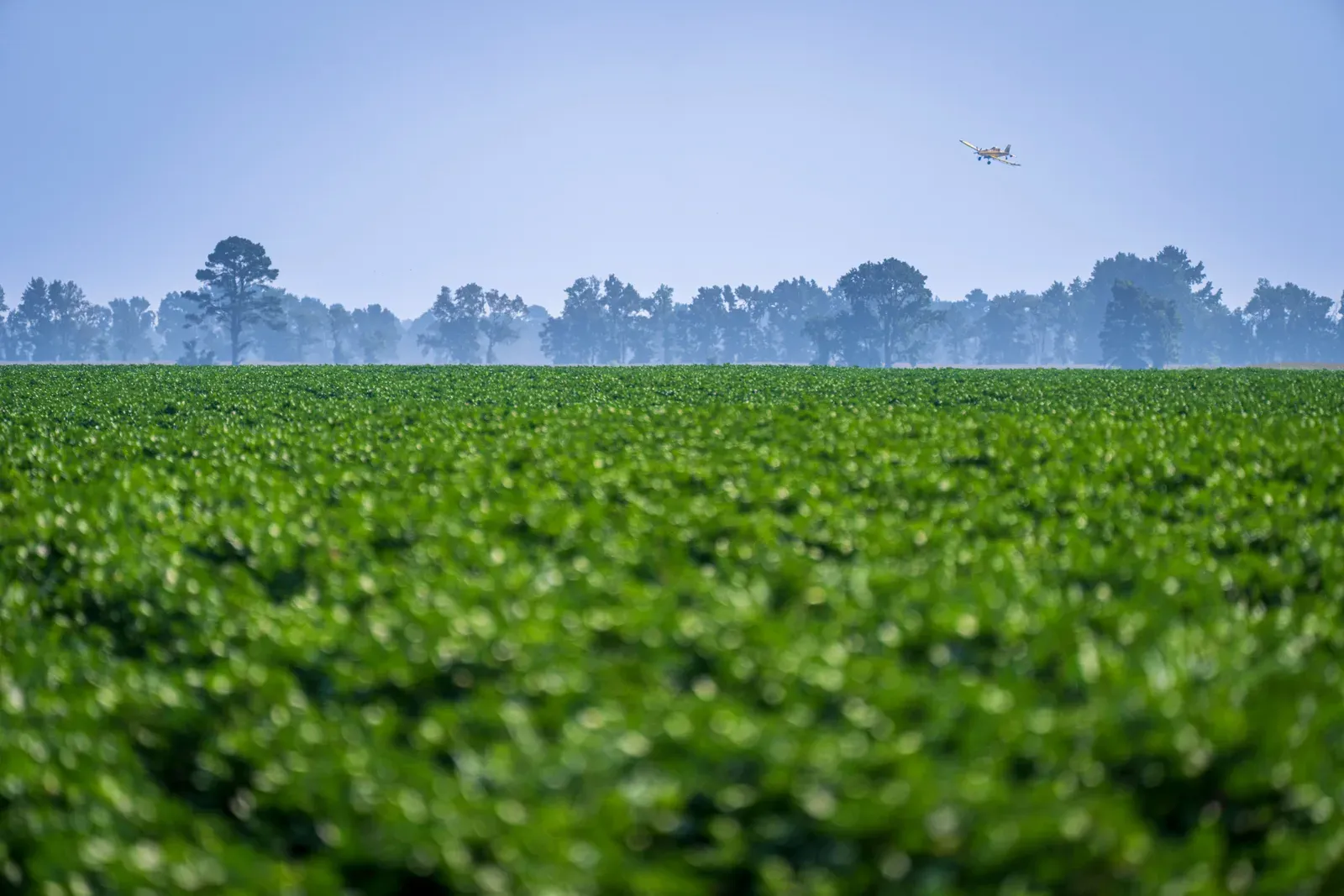
AOPA and NBAA reacted exactly as you'd expect — ag spray pilots and EMS helicopters routinely operate in that band. The uncomfortable truth is that the FAA is trying to solve by rulemaking a problem engineering hasn't solved yet: reliable cooperative detection at low altitude.
This matters beyond US borders because Brazil's ANAC has signaled since the November 2024 RBAC-E 94 workshop that it intends to use Part 108 as a reference. Cloning §108.15 in a country where manned agricultural aviation runs more than 2,400 active aircraft (SINDAG 2024) would be reckless at best.
ADS-B In, ADS-B Out, and the Two-Languages Problem
The FAA explicitly prohibits Part 108 drones from transmitting ADS-B Out. The reason is technical and reasonable: it would saturate the spectrum around metropolitan areas. But the rule requires the aircraft to receive ADS-B In for conflict awareness. Fine. What about manned aircraft that don't broadcast ADS-B Out below 10,000 ft in uncontrolled airspace?
There are many. In the US, an estimated 30–40% of the general aviation fleet is unequipped. In Brazil, the share is higher. The NPRM tries to bridge the gap by requiring complementary sensors — radar, acoustic, optical — but leaves the architecture open.
In practice, the operator picks the DAA vendor and carries the certification risk. Iris Automation, uAvionix's Casia G, and Echodyne's EchoGuard have all published compliance roadmaps, but none has been validated under a final Part 108 — because a final Part 108 doesn't exist yet.

Detect-and-Avoid: The Black Box of the NPRM
Minimum acceptable DAA performance under Part 108 is defined by statistical probability of unresolved conflict, not by sensor specification. That's good in theory — technology-neutral. Bad in practice, because it hands the operator the burden of proving their system meets the required Target Level of Safety (TLS).
A few things stay murky:
- How do you validate sensor failure rates in heavy rain, fog, or low light?
- What confidence interval is acceptable for mid-air collision (MAC) risk modeling?
- Who audits the operator's simulation model — the FAA, a DER, an accredited third party?
- How is the multi-drone scenario handled (two BVLOS aircraft converging under cooperative DAA)?
The NPRM promises guidance material later. Translation: the first certified operators will pay the cost of figuring it out the hard way.
Insurance and Liability: The Piece the Press Skipped
The proposed Part 108 framework raises a broader insurance question: whether minimum liability coverage will adequately reflect the exposure created by routine BVLOS operations.. Insurance exposure becomes materially different when BVLOS operations move into dense urban environments, infrastructure corridors and delivery networks
An opinion, plainly: the FAA lowballed that number to avoid scaring off startups. Politically sensible, actuarially not. If ANAC copies the figure into its Brazilian equivalent, we'll end up with underinsured urban BVLOS operations — and the first serious collision becomes a regulatory crisis.

What Operators Outside the US Should Watch
EASA already runs under SORA (Specific Operations Risk Assessment), conceptually more mature than Part 108 on risk assessment but less prescriptive on DAA. Convergence is coming — and Brazil historically imports the US model with an 18–24 month lag.
Three concrete recommendations for anyone operating or planning BVLOS outside the US:
- Don't treat Part 108 as a ready-made template. Read the technical appendices and map the gaps before your national authority imports them blindly.
- Start documenting mission data now. Sensor logs, C2 link failure rates, near-miss incidents. That data will be the backbone of your certification case when the equivalent local rule drops.
- Push your insurer and broker for coverage above the regulatory minimum. The NPRM floor is a floor — not a market benchmark.
Final Thoughts
Part 108 unlocks operations that today depend on case-by-case waivers, and that's genuinely positive. But anyone selling the NPRM as an "industry win" is reading the press release, not the regulatory text. Those are different documents.
For operators outside the US, the message is twofold: track the FAA comment process (which closes in January 2026) and, at the same time, engage actively with your national regulator's public consultation when the local equivalent goes to hearing. Copying without adapting is the worst of both worlds. And it's exactly what tends to happen.