Brazil's RBAC 100: What Changes for Drone Pilots, Operators and Manufacturers as Weight Classes Disappear
Brazil's ANAC has scrapped weight-based classes in favor of a risk-driven model. Here's what actually changes for registration, pilot exams, insurance and BVLOS flights — without parroting the official brochure.

RBAC 100 is Brazil's new civil drone regulation. Resolution No. 805, signed on June 15, 2026, approved the rule, which was published the following day. The old RBAC-E No. 94 is gone. In its place, a framework that sorts operations into three buckets — Open, Specific and Certified — based on how risky the flight actually is. Weight still matters for some thresholds. But it is no longer the anchor.
The rule reshapes life for remote pilots, service companies, manufacturers and operators flying drones for cinematography, inspections, agriculture, mapping and logistics. It also rewrites how beyond visual line of sight flights — BVLOS — get evaluated. This guide walks through what applies today, and keeps ANAC's remit separate from DECEA's airspace authorizations. Two different approvals. Don't confuse them.
What is Brazil's RBAC 100?
RBAC 100 carries the title "General requirements for unmanned aircraft for civil use." It defines rules for operations, liability and the remote pilot. It also covers airworthiness, registration, identification, insurance and certification. The text uses UA for the unmanned aircraft itself and UAS for the system — aircraft plus its associated components.
Requirements scale with risk. A simple flight far from bystanders gets treated differently from an urban mission. Same logic applies to BVLOS and to carrying dangerous goods. Weight still shows up: the Open category caps aircraft at 25 kg, and there is a separate regime for aircraft up to 250 grams.
Heads up: RBAC 100 covers ANAC's remit only. Airspace access still runs through DECEA. Depending on the activity, rules from Anatel, the Ministry of Defense and the Ministry of Agriculture also apply — plus civil, administrative and criminal law.
The three operational categories under RBAC 100
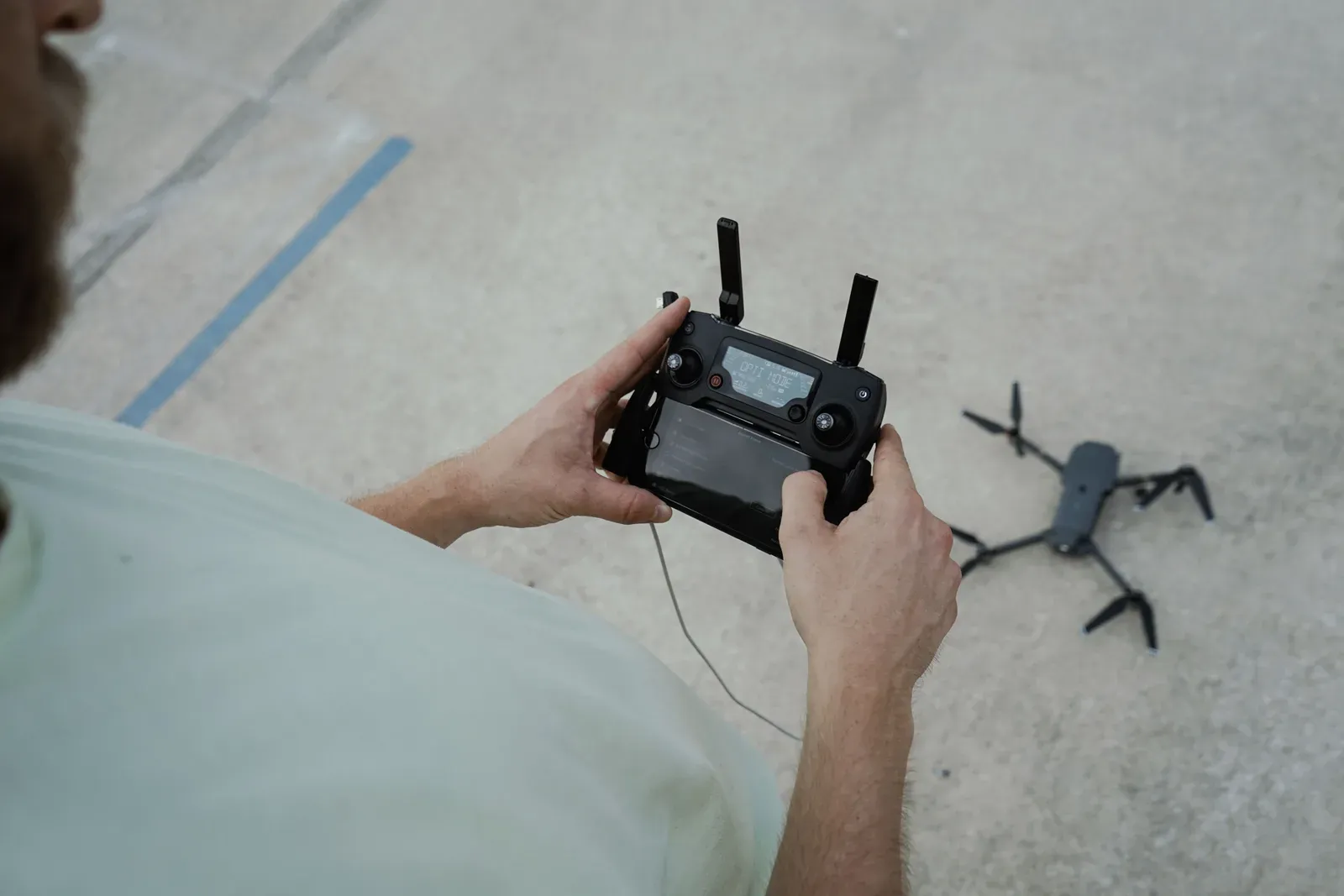
Foto: Kyle Loftus / Pexels
RBAC 100 splits UAS flights into three categories: Open, Specific and Certified. Classification depends on flight characteristics, environment, exposed people, equipment and mitigation measures. Here is how each one works.
Open Category: lower-risk operations
The Open category is for the lowest-risk work under RBAC 100. The drone must weigh no more than 25 kg in flight. The pilot flies in VLOS or EVLOS. Ceiling is 120 meters above ground level. The flight must stay away from uninvolved third parties. As a rule, the operator also needs a risk assessment updated within the past 12 months — waived when the flight stays more than 150 meters from uninvolved, non-consenting people, or when a sufficient mechanical barrier exists.
Specific Category: operations requiring further analysis
The Specific category catches anything that fails an Open category requirement. The operator either follows an ANAC standard scenario or demonstrates compliance with risk-based criteria. That demonstration covers the manufacturer, the UAS, the operation and the remote pilot. An operational authorization is required.
Certified Category: highest-risk operations
The Certified category is reserved for the riskiest flights. ANAC can push a dangerous-goods transport mission into this tier when an accident could pose serious risk to third parties. The agency can also require it when mitigations fall short. In that case, the UAS must meet the applicable certification and airworthiness requirements.
Extra requirements for the Open category
To stay in the Open category, operations must comply with item 100.5(a)(1) of RBAC 100: up to 25 kg, VLOS or EVLOS, 120 meters ceiling, distance from third parties. Risk assessment refreshed every 12 months — with the same waivers noted above.
The Open category doesn't erase safety obligations. It doesn't hand you a free pass on airspace either. Location, altitude and proximity to aerodromes may require a request through DECEA, filed via SARPAS NG.
Additional demands for the Specific category
The Specific category applies whenever an Open-category requirement isn't met. The operator can follow one of ANAC's standard scenarios or demonstrate compliance with risk-based criteria — an analysis touching the manufacturer, the UAS, the operation and the remote pilot. ANAC still has to authorize the operation.
RBAC 100 says Specific-category operations must be assessed by operational risk using a method acceptable to ANAC. SORA (Specific Operations Risk Assessment) is one of the references used in this context. Resolution No. 805 treats SORA as an acceptable method, and ANAC is expected to detail it in a supplementary instruction. Check the most recent regulatory acts before locking in the method for your operation.
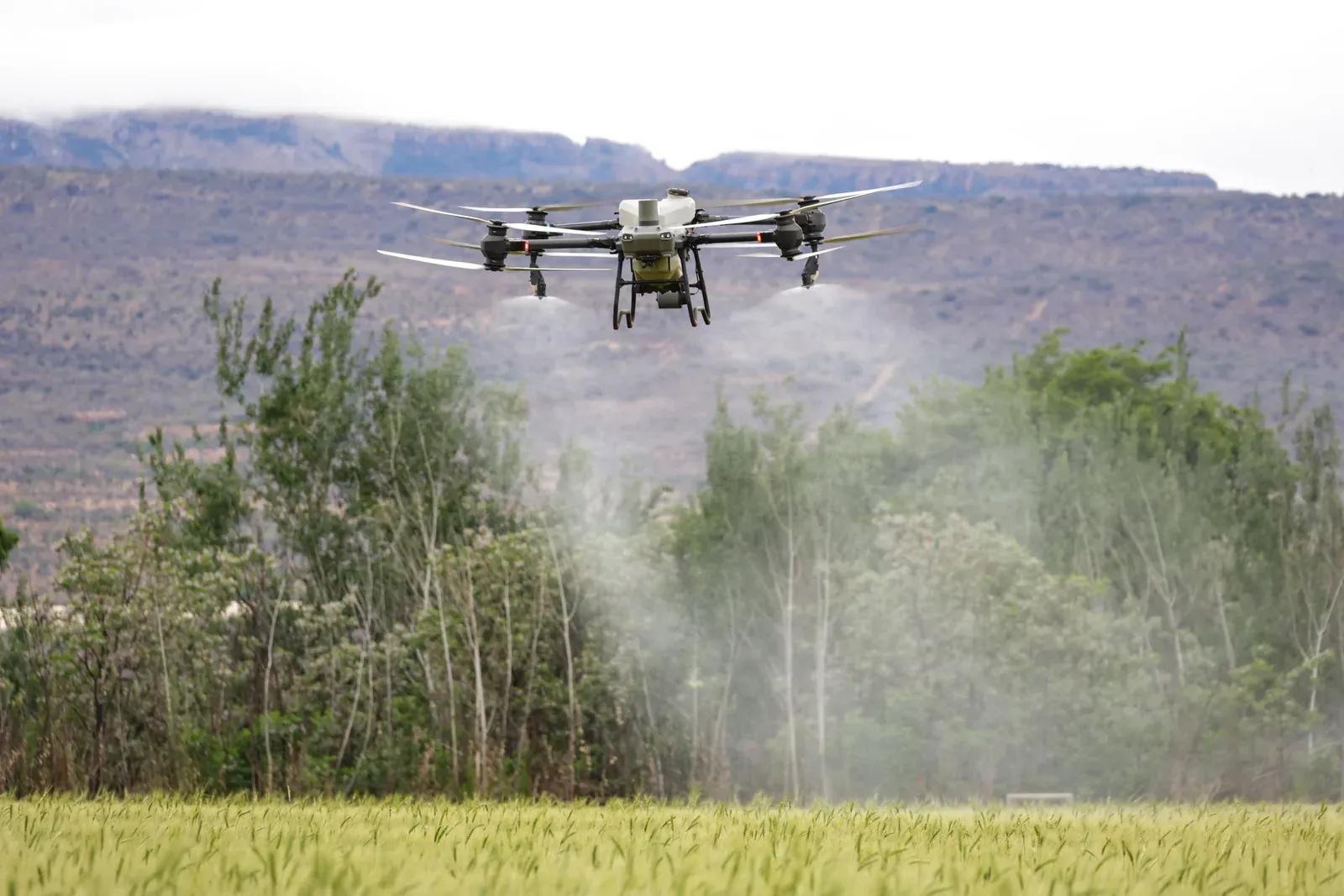
Foto: Magda Ehlers / Pexels
RBAC 100 also creates the COE — the Registration of UA Operator in the Specific Category. It isn't mandatory for every Specific-category flight. Whether you need it depends on complexity, the standard scenario applied, a supplementary instruction or an ANAC decision. When required, no operation begins until the COE is issued and valid.
Certification and airworthiness
For the Certified category, the UAS needs a type certificate under RBAC No. 21. Other regulations may also apply — covering operations, airworthiness and air transport. ANAC can additionally define licenses, type ratings and training programs for certified projects.
What changes for the remote pilot
Item 100.13(b) of RBAC 100 requires an ANAC theoretical exam for every remote pilot. Resolution No. 805 created a temporary waiver valid through December 31, 2026. So no, the exam isn't being demanded across the board on day one.
The published text doesn't specify an in-person exam, a blanket flight-hours requirement, or an online course valid for five years. Those details simply aren't there. Watch ANAC's latest acts and guidance for the specifics.
The remote pilot remains responsible for the aircraft's safety. Fit to fly, physically and mentally. Prepared for the mission. One pilot at the control station throughout the flight. One UA per pilot at a time, unless ANAC authorizes otherwise. Pilots under 18 must be accompanied by an adult pilot.

Foto: Árpád Czapp / Unsplash
How SISANT registration works under RBAC 100
RBAC 100 requires every UA to be registered with ANAC. The exception: aircraft with a type certificate, which fall under the Brazilian Aeronautical Registry. Otherwise, the UA must be tied to an individual or legal entity with a Brazilian CPF or CNPJ. That party is either the operator or must identify who the operator is.
Registration is valid for 24 months. The operator can renew up to six months after expiration. Miss that window and the registration is deactivated for good. The UA must display the registration number legibly — on the outside of the fuselage or in an internal compartment accessible without tools.
ANAC's registration pairs with SARPAS NG. SARPAS handles airspace access requests. DECEA notes that operators must register the aircraft in the system and present the SISANT registration certificate from ANAC.
Does RBAC 100 allow BVLOS flights?
Yes — but not automatically. BVLOS means flight that doesn't meet VLOS or EVLOS conditions. As a rule, it doesn't fit the Open category. The operator moves to the Specific or Certified category, depending on the mission's risk and profile.
In the Specific category, you can follow a standard scenario or submit a risk assessment such as SORA. Either way, you need the corresponding operational authorization. You also need DECEA's rules ticked off. ICA 100-40, in force since July 1, 2026, sets procedures for unmanned aircraft access to Brazilian airspace. Requests go through SARPAS NG.
ANAC approval and DECEA authorization are two separate steps. Complying with RBAC 100 doesn't substitute for airspace clearance, and a DECEA green light doesn't excuse you from RBAC 100. Two locks, two keys.
Foto: Mafia Photography / Pexels
What RBAC 100 says about insurance
Item 100.37 requires third-party liability insurance for UAS operations covered by the regulation. Two exceptions: UAS operated by state-controlled entities, and certain agricultural operations conducted in VLOS or EVLOS, up to 120 meters, over uninhabited areas.
The published text does not include a coverage table by category. RBAC 100 doesn't fix a BRL 500,000-per-event floor, nor does it limit insurance to commercial operations. Any specific coverage figures should be checked against current insurer sources, not inferred from the rule.
What changes for sub-250-gram drones and model aircraft
Resolution No. 806, also published on June 16, 2026, created a separate regime for aircraft up to 250 grams and for model aircraft flown in VLOS or EVLOS. These flights don't sit under RBAC 100. They follow Resolution No. 806 and DECEA's airspace rules.
- Maximum altitude of 120 meters above ground level.
- No transport of people, animals or dangerous goods, save for the exceptions in the text itself.
- Model aircraft above 250 grams still need registration and identification.
- Operations covered by Resolution No. 806 don't require insurance.
The waiver for sub-250-gram drones isn't a license to fly anywhere. The operator is still on the hook for safety, still bound by DECEA, and still liable for negligent or careless behavior. Don't put people or property at risk.
What manufacturers and importers need to watch
RBAC 100 demands clear information about the UAS. The manufacturer or its legal representative must state the equipment's characteristics and limitations, its intended use and its regulatory category. That transparency helps operators classify the equipment correctly instead of guessing.
In the Specific category, ANAC must authorize the UAS design — with exceptions for type-certificated aircraft, specific airworthiness-certificate scenarios and standard scenarios. In the Certified category, the UAS must obtain a type certificate and comply with the applicable airworthiness framework.
The bottom line
RBAC 100 isn't just a rebranding of RBAC-E 94. Moving from weight classes to a risk-based model brings Brazil closer to how EASA and, in practice, the FAA think about drone risk — and that's a good thing for a market that outgrew its old rulebook years ago. The real work now is operational: reading the fine print, mapping missions to the right category, and remembering that ANAC and DECEA are two doors, not one.